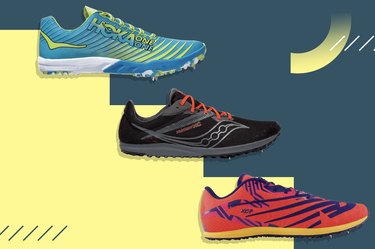
While other athletic activities call for special gear, a couple of good pairs of shoes are all your middle and high school cross-country runner needs. To get your athlete outfitted for the season ahead, get them some training shoes and racing spikes.
"Training shoes are typically highly-cushioned shoes with more support, a little more weight and are designed to handle the long-haul," Nick Hilton, a USATF-certified running coach and the owner of Hilton Performance Running, tells LIVESTRONG.com. These are the shoes your athlete will wear during practices.
Video of the Day
Video of the Day
Meanwhile, racing spikes are much lighter, less supportive and designed to get your runner through the course as fast as possible on race day, Hilton says. True to their name, racing spikes have metal and/or rubber spikes on the bottom to help the shoe grip a variety of running surfaces.
As training shoes and racing spikes serve different purposes, the ideal features vary between them. To help narrow your search, we found the best cross-country shoes for pre-teens and teens to wear to practices and meets.
How We Chose
Both Hilton and Keri-Ann Rugg, a youth running coach with Mercuria Running, shared their criteria for identifying a great pair of cross-country training shoes and racing spikes for pre-teens and teens. Using their input, we pulled together several stellar shoe options, making sure each pair meets standards for the following criteria:
- Price
- Quality
- Materials
- Comfort
Why Are Certain Shoes Marketed to Men or Women?
We make deliberate choices about the language we use, but manufacturers typically market shoes according to gender, so we have listed both women's and men's picks below according to the language used by the brands. However, the main difference between most men's and women's shoes lies in the shoe width and size.
In some cases, men's shoes are built to support greater weights. So people with bigger bodies may want to opt for men's versions, whereas people with smaller bodies may prefer women's versions. We encourage everyone to shop according to their personal preferences rather than feel restricted by marketing lingo.
Best Training Shoes
1. Saucony Peregrine 12
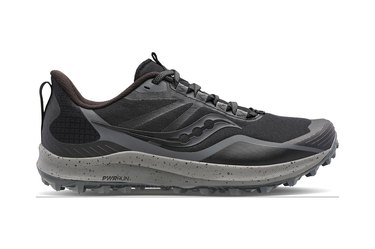
Trail running shoes can give cross-country runners the flexibility they need to conquer any terrain during training runs.
Named after the fastest bird on earth, the Peregrine 12 is one of Rugg's go-to recommendations. "I really like it," she says. "It's pretty stiff, but it's really durable, and it's got some good tread on it."
This shoe includes a contoured sockliner for added cushioning. As an added bonus, this style contains recycled upper materials for a lighter environmental footprint.
Buy it: Saucony.com (men’s); Saucony.com (women’s); Price: $130
2. Brooks Cascadia 16
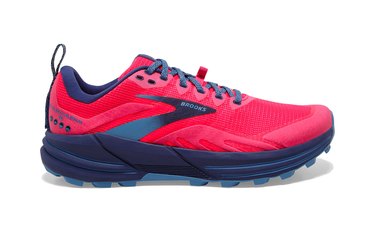
This is a popular trail running shoe among Rugg's runners. "It's just a really trustworthy shoe — I honestly haven't heard someone say they don't like it," she says.
The Cascadia 16 offers stability and traction for any terrain. It's also lightweight with soft, flexible cushioning. Grippy rubber tread helps your feet find their footing in wet and dry conditions. Plus, the shoe has drainage ports, which allow water to escape quickly if your runs get damp.
Buy it: Brooksrunning.com (men’s); Brooksrunning.com (women’s); Price: $130
3. Nike Air Zoom Terra Kiger 8
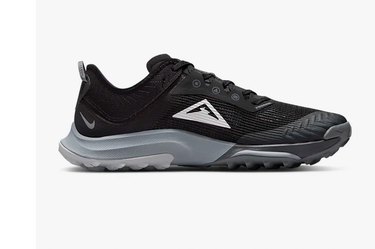
For a no-frills training shoe, go for the Terra Kiger 8. It's built to be pared down with only the features you need to succeed.
This shoe offers soft cushioning and a responsive feel to give you more spring in every step. A lightweight, breathable mesh upper keeps your feet cool, but it's fully lined to keep dirt and rocks out.
Plus, traction lugs in the heel made from high-abrasion rubber help you grip on any terrain.
4. Hoka Speedgoat 5
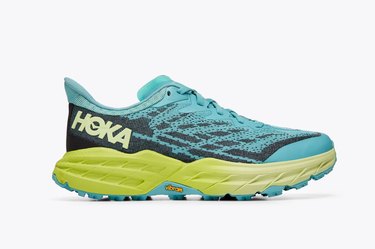
The Speedgoat 5 is another popular shoe among Rugg's runners. It's lighter but offers more traction than earlier models. This is thanks to a sole with traction lugs made of Vibram Megagrip, a high-performance rubber compound that helps you grip on wet and dry terrains.
This shoe also provides protective cushioning for comfort, plus a responsive toe-off when you're ready to speed up.
Best Racing Spikes
1. Saucony Kilkenny XC9
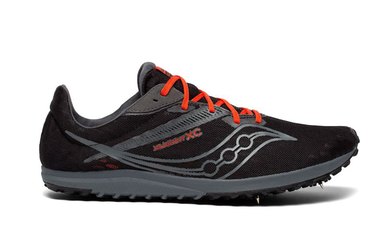
The Kilkenny XC9 is billed as this brand's most trusted cross-country spike. With a four-pin plate on the sole, they provide great grip to help you conquer any race course.
These racing spikes also feature a lightweight mesh upper for maximum breathability and a touch of cushioning for ultimate comfort with every step. A standard lacing system provides a secure fit.
Buy it: Saucony.com (men’s); Saucony.com (women’s); Price: $65
2. Hoka EVO XC Spike
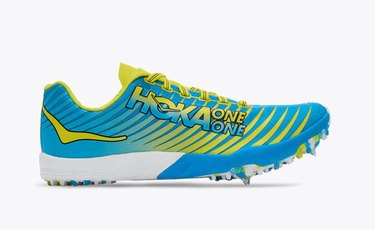
While pricey, these spikes offer performance and comfort. They have a low-profile cushion bed that keeps your feet closer to the ground and features firm forefoot material for improved push-off. But the heel has softer cushioning for a more comfortable landing.
These racing shoes have four metal spikes in the sole, plus raised rubber tread for better traction.
3. New Balance Unisex XC Seven v4
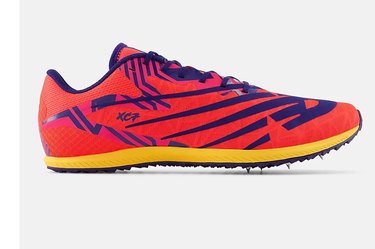
The Seven v4 is a great competition spike for emerging cross-country runners. They feature lightweight midsole cushioning and a six-pin metal spike plate for traction on any terrain. A traditional tongue and collar construction and lace-up closure ensures a secure fit.
Choose between two striking colors so your feet pop on the race course. Keep in mind these shoes are unisex, so pay attention to the sizing.
Buy it: Newbalance.com; Price: $70
4 Things to Consider When Shopping for Cross-Country Shoes for Pre-Teens and Teens
1. Fit
"When buying running shoes for a young cross-country runner, it's absolutely imperative to get the right fit, especially if they are new to the sport," Hilton says. "Newer runners will be more injury-prone than more experienced ones, and having them in high-quality, appropriate-fitting shoes is essential."
Younger athletes — mainly middle schoolers — may still be growing rapidly. Consider going a half or full size up so your young athlete can grow into their shoes throughout the season, Rugg says.
You may even consider getting your middle school-aged male athlete the women's version of a shoe. "They usually fit better on younger kids," Rugg says.
Rugg and Hilton recommend seeking a local specialty running shop to get your athlete fitted. Many shops have great loyalty programs or offer student discounts, so be sure to ask. You may be able to save some cash.
If you don't have a shop near you, several brands have shoe-fitting tools on their websites that can help you with shoe selection, Hilton says.
2. Comfort
Both the racing and training shoes should be comfortable for your young runner. However, keep in mind the racing spikes won't be worn as much as the training shoes and will naturally have less cushioning.
For training shoes, aim for moderate cushioning. "You want to be able to feel the ground a little bit and move your toes within the shoe," Rugg says.
Have your young athlete try on multiple training shoes and racing spikes to find the pairs they're most comfortable wearing.
3. Durability
"When it comes to footwear quality and durability, expect to pay a little more than you would for a typical pair of sneakers from a big box store," Hilton says.
On average, running shoes cost between $120 and $150, he continues. Expensive, yes, but spending a little more is often worth it in the long run if you can afford to. Shoes in this price range tend to be higher quality and last longer than a $60 pair from your local sporting goods store, Hilton says.
Plus, investing in a good pair of shoes will make your young athlete's experience much smoother and will hopefully help keep them healthier throughout the season, he adds.
4. Sole
Find out what kinds of terrain your runner will face during meets, so you're sure to buy racing spikes with appropriate soles, Rugg says.
Racecourse terrains vary from one area to another. Some cross-country teams battle steep inclines, obstacles and even river crossings at every meet. These runners will need more rugged soles to help them grip. Meanwhile, other teams race on mostly flat and even surfaces and may not need a technical shoe. A specialty running store can help you find appropriate shoe options for the terrain.
However, note that some states don't allow racing shoes with metal spikes on the soles, Hilton says. Find out if your state or school has any restrictions.