Almonds: Nutrition & Inflammation
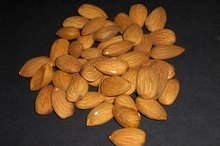
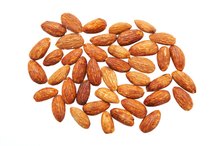
Eating a handful of any type of nut provides a boost of fiber, nutrients and heart-healthy unsaturated fats. But almonds have a slight edge over many other tree nuts. They contain more protein, fiber, calcium and vitamin E than seven other widely consumed tree nuts, according to the University of Michigan. Besides their regular roles in your body, some of the nutrients in almonds, such as vitamin E and magnesium, also help fight inflammation.
Nutrition Basics
One serving of nuts is 1 ounce, or 1/3 cup, according to the Academy of Nutrition and Dietetics. An ounce of almonds equals about 20 to 24 whole kernels. Keep this portion in mind to be sure you don’t overindulge because 1 ounce of dry-roasted almonds contains 170 calories. This portion has 14.9 grams of total fat, which includes 9.38 grams of monounsaturated fat and 3.67 grams of polyunsaturated fat. Both types of unsaturated fat help lower cholesterol. In addition to magnesium and vitamin E, a serving of almonds supplies calcium, iron, zinc, manganese and niacin.
Antioxidant Vitamin E
Cranberry Juice and Inflammation
Learn More
In its primary job as an antioxidant, vitamin E neutralizes reactive molecules called free radicals. Vitamin E protects fats throughout your body, including fats that provide structure to cell membranes and lipoproteins, which carry cholesterol through your bloodstream. When free radicals aren’t neutralized, they attach to molecules of fat, which damages the structure and triggers inflammation. Vitamin E in the form of alpha-tocopherol also reduces the amount of substances that trigger inflammation, according to the Linus Pauling Institute. One ounce of dry-roasted almonds contains 6.78 milligrams of vitamin E, or 45 percent of the recommended dietary allowance of 15 milligrams.
More Magnesium Equals Less Inflammation
You need magnesium to produce DNA and protein, build bones, regulate blood pressure and keep muscles and nerves working. It also helps fight inflammation. When a substance called C-reactive protein, or CRP, is found in your blood, it indicates the presence of inflammation somewhere in your body. Magnesium is significantly and inversely associated with levels of CRP, according to the an article in the February 2014 issue of the “European Journal of Clinical Nutrition.” If you consume less than the recommended dietary allowance -- 320 milligrams for women and 420 milligrams for men daily -- you’re more likely to have elevated CRP levels, reports the Linus Pauling Institute.
Research Supports Anti-Inflammatory Role
Are Raw Peanuts Good for You?
Learn More
Almonds show promise for reducing inflammation, as well as keeping blood sugar balanced and maintaining a healthy weight, according to a review published in the July 2012 issue of the “Journal of Agricultural and Food Chemistry.” The review reported that these potential benefits are due to the nut’s combination of nutrients, including monounsaturated fats, magnesium, copper, alpha-tocopherol and phytonutrients. While more research is necessary, the current evidence supports almond’s potential to help prevent chronic diseases.
Related Articles
Cranberry Juice and Inflammation
Learn More
Are Raw Peanuts Good for You?
Learn More

Shelled Peanuts: Nutrition Facts
Learn More
Good Nuts Vs. Bad Nuts
Learn More

The Best Foods to Lubricate the Knees
Learn More
Nutritional Facts on Sprouted Almonds
Learn More
The Nutrition of Smoked Almonds
Learn More
Does Magnesium Help You Lose Weight?
Learn More

Allergy to Vitamin B-12
Learn More

What Are the Benefits of Apples, Oranges & Grapes?
Learn More
References
- Linus Pauling Institute: Nutrition and Inflammation
- Linus Pauling Institute: Vitamin E
- Office of Dietary Supplements: Magnesium
- Food and Function: Almond Protein Hydrolysate Fraction Modulates the Expression of Proinflammatory Cytokines and Enzymes in Activated Macrophages
- European Journal of Clinical Nutrition: Dietary Magnesium Intake Is Inversely Associated With Serum C-Reactive Protein Levels: Meta-Analysis and Systematic Review
- Journal of Agricultural and Food Chemistry: Health Benefits of Almonds Beyond Cholesterol Reduction
Resources
Writer Bio
Sandi Busch received a Bachelor of Arts in psychology, then pursued training in nursing and nutrition. She taught families to plan and prepare special diets, worked as a therapeutic support specialist, and now writes about her favorite topics – nutrition, food, families and parenting – for hospitals and trade magazines.