
The Official Rules for a Baseball Strike Bunt
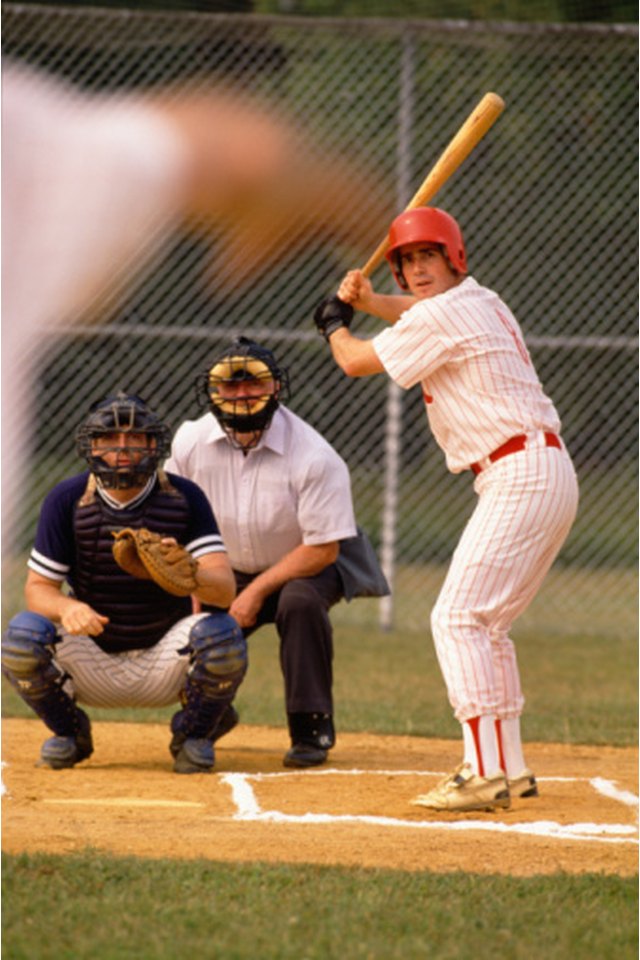
Bunting is a baseball strategy that involves putting the ball into play off the bat without using a full swing. A bunted ball usually rolls slowly toward the pitcher, first baseman or third baseman. A bunt is subject to most of the same rules as a pitch you swing at, with one notable exception.
Bunt Attempt Strike
It is up to the umpire’s discretion whether a bunt attempt has been made and a pitch should be called a strike. Usually, the feet are squared around to face the pitcher and the bat is held out over the plate. If a player doesn’t like the pitch, he pulls the bat back before it gets there and if it isn’t in the strike zone, it is called a ball. If the batter clearly tried to make contact or if the umpire feels he made an attempt to make contact, it is called a strike. If the hitter has the bat extended out for a bunt and the pitch hits him, it is called a strike.
Bunting Foul
When a player makes an attempt to bunt the ball and it goes foul, it is called a strike like any regular swing. However, if a hitter attempts to bunt the ball with two strikes and it goes foul, he is called out. Hitting a foul ball with a full swing and two strikes simply extends the at-bat with two strikes.
Bunt Situations
Bunts are usually tried in a baseball game in a few situations. The first scenario is to sacrifice yourself to move runners ahead. If a runner is on first or second a bunt is a controlled way to move him ahead. A squeeze play is another bunting situation in which a runner on third breaks for home as the pitcher delivers the ball. The batter must lay down a successful bunt for him to score. If you miss, the catcher will be standing there with the ball as the runner runs from third. It is also know as a suicide squeeze play. A third bunting situation when your try to bunt for a base hit. If the first or third baseman are playing deep on the infield, you can lay down a bunt and get to first before anyone is able to make a play.
Bunting Technique
Players have their own style when it comes to bunting, but all should observe a few steadfast rules. To bunt effectively, you must place your top hand behind the barrel of the bat and your bottom hand on the handle. Don't wrap your fingers of your top hand around the front of the barrel or they could easily be hit with the ball. Hold the barrel between the side of your bent index finger and pad of your thumb, with your other fingers bent into your palm. Third, as the ball makes contact with the bat, cradle it slightly by pulling back a little. This helps deaden the ball on the ground and makes fielding it more difficult.
References
Writer Bio
Joshua McCarron has been writing both online and offline since 1995. He has been employed as a copywriter since 2005 and in that position has written numerous blogs, online articles, websites, sales letters and news releases. McCarron graduated from York University in Toronto with a bachelor's degree in English.