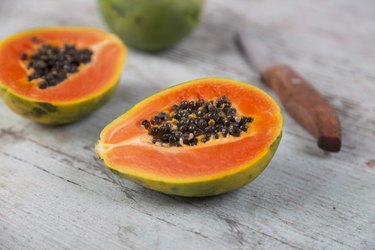
The papaya fruit is native to Central and South America. It has a green or yellow exterior that varies depending on how ripe it is. On the outside, papayas kind of look like mangoes but once they're cut open, you'll see they have orange flesh and tiny black seeds.
These sweet fruits are well-known for their beneficial nutrients and medicinal properties. In general, papaya is considered to be a nutritious food with few side effects.
Video of the Day
Video of the Day
Papaya Side Effects
Enjoying ripe papaya is safe as can be, but eating unripe papaya is linked to some negative side effects.
1. It Might Harm the Esophagus
Unripe papaya fruit contains papaya latex, which contains an enzyme called papain. Eating a lot of papain might damage the esophagus, per the U.S. National Library of Medicine (NLM).
And that's especially true for pregnant people: Some research suggests that unprocessed papain in unripe papaya fruit can be toxic to the fetus or cause birth defects, per the NLM. But eating the ripe fruit in moderation while pregnant is OK.
2. It Can Trigger a Reaction in People Allergic to Latex
If you are allergic to latex, avoid eating papaya or taking supplements or eating food products that contain papaya. People with a latex allergy are likely also allergic to papaya, per the NLM.
Papaya Seeds Side Effects
Papaya seeds are edible and contain healthy unsaturated fats as well as antioxidants. But some animal studies (like this May 2002 Asian Journal of Andrology study) linked papaya seeds to infertility in monkeys. Human studies are needed to confirm this.
Is Papaya Good for Bloating?
Papaya is a nutritious fruit, with fiber and vitamins A and C. Eat too much of it, however, and you may increase your risk for gas or bloating due to papaya's fiber content.
Whether you'll experience gas depends on your overall fiber intake for the day. Gas typically occurs when you suddenly increase your fiber intake, as this can overwhelm the capacity of the bacteria in your large intestines to break down the fiber.
But papaya may help reduce gas in people who don't produce enough of the enzymes necessary for breaking down proteins in the digestive tract. It contains the enzyme papain that can improve digestion by helping to break down proteins, according to Beth Israel Lahey Health.
Can Eating Too Much Papaya Turn Your Skin Yellow?
Beta-carotene is a type of carotenoid pigment that is found in yellow, orange and red plant foods, such as papaya.
Beta-carotene is converted to vitamin A, but eating large amounts of beta-carotene, through foods or supplements, may cause your skin to turn yellow-orange. This condition is called carotenodermia, per Oregon State University.
Large doses of beta-carotene — over 30 milligrams per day — can cause carotenodermia. For reference, 1 cup of papaya has 0.4 milligrams of beta-carotene so it's extremely rare to eat enough papaya to turn your skin orange.
FYI, carotenodermia is not dangerous and does not require medical treatment. Your skin will return to its normal color after quitting the beta-carotene for a bit.
Related Reading
- International Research Journal of Pharmacy: Basketful Benefits of Papaya
- Self: Nutrition Data: Papaya
- Plant Physiology: Postharvest Variation in Cell Wall-Degrading Enzymes of Papaya
- The Pharma Innovation Journal: Natural Remedies to Increase Platelet Count
- Asiaweek: The Natural Way. A Tropical Contraceptive.
- MedlinePlus: Papaya
- NIH: Vitamin C