The Nutrition in Raw Kefir
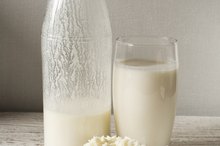
Raw kefir is a fermented drink made from the milk of cows, goats or sheep. Raw kefir is not subjected to pasteurization or other filtration methods, so it contains more bacteria than milk that that has been pasteurized. While proponents of raw kefir and raw foods in general argue that these bacteria are safe, consult your doctor before drinking raw kefir, a protein-rich beverage.
Calories
Raw kefir is moderately calorie-dense, as each 8 oz. serving provides 154 calories. That amount is just 4 g more than whole cow's milk provides and is 74 calories more than skim milk contains. One 8 oz. serving of raw kefir contains nearly 8 percent of the daily suggested intake of 2,000.
Fat
Raw Goat's Milk for Weight Loss
Learn More
Raw kefir is rich in fat, with 8 g in each 8 oz. serving. Of this fat, 2 g comes from saturated fat, which is 3 g less than the amount of saturated fat in whole cow's milk. Consuming too much saturated fat can be harmful, as it may increase cholesterol levels, which increases your risk of cardiovascular disease. The American Heart Association suggests limiting daily saturated fat intake to less than 16 g each day to limit your risk.
Carbohydrates
Raw kefir is different from other types of milk in that it can be appropriate for low-carbohydrate diets. An 8 oz. serving of raw kefir contains just 4 g of carbohydrates, which is 9 g fewer than an 8 oz. cup of skim cow's milk contains. While high-carbohydrate diets don't promote fat gain, research published in the February 2006 edition of "Archives of Internal Medicine" indicates that low-carbohydrate diets can help you lose weight more quickly than higher carbohydrate diets.
Protein
Non-Dairy Probiotic Drinks
Learn More
Raw kefir is a good source of protein, as each 8 oz. serving provides 9 g of protein. That amount is equal to the protein in 1.5 eggs. Protein promotes the construction and repair of your body's cells and tissues, so it's essential for proper health. The Institute of Medicine recommends consuming .8 g of protein for every kg of your body weight each day.
Related Articles

Raw Goat's Milk for Weight Loss
Learn More

Non-Dairy Probiotic Drinks
Learn More
Lifeway Kefir Nutrition
Learn More
Food With Lactobacillus
Learn More

Greek Yogurt Serving Size
Learn More

Are Yogurt Covered Almonds Healthy?
Learn More
List of Good Bacteria
Learn More

The Nutritional Value of Plaice
Learn More

What Is the Healthiest Yogurt to Eat?
Learn More

Foods Good to Eat for an Ulcer
Learn More
References
- MyFitnessPal: Calories in Raw Whole Milk Kefir
- American Heart Association; Knowing Your Fats; September 2010
- "Archives of Internal Medicine"; Effects of Low-Carbohydrate vs Low-Fat Diets on Weight Loss and Cardiovascular Risk Factors: A Meta-Analysis of Randomized Controlled Trials; A.J. Nordmann et al.; February 2006
- "Dietary Reference Intakes for Energy, Carbohydrate, Fiber, Fat, Fatty Acids, Cholesterol, Protein, and Amino Acids (Macronutrients); The National Acadmies Food and Nutrition Board; 2005
Writer Bio
Brian Willett began writing in 2005. He has been published in the "Buffalo News," the "Daytona Times" and "Natural Muscle Magazine." Willett also writes for Bloginity.com and Bodybuilding.com. He is an American Council on Exercise-certified personal trainer and earned a Bachelor of Arts in journalism from the University of North Carolina.