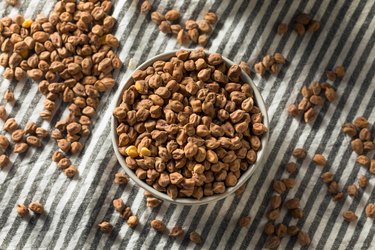
Kala chana is a type of desi chickpea grown mainly in India and translates to black chickpeas. Kala chana, like other types of chickpeas, is high in fiber, protein and iron, among other nutrients. Use kala chana in a wide variety of curries and soups for a healthy, nutritious meal.
Kala chana chickpeas are darker than regular chickpeas, with a nuttier flavor. They are more firm and hold their shape when cooked. Kala chana does not get mushy when boiled and takes longer to cook through. According to the USDA, black chickpeas have high fiber content and a very low glycemic index.
Video of the Day
Video of the Day
Kala chana nutrition is different than regular chickpeas, also known as garbanzo beans. Black chickpeas are higher in fiber and iron but have similar protein and carbohydrate content to garbanzos.
Read more: Benefits of Chickpeas
Kala Chana Calories and Macronutrients
According to the USDA, kala chana contains 127 calories per 35 gram (1.2 ounces) dry serving size, making a serving worth about 6 percent of daily calories at the 2,000 calorie level. The 2015-2020 Dietary Guidelines for Americans recommend 1.5 cups of legumes per week at the 2,000 calorie level.
Black chana is relatively low in calories, making them a healthy option as part of a filling and nutritious meal. One reason kala chana is so filing is due to its high protein content. These legumes contain 7 grams of protein per 35 gram serving, making them comparable to a large egg or 1 ounce of beef steak.
The 2015-2020 Dietary Guidelines for Americans explain that legumes are high in protein yet also offer nutritional components similar to vegetables, making them uniquely able to qualify as either a protein source or vegetable for meeting dietary intakes. The Dietary Guidelines recommend 5.5 ounces of protein foods per day for a 2,000 calorie diet.
Slowly digestible carbohydrates, also known as complex carbs, are recommended by the U.S. National Library of Medicine over more simple carbohydrates. Complex carbs consist of long chains of sugar molecules strung together.
Read more: A Complete Guide to Complex Carbohydrates
Complex carbohydrates like those found in black chickpeas offer more nutritional value than simple carbs and help to keep blood sugar stable due to their slower release of glucose. Complex carbohydrates are in:
- Peas
- Beans
- Whole grains
- Vegetables
The 2015-2020 Dietary Guidelines for Americans recommend a diet consisting of 45 to 65 percent carbohydrates in your daily calorie intake. Meaning, between 900 and 1,300 of your daily calories should come from carbohydrates; that's between 225 and 325 grams of carbohydrates per day. Black chana contains 27 grams of carbohydrates per 35 gram dry serving size. This equates to 7 percent of your daily recommended carbohydrates per day based on a 2,000 calorie diet.
Kala chana is low in fat, containing only 2 grams per 35 gram dry serving equaling 3 percent of your daily fat intake recommendation. To boost healthy fat intake when eating black chickpeas, try making them into a curry or soup using coconut milk, or serving them with some ghee or olive oil.
Micronutrients in Black Chickpeas
Like other legumes, kala chana is high in many essential micronutrients, particularly iron. Black chickpeas are especially beneficial for growing children and active people participating in a plant-based diet. Legumes provide other nutrients found in animal sources such as folate, potassium, iron and zinc as well.
A December 2017 review in Nutrition Reviews revealed the nutrients found in pulses, such as folate, fiber, iron and magnesium, are not consumed in sufficient amounts in those two years of age and older. Iron is crucial for children and women who are athletes, pregnant or premenopausal.
According to the December 2017 Nutrition Reviews paper, data suggests that including pulses in your diet can help reach sufficient levels of these lacking micronutrients. The review recommended consuming one-half cup of cooked beans or peas such as kala chana. When adding this amount of pulses to the diet, it is shown that the day's food intake consisted of higher intakes of folate, iron, magnesium, zinc and lower amounts of total fat and saturated fat.
One factor to note when choosing your source is that kala chana nutrition could be affected by the preparation method. A November 2018 review in Nutrients says that "canning led to a greater decrease in proteins, total dietary fibers, magnesium or phytate contents compared to household cooking." You may wish to choose cooking dried black chickpeas at home for optimal nutrient content.
Kala Chana Aids Weight Loss
The Mayo Clinic explains that sticking to foods low on the glycemic index could help with weight loss. Keeping foods higher on the glycemic index to a minimum while still including plenty of foods low on the index is key. Foods high on the glycemic index include:
- Processed snack foods
- White potatoes
- White bread products
- Sugary dessert and snack foods
- Soda
Aside from their high glycemic load, these foods are also lacking in nutrients, especially when compared to more healthy foods low on the glycemic index, such as:
- Legumes, including pulses such as kala chana
- Vegetables
- Whole fruit (not juice)
- Low-fat dairy
Maintaining the Dietary Guidelines recommended amount of carbohydrates contributes to a weight-loss diet because they are your body's primary preferred fuel source. Supporting an active lifestyle requires healthy fuel sources like complex carbohydrates.
Moreover, the Mayo Clinic explains that eating foods high in bulk and fiber helps to control weight by increasing feelings of fullness with fewer calories. Legumes, according to Mayo Clinic, are ideal due to being some of the most nutritious foods you can eat, being high in nutrients, low in fat, high in protein and low in cholesterol. Use them in place of some of your meat sources of protein.
A March 2016 review in the American Journal of Clinical Nutrition showed that adding pulses to the diet leads to a modest weight loss even when calories are not intentionally restricted. The findings come from 21 trials that pooled together, showed significant weight loss when pulses were added to the diet for an average of six weeks. The results also showed a reduction in body fat percentage. The study recommends 132 grams of cooked pulses per day.
Read more: Are Chickpeas Good for Weight Loss?
- USDA: "Chickpeas (Garbanzo Beans Bengal Gram) Mature Seeds Raw"
- USDA FoodData Central: "Kala Chana"
- DietaryGuidelines.gov: "Dietary Guidelines for Americans, 2015-2020"
- USDA FoodData Central: "Eggs, Grade A, Large, Egg Whole"
- USDA FoodData Central: "Beef Steak, Broiled Or Baked, Lean And Fat Eaten"
- U.S. National Library of Medicine: "Complex Carbohydrates"
- Journal of the International Society of Sports Medicine: "Vegan Diets: Practical Advice for Athletes and Exercisers"
- Nutrition Reviews: "Enhancing Nutrition With Pulses: Defining a Recommended Serving Size for Adults"
- Nutrients: "Nutritional Composition and Bioactive Content of Legumes: Characterization of Pulses Frequently Consumed in France and Effect of the Cooking Method"
- Harvard Health Publishing: "Chickpeas (Garbanzo Beans)"
- Mayo Clinic: "Carbohydrates: How Carbs Fit Into a Healthy Diet"
- American Journal of Clinical Nutrition: "Effects of Dietary Pulse Consumption on Body Weight: A Systematic Review and Meta-Analysis of Randomized Controlled Trials"