Luden's Cough Drops Nutrition
Luden’s is a commonly dispensed cough drop for those suffering from a sore throat 1. Luden’s cough drops are known and sold as throat drops by Luden’s 1. Marketed for sore, scratchy or dry throats, Luden’s comes in many flavors: Wild Cherry, Honey Lemon, Honey Licorice, Original Menthol and Berry Assortment. Luden’s throat drops are known for being tasty, so what exactly is in them 1?
Nutritional Information
Calories come from carbohydrates, proteins and fats. The calories in Luden's drops come from 3 grams of carbohydrates in the form of sugar, and each flavor contains approximately 12 calories 1.
Active Ingredients
The Effect Cough Drops Have on the Heart Rate
Learn More
Luden’s throat drops are, in fact, used for medicinal purposes, so each drop contains active ingredients to help aid the symptoms of a sore throat 1. Each flavor differs in its active ingredients. The Wild Cherry flavor uses 1.7 mg and Berry Assortment uses 2.8 mg pectin as an oral demulcent, which causes a film to form over a mucous membrane, relieving irritation and having soothing effects on the throat. The Honey Lemon and Honey Licorice flavors each use 1.0 mg of menthol, and the Original Menthol flavor uses 4.0 mg of menthol. Menthol is an oral anesthetic that provides temporary relief from pain due to irritation or soreness of the throat.
- Luden’s throat drops are, in fact, used for medicinal purposes, so each drop contains active ingredients to help aid the symptoms of a sore throat 1.
- The Wild Cherry flavor uses 1.7 mg and Berry Assortment uses 2.8 mg pectin as an oral demulcent, which causes a film to form over a mucous membrane, relieving irritation and having soothing effects on the throat.
Inactive Ingredients
Luden’s throat drops also contain inactive ingredients for flavor, color or texture 1. Each flavor of throat drop contains inactive ingredients. Ascorbic acid, or vitamin C, and citric acid are found in the Wild Cherry, Honey Lemon and Berry Assortment flavors. Vitamin C can help boost the immune system of a healthy or sick individual. Corn syrup, caramel color, soybean oil and artificial coloring are also inactive ingredients. Each throat drop contains sucrose, which is the sugar that gives sweetness to the product and also contains 4 calories per gram. Each throat drop contains 3 grams, giving 12 calories per drop.
- Luden’s throat drops also contain inactive ingredients for flavor, color or texture 1.
- Each throat drop contains sucrose, which is the sugar that gives sweetness to the product and also contains 4 calories per gram.
Related Articles
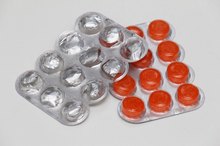
The Effect Cough Drops Have on the Heart Rate
Learn More

Signs & Symptoms of Throat Allergies
Learn More

Ingredients & Nutrition Facts for Trolli Sour Gummy Worms
Learn More
Signs & Symptoms of Throat Allergies
Learn More

How to Get Rid of Nasal & Throat Congestion
Learn More
Banana Extract Ingredients
Learn More

How to Soothe a Burned Throat From Apple Cider Vinegar
Learn More

Dramamine Directions
Learn More
Dry Throat Remedies
Learn More

How to Get Rid of Sticky Mucus in My Mouth
Learn More
References
- Luden's: Throat Drops
- Samantha Ellwood; Blacksmith Brands Consumer Affairs; Tarrytown, NY
Writer Bio
Jennifer Marie is a licensed dietitian based in Cincinnati. She holds a Bachelor of Science in health and sports studies from Miami University of Ohio, as well as a Master of Science in nutrition from the University of Cincinnati.