
Training & Diet for Motocross
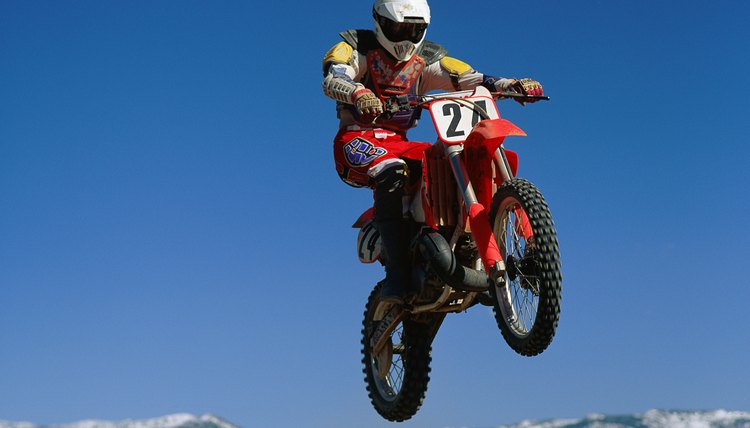
Nutrition always takes first priority, followed by understanding a workout blueprint. Depending on your training regimen, you will need more carbohydrate intake than the average healthy eater because of the demands of your sport. High protein, high fat and good quality carbohydrates at precise times are needed. As a sample of motocross demands, the winning time at Washougal National in 2013 was 36:49.329. Such a race consists of strength endurance, handling your bike like a toy for almost 40 minutes straight, cardio-respiratory conditioning, or metabolic conditioning, and balance, so your training must fulfill those needs.
Nutrition and Commitment
Like a sprinter's, your body weight is extremely important, and the lighter you are with maximal strength, the better you race. Eat most of your carbohydrates near your workout and riding times so that the glucose – the sugar that carbohydrates break down into in the blood – is used for your muscles, not for fat storage. There is never a one-size-fits-all nutrition plan, but a basic plan for athletes would be taking in 30 to 50 grams of protein every three waking hours, roughly the same amount in grams of fat, and equal or less total grams of carbohydrates.
Specific Foods
White rice, sweet potatoes, vegetables and little fruit should make up your carbs. Never eat wheat products, whole grains, corn, soy, or added sugar because these inflammatory foods are the enemy of an athlete. Your protein should be from beef, elk, bison, pork, chicken, turkey, duck, omega-3 eggs and wild caught fish. Your fats should come from butter, coconut, avocado and nuts. Carbohydrates cause insulin secretion which drives fat accumulation. Therefore, if you gain weight, reduce your carbohydrate intake.
Muscles Specific to Motocross
Often the biggest factor in your success is your ability to handle forearm pump. Constant throttle, breaking, shifting and controlling your bike through turbulence tests your grip strength and endurance. So, your training should involve a lot of pullups, heavy deadlifts, kettlebells, farmers carries, dumbbells and time tests in grip strength. Your core and balance is of utmost importance, and to be strong and reactive for the entire race you must also do heavy squats, and workouts that target your abs and obliques, as well as back extensions and good mornings, Olympic style weightlifting, lunges and box jumps. Constantly vary these movements and train at least three days per week.
Workout Blueprints
The days of separating cardio and weightlifting are over. In a sport such as motocross where the tracks are different each weekend and the dirt feels different each day, a planned, stiff, isolated exercise routine is the enemy. There is absolutely no better way to prepare for the demands of the dirt than to mix sprinting, jumping, gymnastics and weightlifting into one short maximum effort workout that replicates the time domains of a race. Mix up your workouts between three to six minute barn burners and 20 to 30 minute interval sessions.
Sample Training
A sample of the barn burner could be five rounds of 20 pullups, 20 box jumps, and 10 burpees for time. An interval, longer duration workout could be four heavy deadlifts and 10 toes-to-bar every minute for 15 minutes followed immediately by eight walking lunges holding heavy dumbbells and six barbell push press every minute for another 15 minutes. This type of interval, maximum exertion training with constantly varying movements will build your strength endurance, metabolic conditioning, balance and agility.
References
- Monster Energy AMA Supercross: Anaheim 2 Provisional Results - 450SX Main Event.
- The CrossFit Journal: CrossFit and Motocross.
- The CrossFit Journal: Insulin: Body Weight and Energy Production.
- SpecialtyHealth - Sugar. Could be the Primary Cause of Insulin Resistance and Why People Get Fat: Gary Taubes.
- The Weston A. Price Foundation: Why We Crave: Janice Curtin
Writer Bio
Ryan Mess earned a Bachelor of Arts in communications from Cal Poly SLO, where he played rugby. His fitness expertise bloomed during his college and semi-pro rugby career. And since then, he has been training everyone from youth to professional athletes to grandparents in all things fitness and health while still competing.