c8501089/iStock/Getty Images
America has a serious love affair with salt. It is added to food products ranging from canned carrots to cinnamon bagels. While it adds flavor and is needed by the body in small quantities, most Americans consume vastly more sodium than needed. To lower your sodium intake, choose foods that are naturally low in sodium or that have been prepared without excess sodium. With a little effort, you can enjoy a delicious, low-sodium diet.
Breakfast Foods
Oatmeal, cream of wheat and cream of rice without added salt are healthy breakfast options. Avoid the instant varieties of breakfast cereals that contain added sodium. Omelets made with a mixture of whole egg and egg whites are also low in sodium; add veggies such as mushrooms, peppers and onions or low-sodium cheese. Whole wheat or raisin toast can be eaten on most low-sodium diets; these can be topped with jam or preserves. For variety, make a breakfast smoothie containing yogurt, berries, wheat germ and honey. Choose a yogurt containing 140 milligrams of sodium or less.
Lunch Foods
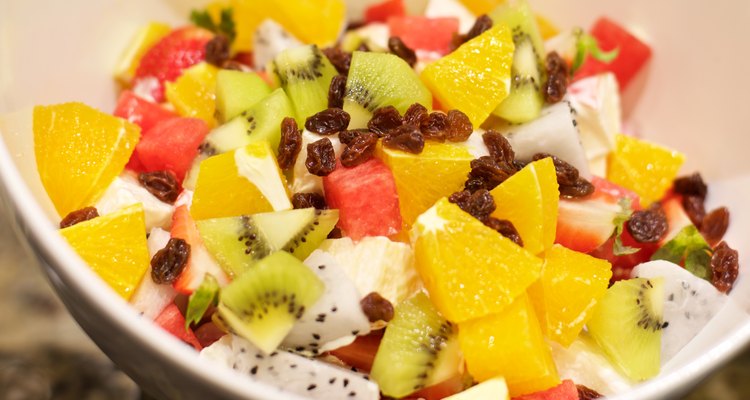
Low-sodium traditional lunch foods include salad made with fresh vegetables and topped with an oil and vinegar dressing, and a salmon fillet topped with lemon and herbs, served with a side of brown rice and broccoli florets. Prepare the salmon, rice and broccoli without adding salt. Pork tenderloin topped with cooked apples makes an excellent low-sodium lunch. For a lighter lunch, consider making a fresh fruit salad with crunchy pecans.
Dinner Foods
Stuffed peppers containing low-fat ground beef, garlic and low-sodium tomato sauce make a good-tasting dinner food. Top a baked chicken breast with pineapple rings and serve with a baked sweet potato and Brussels sprouts, or prepare a veggie tortilla wrap containing crunchy vegetables such as cucumber, squash, baby carrots and red peppers. Make sure the tortilla contains 140 mg or less of sodium. Spice up a bowl of freshly prepared black-eyed peas with chili seasoning and your favorite herbs.
Snack Foods
Many Americans favor salty snacks, but this habit can be defeated by choosing a low-sodium crunchy or sweet snack. Instead of adding salt to popcorn, toss it with a few dried cranberries and brown sugar. Make homemade potato chips without added salt and dip them in sour cream or a low-sodium bean dip. Eat a bowl of tasty purple grapes or a crunchy red apple for a quick snack. For a creamy treat, try making a homemade pudding without adding salt.
Related Articles
Salt-Free Diet Menus

Low-Potassium Meals

What Goes With Smoked Salmon Bagels & ...

How Many Calories in Chopped Antipasto ...

Traditional Irish Foods for Lunch

Healthy Unprocessed Lunch Choices
How to Make a Home Remedy Oatmeal Scrub ...

Diet Menu to Lower Potassium
Dinner Ideas With Chicken & Cream of ...

What Breakfast Is Easy to Make for a ...
How to Make Quaker Oatmeal

What Type of Food Do People in Honduras ...

Sauerkraut Diet

How to Make Fish Taco Sauce
What Kind of Food for a Hawaiian Themed ...

Menu for Pork Loin Roast

Sandwich & Side Dish Ideas for a ...
What Are the Health Benefits of Pico De ...
Restaurants on 50th - 52nd Street in ...
Roast Beef Menu
References
Writer Bio
J. Lucy Boyd, RN, BSN has written several nonfiction books including "The Complete Guide to Healthy Cooking and Nutrition for College Students." She is frequently called upon to provide career guidance to medical professionals and advice to parents of children with challenges. She also loves teaching others to cook for their families.
Photo Credits
c8501089/iStock/Getty Images