
The rotator cuff is the group of small muscles and tendons that move and stabilize your arm within your shallow shoulder socket. Because the rotator cuff permits a wide range of shoulder motions, injuries are common. Rotator cuff injuries cause weakness and pain, particularly when lifting your arm above shoulder height. In order to heal, blood must nourish the rotator cuff with oxygen and nutrients. Rotator cuff rehabilitation, therefore, requires blood circulation therapies to encourage blood flow to the injured area. If you are not injured, increasing circulation to the rotator cuff can help prevent injuries from occurring.
Active Rest
Video of the Day

If you've experienced a rotator cuff injury, rest your shoulder for four or five days after the injury or until swelling has subsided. Rest does not mean complete inactivity, but rather active rest. Introduce non-weight-bearing movements into your daily routine as pain permits and try not to favor your shoulder. Rest relieves shoulder swelling, and mild activity promotes continued blood flow to the injured area. Mild shoulder movement prevents stiffening of the joint and atrophying of the muscles, and it reduces the risk of developing frozen shoulder.
Video of the Day
Ice and Heat Therapies
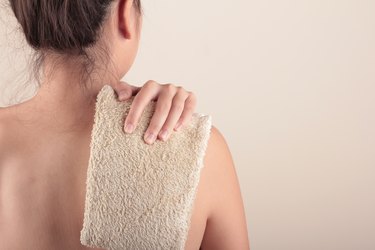
If your shoulder is inflamed, apply ice to your shoulder to reduce swelling. Avoid heat at this time because it increases inflammation. Four or five days after injury, or once inflammation has subsided, apply heat to your shoulder to increase blood circulation. Apply moist heat if possible. Good sources of heat include steam rooms, hot showers, heated wet towels, heat packs and heating pads. In addition to increasing circulation to the area, heat can ease spasms and muscle tightness. If you're looking to reduce your risk of developing a rotator cuff injury, you might consider applying heat to your shoulder before exercise.
Massage and Circulation
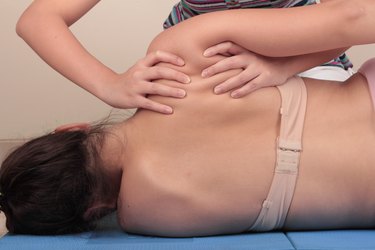
Massage therapy can help relieve pain and stiffness related to rotator cuff tendinitis. Massage also relaxes muscle spasms to further assist in your recovery. Even in non-injured individuals, deep tissue massage stimulates blood flow to the area by releasing tension in your muscles that would otherwise block the flow of blood. Include regular massage in your fitness program to avoid injury.
Movement and Circulation
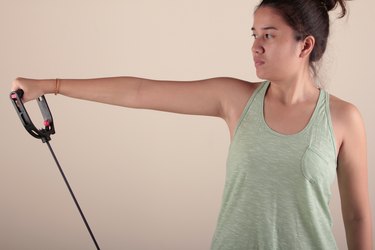
If your rotator cuff is injured, introduce more and more movement into your therapy program as your shoulder heals. Work to the edge of your pain and range of motion, increasing your movement as your range of motion improves and your pain decreases. In situations in which your shoulder remains immobile for prolonged periods, move your shoulder periodically to ensure it receives adequate blood supply.
Shoulder Stretches

In the same manner that massage and movement encourage blood flow, stretching increases circulation. Tight muscles block the flow of blood. Gentle stretching permits blood to re-enter the area. Never bounce or force your shoulder into a stretch. Move your shoulder slowly into the stretch until you have reached your range of motion, then hold the position for 20 to 30 seconds. If recovering from injury, stretch only to the point where you feel a gentle stretch, not pain.
Is this an emergency? If you are experiencing serious medical symptoms, please see the National Library of Medicine’s list of signs you need emergency medical attention or call 911.