
Are Bicycle Twist Shifters Good?
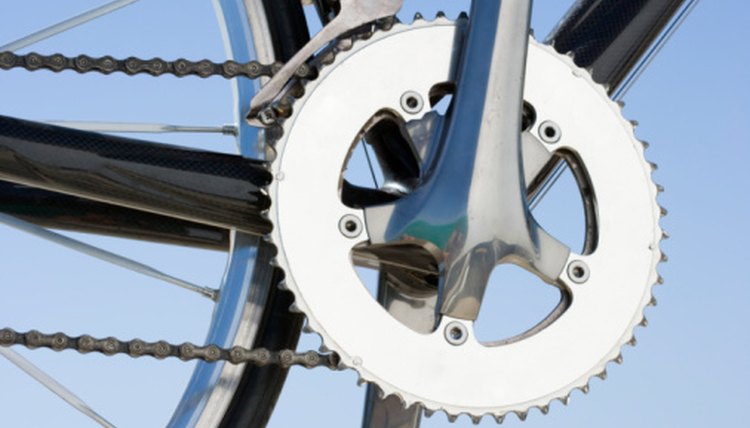
Shifting gears on a bicycle helps riders adjust to the difficulty of pedaling and the pedal-to-wheel rotation ratio. This allows cyclists to be more efficient as they ride paths of varying difficulties and inclines. Different shifting systems have been developed to accommodate the needs of riders, depending on the type of bike they are riding. Twist shifters, also called grip shifters and twist-grip shifters, are a common type of shifter for mountain bikes, and they can be useful.
Function
Twist shifters are used by twisting the shifter -- placed over the handlebar and serving as the rider's handgrip -- forward or backward to make the gears move up or down. Mountain bikers prefer twist shifters so they can change gears without taking a hand off the handlebars and potentially losing control of the bike. Road bikes require cyclists to move their hands from the handlebars to shift gears, but because their course is smooth and relatively straight, this is not a concern. But mountain bikers need to react quickly and be strong enough to keep the bike upright. Twist shifters help with this.
Use
Twist shifters are most commonly featured on mountain bikes, and they can also be used on other bikes with straight handlebars. Because the shifters are placed on the outer handle, they do not fit on road bikes. Some people prefer these shifters because they make it easier to remain stable on the bike. While mountain bikers benefit, novice bicyclists also may find them easier to use.
Shifting
Shifting is performed by twisting the handle shifter. This needs to be done while you are pedaling at a slow pace. If you shift gears when standing, coasting or pedaling hard, you can cause friction to the bike chain and gear teeth, resulting in damage to the equipment. When using twist shifters, you should also shift just one gear at a time to avoid jumping gears, derailing your bike chain and causing damage to the bike's components.
Considerations
Twist shifters make it easy to constantly change gears, and this is something you should get accustomed to -- change gears as inclines and difficulty vary to keep your pedaling rhythmic and steady. Developing a rhythm in your pedaling will make it easier to maintain your pace and put together a consistent ride.
References
Writer Bio
Jonathan Croswell has spent more than five years writing and editing for a number of newspapers and online publications, including the "Omaha World-Herald" and "New York Newsday." Croswell received a Bachelor of Arts degree in English from the University of Nebraska and is currently pursuing a Master's of Health and Exercise Science at Portland State University.