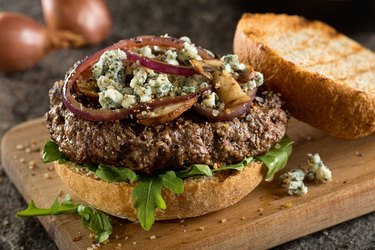
A more sustainable alternative to beef, bison is a type of red meat that seems to be popping up on steakhouse and burger joint menus across the country. If you're looking to vary your protein sources, it may be time to give bison a chance.
Read more: How Much Protein Is Right For You?
Video of the Day
Video of the Day
Bison Vs. Beef: Which Is Healthier?
If you're debating between a bison or beef burger for dinner, it may be helpful to consider some of the benefits of this lesser-known meat. So how healthy is bison meat? When it comes to calories and macronutrients, bison is a leaner source of protein than beef, as it contains less fat and calories.
A standard four-ounce serving of bison meat clocks in at about 124 calories, 6 grams of fat and 17 grams of protein, according to the USDA. For comparison, a beef patty of the same size contains 224 calories, 14 grams of fat and 21 grams of protein, according to the USDA. The significant calorie difference is mostly due to the low fat content in bison meat. Beef has more than double the fat content than bison!
Unlike beef, bison is never treated with antibiotics and growth hormones while being raised, according to the USDA. Bison herds are also usually raised on open ranges and eat hay or grass for a majority of their lifetimes, whereas cows often spend their entire lives on industrial feed lots.
Read more: This Is Why You Might Want to Eat Less Red Meat
How to Choose and Prep Bison Meat
There are several things to look out for when purchasing bison at the grocery store.
Kirk Biondi, the executive corporate chef at Ted's Montana Grill — an NYC restaurant known for its burgers and chops made from bison — has some great tips for choosing the right cut.
Biondi recommends that you look for bison steak that has been cut fresh on the same day of purchase. If this isn't available to you, opt for the fresh, non-frozen cuts. When it comes to meat quality, look for a cut that is rich and red in color with little or no fat.
Bison and beef should be handled the same way, according to the USDA. After you've purchased your bison meat, store it in disposable plastic bags to contain any leakage that could cross-contaminate other foods or produce. Refrigerate the meat as soon as possible and use it within three to five days.
Tip
Before you begin preparing your bison steak or burgers, consider this: Due to its low fat content, bison meat cooks much faster than beef, so you'll want to keep a close eye on it to make sure you don't overcook it, recommends Biondi.
Read more: How to Grill the Perfect Burger, According to a Chef
Bison Burger Recipe
Ready to try your hand at the perfect bison burger? Chef Biondi shares his go-to recipe below.
Bison Burger Ingredients
- Ground bison meat
- Gruyere and blue cheese
- Caramelized onions
- Arugula
- Garlic aioli
- Seasonings like kosher salt, black pepper, onion salt and garlic
- Bun of choice
- Other toppings of choice
- Pack your burger: Loosely pack a burger patty by gently stretching and pulling the meat, making sure it's a bit larger than the bun (the meat will shrink slightly while cooking). Don't over-handle the meat or your burger will wind up being too tough. Then, season your patty with kosher salt, black pepper, onion salt and garlic.
- Cook the burger: On a grill or a cast-iron skillet over medium heat, cook the patty halfway through, around three minutes. Then, flip the burger and cook an additional two to three minutes. This will render a medium-rare burger. Considering bison meat is minimally processed, Biondi recommends you treat it like a steak. Also, avoid pressing the burger with a spatula to keep the juices inside the meat.
- Add cheese: One tip for melting cheese is to cover the burger with a small, stainless steel bowl to create a little pocket of steam that will help melt the cheese. This will give you that ooey-gooey goodness.
- Add the toppings: Top your burger with caramelized onions, arugula and garlic aioli. Now, enjoy!
Was this article helpful?
150 Characters Max
0/150
Thank you for sharing!
Thank you for your feedback!