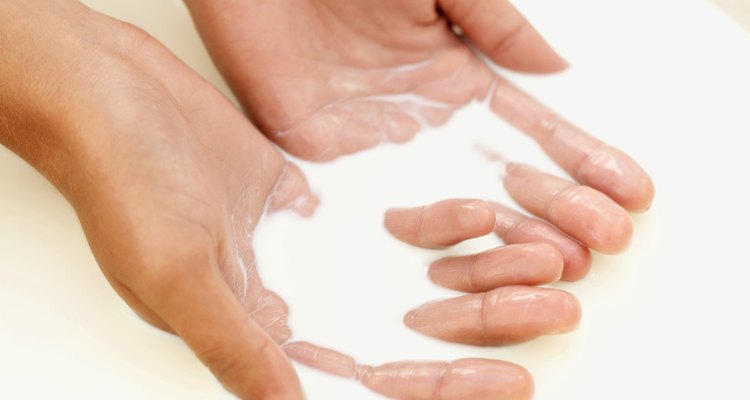
George Doyle/Stockbyte/Getty Images
Age spots refer to those undesirable brown to black spots that develop on your skin as you get older. Unlike skin cancers and moles, age spots are flat. Also called liver spots, age spots are the result of long-term, unprotected UV-ray exposure. According to Medline Plus, these spots are most common in people age 40 and older. It’s never too late to protect your skin with sunscreen, but this won’t get rid of previous damage. Over-the-counter and prescription bleaching kits offer promise in removing age spots, but they come with risks.
Over-the-Counter Bleaching
Bleaching kits are available at your local beauty shop and drugstore. The majority of these kits contain hydroquinone, a bleaching agent that lightens the skin. It works by preventing the release of melanin, a natural compound responsible for skin coloring. Hydroquinone is available in lotion, cream or gel formula. The choice ultimately depends on your preference. Gels and lotions absorb more quickly than cream, while the latter may offer more hydration for dry skin. Over-the-counter bleaching kits contain hydroquinone in concentrations between 0.5 and 2 percent.
When to Get a Prescription
Prescription bleaching kits contain 4 percent or more hydroquinone. A higher concentration of hydroquinone is needed if over-the-counter kits fail to produce the results you want. If your case of age spots is severe, you may consider skipping over-the-counter bleaching agents altogether and ask your dermatologist for a prescription version instead.
Downsides to Bleaching
Bleaching kits are regarded as a safe way to lighten dark skin spots. However, there are a few risks to bleaching age spots. Among the most common symptoms are rashes and blisters. In rare cases, bleaching the skin can result in a blue discoloration called ochronosis. The higher concentration of hydroquinone, the more likely you are to experience side effects. Use caution if you have sensitive skin.
Alternative Age Spot Treatments
Hydroquinone is a mainstay in age spot treatment, but it isn’t your only option. Natural remedies may provide similar skin-lightening effects. Examples include buttermilk, aloe vera gel, honey and yogurt blends and even strawberries. Other skin-lightening kits may contain kojic acid and soy extracts. Keep in mind that alternative treatments may take longer than hydroquinone to produce visible results. Address any concerns with your dermatologist.
Related Articles

Fraxel Repair Vs. Restore Results

Can Age Spots Be Reversed?
The Best Facial Moisturizers for People ...

List of Retinoids

How to Whiten Jeans
Definition of Skin Bleaching
How to Remove Loctite From Clothes

How to Freeze Tzatziki

The Best Way to Hide Skin Discoloration

How to Lighten Denim or Canvas

How Do I Repair Scratches on an Oakley ...

The Difference Between Retin A & Renova

Are There Foods That Heal Age Spots?
How to Make Transition Lenses Darker

What Are the Dangers of Fraxel Repair?

How to Bleach & Tone Hair
Removing Acne Scars With Tretinoin Cream
How to Fix Transition Lenses
How to Restore Discolored Boots
How Long Should a Hair Toner Be Left on ...
References
Writer Bio
Kristeen Cherney began writing healthy lifestyle and education articles in 2008. Since then, her work has appeared in various online publications, including Healthline.com, Ideallhealth.com and FindCollegeInfo.com. Cherney holds a Bachelor of Arts in communication from Florida Gulf Coast University and is currently pursuing a Master of Arts in English.
Photo Credits
George Doyle/Stockbyte/Getty Images