
Can You Use a Snorkel in a Triathlon?
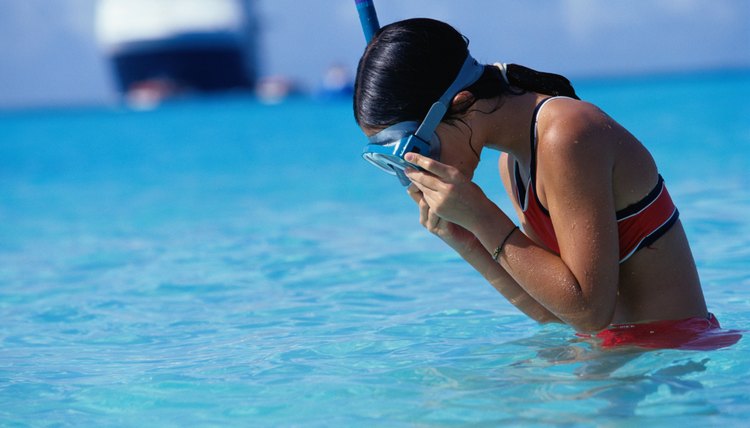
Snorkels are not banned by many bodies that govern triathlons, but they are not specifically allowed by these agencies either. Front-mounted snorkels are gaining popularity in swimming circles as training aids because they can help improve technique and lung capacity. Snorkels help correct the out-of-breath feeling you get as you hold your breath with your face in the water. This might make using a snorkel tempting to use in a race, but before you try it check the rules for the race you’ve entered.
USA Triathlon
USA Triathlon, the governing body for the sport in the United States, does not specifically ban snorkels. USAT does ban artificial propulsion devices. These include, but are not limited to, gloves, fins, paddles and floating devices. Wetsuits cannot be thicker than 5 mm in any portion of the suit. The penalty for violating this rule is disqualification. Triathlon Australia and Triathlon Canada do not specifically ban snorkels, either. Same goes for the International Triathlon Union, which is the worldwide governing body for the Olympic triathlon.
Ironman
Snorkels are specifically banned by the World Triathlon Corporation, which runs the Ironman series of races. WTC Ironman races generally follow rules set by USAT. However, WTC does request some dispensations from USAT, including the snorkel ban. WTC also bans fins, flotation devices and paddles. Wetsuits are prohibited in water that is 83.8 degrees Fahrenheit or warmer.
England
The British Triathlon Federation rules do not include snorkel use, so snorkels are therefore banned by omission. The only swimming aids allowed under British Triathlon rules are goggles, a cap, a nose clip and a costume such as a wetsuit. Gloves and socks cannot be part of the wetsuit “costume.”
Considerations
Even if a snorkel is technically legal under the rules of the agency that governs your triathlon, the race director has the final say as to what is allowed. That makes bringing a snorkel on race day a risky proposition. If you use a snorkel when you practice do not do so exclusively because it may hamper your snorkel-free performance on race day, recommends Sara McLarty, author of an article published in "Triathlete Europe."
References
Writer Bio
Linda Tarr Kent is a reporter and editor with more than 20 years experience at Gannett Company Inc., The McClatchy Company, Sound Publishing Inc., Mach Publishing, MomFit The Movement and other companies. Her area of expertise is health and fitness. She is a Bosu fitness and stand-up paddle surfing instructor. Kent holds a bachelor's degree in journalism from Washington State University.