Iron's main role in the body is to transport oxygen and carbon dioxide through the blood. Vitamin C is necessary for growth and repair in your body, and it increases iron absorption. Most people get enough vitamin C from their diet, so taking a vitamin C supplement may not be necessary. If you're at risk of iron deficiency, increasing your intake of iron should be a priority, but consuming vitamin C with iron supplements helps. Children and pregnant women have a high chance of being iron deficient, leading to iron-deficiency anemia. You also need more iron if you have heavy periods or donate blood frequently. If you have symptoms of anemia such as fatigue and cold extremities, please contact your primary care physician.
Vitamin C Improves Iron Absorption
Video of the Day
According to a report published in the "International Journal for Vitamin and Nutrition Research" in 2004, vitamin C enhances absorption of iron. Some food contains compounds that inhibit iron absorption, and including vitamin C during these meals helps counteract the inhibiting effect. You must consume vitamin C during at the same time for it to help absorb iron. It doesn't make a difference whether the vitamin C is a supplement (ascorbic acid) or in food. On the other hand, a component in black and pekoe tea binds with iron and reduces the amount your body can absorb, so it's best to avoid drinking tea with your iron supplement.
Video of the Day
Getting Enough Iron from Foods
The U.S. National Library of Medicine lists eggs, iron-fortified cereals, beef, liver, oysters, salmon and tuna as some of the best food sources of iron. According to the USDA, pork, clams and oysters contain the highest levels of iron, each containing 7.4 milligrams of iron or more in every 3-ounce serving. Iron in fruits, vegetables, grains and iron supplements is harder to absorb than iron in meat, so supplementing with vitamin C when eating those foods would improve absorption. Keep in mind that men need 8 milligrams of iron daily. Women age 50 and under require 18 milligrams a day and 27 milligrams during pregnancy, while women age 51-plus only require 8 milligrams daily.
Getting Your Vitamin C
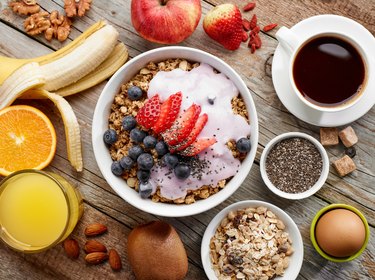
Vitamin C deficiency can result in iron deficiency, due to reduced iron absorption. The recommended dietary allowance of vitamin C is 90 milligrams daily for men and 75 milligrams for women. All fruits and vegetables are sources of vitamin C. Some of the most potent fruit sources include citrus, cantaloupe, kiwi, mangoes, papayas, pineapples, watermelons and berries. Vegetables with a high vitamin C content include green vegetables, potatoes, sweet potatoes, tomatoes, red bell peppers and winter squash.
Safety With Taking Supplements
Consult with your doctor before taking any supplements if you're on medication or have a medical condition. Diarrhea and constipation are common side effects of iron supplements. If you take higher doses, nausea and vomiting are potential side effects. Most iron supplements contain 325 milligrams of iron. If you take too much iron, serious side effects can occur. Don't drink milk, take calcium supplements or antacids at the same time you take an iron supplement. To avoid upset stomach and diarrhea, don't take more than 2,000 milligrams of vitamin C supplements in a day. Vitamin C supplements interact with many common medications, such as birth control pills, aspirin, acetaminophen and nonsteroidal anti-inflammatory drugs.
- International Journal for Vitamin and Nutrition Research: Enhancers of iron absorption: ascorbic acid and other organic acids
- Centers for Disease Control and Prevention: Iron and Iron Deficiency
- Medline Plus: Taking Iron Supplements
- University of Maryland Medical Center: Possible Interactions with: Vitamin C (Ascorbic Acid)
- National Institutes of Health: Iron