moodboard/moodboard/Getty Images
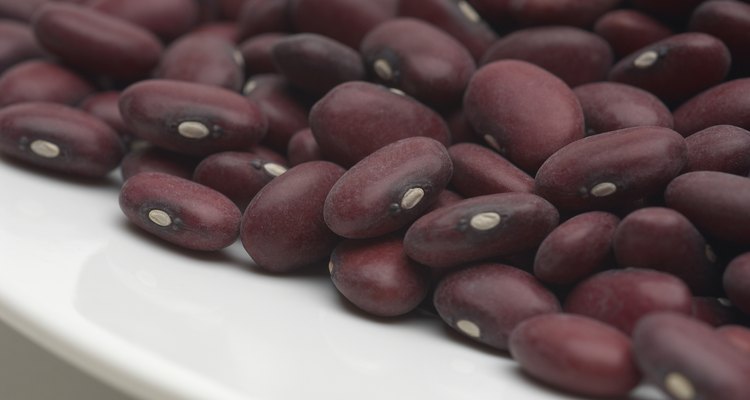
Kidney beans are named for their shape -- like that of the kidney organ -- and generally come in red and white colors. Kidney beans, particularly red kidney beans, are sturdy and hold their shape well. They also readily absorb surrounding flavors in a dish. These characteristics make them an ideal ingredient for hearty and spicy dishes, such as chili. Red kidney beans are rich in nutrients and high in dietary fiber, making them a healthful food choice.
Basic Nutrient Stats
One cup of cooked red kidney beans provides 225 calories, 1 gram of fat, 15 grams of protein, 40 grams of carbohydrates, 13 grams of dietary fiber and 4 milligrams of sodium. The majority of the calories in red kidney beans come from carbohydrates. The rough caloric breakdown is 70 percent from carbohydrates, 26 percent from protein and 4 percent from fat.
Carbohydrates and Protein
Red kidney beans are a source of fiber-rich complex carbohydrates, which should play a large role in your diet, according to the U.S. Department of Agriculture. Carbohydrates provide energy for your body's cells and are the sole energy source for the nervous system. Red kidney beans are not a complete protein, meaning they do not provide all of the essential amino acids. However, they're a good source of lean protein, providing 17 percent of your recommended daily allowance. If you pair kidney beans with a whole grain, such as brown rice, the meal provides all of the essential amino acids. Amino acids are necessary for forming the basic structure of your body's cells, tissues and muscles.
Micronutrients of Note
One cup of red kidney beans meets 58 percent of the recommended daily value for folate, 20 percent for magnesium, 29 percent for iron and 21 percent for copper. Folate is needed to form DNA, red blood cells and chemical messengers in the nervous system. Magnesium is important for healthy bones, energy metabolism and regulating blood pressure. Iron is essential for oxygen transport in the bloodstream and promotes a healthy immune system. Copper helps the body use iron efficiently and is needed to form collagen.
Fiber Benefits
Red kidney beans, like most legumes, are an excellent source of both types of dietary fiber important for optimal health: insoluble and soluble fiber. Just one cup provides roughly half your daily fiber. About one-fourth of the fiber is the soluble type, which lowers cholesterol and helps keep your blood sugar balanced. The rest of the fiber in kidney beans is insoluble. This is the type of fiber that keeps your digestive tract regular and helps prevent diverticular disease. Dietary fiber may also support weight management because it makes you feel full and maintains satiety longer.
Health-Promoting Food
The U.S. Department of Agriculture recommends eating legumes, such as red kidney beans, several times weekly for their high fiber content and because they are considered part of two food groups: the vegetable group and the protein group. Thus, they are rich in nutrients found in each of these food groups. As a protein-rich vegetarian-friendly food, kidney beans are versatile and extremely low in fat, providing virtually no saturated fat, unlike red meat. For quick meals, try canned kidney beans that have been rinsed. Use them in place of, or in addition to, ground meat in tacos and chili.
Related Articles
The Nutritional Value of Edamame Beans

Vitamins for Mental Alertness

The Nutrition of 15-Bean Soup
Nutrition Information for Adzuki Beans
What Is the Nutrition for Cranberry ...
Nutrition Information on Blueberries
Nutritional Value of String Beans
Nutritional Facts of Fava Beans

The Calories in Seafood Paella
Nutrition Data on Boiled Red Potatoes
Green Bean Nutrition
Cracked Wheat Nutrition
What Are the Benefits of Great Northern ...
Calories per Cup of Cooked Navy Beans
Cannellini Beans for Weight Loss
Egg Noodle Nutrition
Food Sources of Betaine

Alkaline Diet & Protein Foods

A List of Foods That Contain Choline
Potassium in Pinto Beans
References
- NutritionValue.org: Beans, Without Salt, Boiled, Cooked, Mature Seeds, Red, Kidney
- Oklahoma Cooperative Extension Service: Dietary Fiber
- U.S. Department of Agriculture: Dietary Guidelines for Americans: Food Groups to Encourage
- U.S. Department of Agriculture: Dietary Guidelines for Americans: Carbohydrates
- Harvard University: Fiber Content of Foods in Common Portions
Writer Bio
Michele Turcotte is a registered, licensed dietitian, and a certified personal trainer with the National Academy of Sports Medicine. She has more than 12 years of experience in clinical and corporate settings, and has extensive experience in one-on-one diet counseling and meal planning. She has written freelance food and nutrition articles for Trouve Publishing Inc. since 2004.
Photo Credits
moodboard/moodboard/Getty Images