
Little League Baseball Rules on Rainout
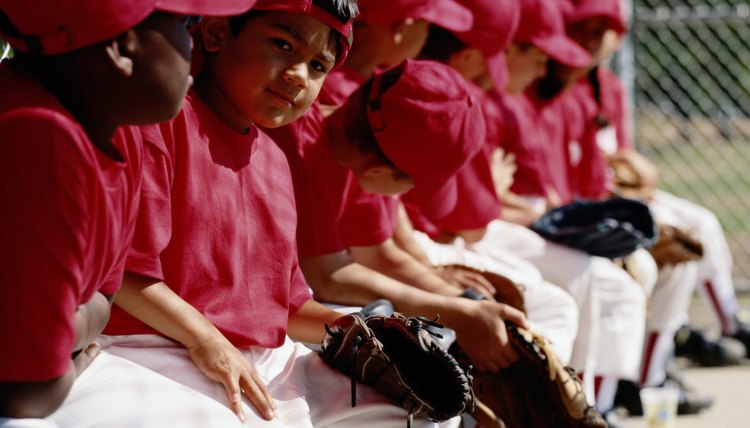
As the Little League players shelter in the dugout, the rain continues pouring down. For the safety of the players, Little League rules mandate that participants play only on safe terrain. Rain may dampen the field, causing players to slip or fall and possibly injure themselves. While the ultimate decision is generally up to the Little League umpire or the coaches, officials must follow specific rules when deciding whether to cancel a game due to rain.
Lightning and Little League Rules
The strictest rules in Little League regarding a rainout cover lightning storms. If anyone sees lightning or hears thunder, adults must immediately clear the field of all players until the lightning storm passes. Players should remain in the dugout or preferably inside the clubhouse if one is available. Coaches and umpires have the option of either continuing the game if lightning is not seen for a reasonable amount of time -- usually about 30 minutes -- or canceling the game.
Playing on a Wet Field
Little League players may continue a game during rain or wet conditions if the umpire, coaches or other Little League official has determined that the field is safe for play. Adults should inspect the paths between bases, the infield and the outfield for any unsafe locations. Deep puddles, slippery patches in the dirt or grass, and any other potentially unsafe surfaces should not be present on the field during play. If adults notice any unsafe area as a result of rain, even if the players do not frequently move across that specific area, the game should be paused until conditions improve or canceled if conditions are unlikely to improve.
Result of a Rainout
If a rainout call occurs after the players have played four innings, the game is considered official, which means that the team currently in the lead is the game's winner even if the game cannot be played to completion. A tie at the time a rainout is called during an official game suspends the game until play can be resumed on another day. Additionally, a rainout after one full inning but before four innings also suspends the game, with play to be resumed on another day, even if one team is in the lead. In both instances, play begins immediately where it stopped, with players in the same positions -- including on bases if necessary -- and the number of balls, strikes and outs consistent. If a rainout occurs before one full inning, then the game will start over on another day as if it were a brand-new game.
References
Writer Bio
Brian Richards is an attorney whose work has appeared in law and philosophy journals and online in legal blogs and article repositories. He has been a writer since 2008. He holds a Bachelor of Science in psychology from University of California, San Diego and a Juris Doctor from Lewis and Clark School of Law.