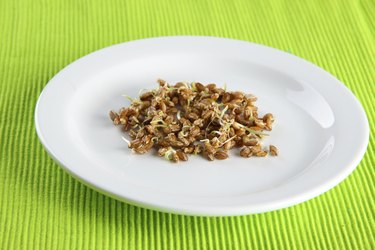
Gluten is a protein that naturally occurs in wheat, rye and barley products, and it can cause intolerance in some individuals, leading to various symptoms of illness. Individuals with gluten intolerance should avoid gluten and foods that contain it. To do this, it's critical to know which foods contain gluten, and wheat germ is a food that must be eliminated in a gluten-free diet.
Gluten
Video of the Day
Gluten is a general name for a family of proteins that include gliadin and glutenin, according to the Gluten Intolerance Group. In breads, gluten provides the structure and strength for holding the dough together when the yeast produces carbon dioxide bubbles and causes the dough to rise. According to the Food Reference website, wheat flour contains the right amount of gluten for most baking. It is combined with other flours to create a wide variety of baked products that might not sound like they have wheat, including potato bread, corn bread and rye bread. These items often contain wheat flour so that their texture is chewy and moist instead of dry and crumbly.
Video of the Day
Gluten Allergy
For individuals who can't tolerate gluten — a condition called celiac disease—the body adversely reacts when exposed to gluten, even a tiny amount. Damage occurs to the small intestine and, over time, it may not be able to absorb sufficient nutrients. The National Digestive Diseases Clearinghouse explains that some of the symptoms of celiac disease include upset stomach, constipation, diarrhea, certain skin problems, vomiting and abdominal or digestive discomfort. Children might also display symptoms of irritability and malabsorption.
Gluten-free Diet
Treatment for gluten intolerance involves removing all sources of gluten and avoiding foods that could have been exposed to gluten, which includes those made on the same equipment as wheat, rye and barley foods. According to the National Digestive Diseases Information Clearinghouse, the small intestine may be able to heal and function normally if gluten is removed from the diet. The Gluten Intolerance Group says that you can still eat a diet rich in fruits, vegetables, meat, dairy foods and gluten-free grains, like rice, potatoes, quinoa and corn. Processed foods can present a challenge, because some ingredients may contain gluten, such as modified food starch. Carefully read the labels to avoid exposure to gluten.
Wheat Germ and Gluten
Wheat germ is part of the wheat grain and contains gluten. The germ and bran of wheat are the outer portions of the grain that are often removed during refinement of wheat for flour. To make whole-wheat flour, the kernels are simply ground into flour. In refined, all-purpose flour, the crushed wheat kernel is sifted to remove the endosperm from the bran and germ. The endosperm is further ground into flour.
Gluten-free Substitutes for Wheat Germ
If you need to avoid gluten-containing ingredients but would like to benefit from the flavor and nutritional value of wheat germ, you have a few substitutes that may work for your recipe. Ground flaxseed meal is nutty and can provide satisfying texture and color to baked foods. In addition, ground almond meal serves as a good source for vitamin E and protein, two nutrients provided by wheat germ. Both ingredients are considered safe by the Gluten Intolerance Group. Check ingredient labels to ensure that foods aren't made in facilities where gluten-containing foods are also processed, since this could contaminate the food with gluten.