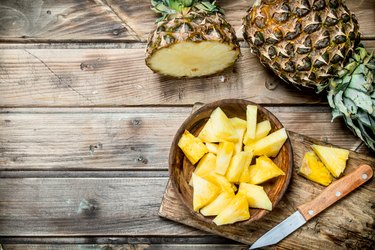
The pineapple is a member of the Bromeliaceae family, which is named after the enzyme bromelain. This enzyme helps breaks down protein, so it is an excellent meat marinade or tenderizer.
The pineapple fruit is formed from many flowers that can be identified by the spiny "eyes" on the outside rind. Each flower produces a fruit, and as the fruits grow, they fuse together around the stem.
Video of the Day
Video of the Day
Ripe pineapples should be yellow at the base, have no brown spots and should smell sweet at the stem end. They provide many healthy nutrients and are a good source of vitamin B6, vitamin C, folate, thiamin, manganese, potassium and some dietary fiber.
Pineapple Nutrition Facts
Whole Pineapple | 1/2 Cup Pineapple | |
|---|---|---|
Calories | 453 | 41 |
Total Fat | 1.1 g | 0.1 g |
Cholesterol | 0 mg | 0 mg |
Sodium | 9.1 mg | 0.8 mg |
Total Carbs | 118.7 g | 10.8 g |
Fiber | 12.7 g | 1.2 g |
Sugar | 89.1 g | 8.1 g |
Protein | 4.9 g | 0.4 g |
Vitamin C | 481% DV | 44% DV |
Vitamin B6 | 60% DV | 5% DV |
Manganese | 365% DV | 33% DV |
Copper | 111% DV | 10% DV |
Sugar in Pineapple
Although fruits contain natural sugars, they also come with blood-sugar-regulating fiber and important vitamins and minerals.
Still, be wary of pineapple's sugar content and stick to the recommended serving size — especially if you have diabetes or need to monitor your sugar intake more closely.
Sugar in Fresh Pineapple
The recommended serving size for fresh pineapple is a 1/2 cup, which contains 8.1 grams of sugar.
Fresh, plain pineapple contains less sugar than canned pineapple that's preserved in syrup as well as dried pineapple.
Sugar in Canned Pineapple
Canned pineapple typically has more sugar in it because it is stored in juices to preserve its freshness and flavor. These juices often have additives and flavoring to assist in this process.
The recommended serving size for canned pineapple is a 1/2 cup, which contains 75 calories and 18 grams of sugar, per the USDA.
Sugar in Dried Pineapple
Dried pineapple is a delicious snack often eaten in lieu of candy. It might also be included as an ingredient in trail mixes.
The recommended serving size for dried pineapple is 1/4 cup, which contains 91 calories and 20.7 grams of sugar, per the USDA.
Fiber in Pineapple
Dietary fiber is a type of carbohydrate that is not digested by your body. Unlike most carbohydrates, fiber cannot be degraded into simple sugars — instead, it goes through your body undigested, according to the Harvard T.H. Chan School of Public Health.
Overall, pineapple has fiber, but it's not such a high-fiber fruit as other fruits (such as berries and apples) contain more. Check out the pineapple fiber content breakdown below:
- 1/2 cup fresh: 1.2 g fiber
- 1/2 cup canned: 1 g fiber
- 1/4 cup dried: 1.3 g
Fiber helps balance blood sugar levels, helping keep hunger and blood sugar in check, per the Harvard T.H. Chan School of Public Health. And that's especially important because pineapple has sugar, and the fiber in the fruit helps avoid dramatic blood sugar spikes.
Glycemic Index of Pineapple
Pineapple has a glycemic index of about 66, per a classic 2008 Diabetes Care report. That deems pineapple medium-glycemic.
But, its glycemic load stands at 6, which is considered low. The glycemic load indicates the change in blood sugar levels when you eat a typical serving of food, per the Mayo Clinic. This makes it a better measure of how food affects your blood sugar.
In other words: Pineapple is nutritious and a smart addition to your diet. If you're watching your sugar intake, stick to the 1/2 cup pineapple serving size.