There was a time when standard nutritional wisdom held that eating fat made you fat. But these days, nutrition research has shown that low-fat diets aren't necessarily a recipe for weight-loss success. Still, some people may need to reduce dietary fats for medical reasons.
Video of the Day
Video of the Day
Defining a Low-Fat Diet
While the ins and outs of a low-fat diet plan can vary, its definition is fairly consistent. "In general, a low-fat diet is a diet where at least 30 percent or less of total calories come from fat," says Erin Palinski-Wade, RD, CDE, a dietitian and certified diabetes educator in private practice in New Jersey. On a 2,000-calorie-a-day diet, this means taking in only about 600 calories, or 67 grams of fat, but some popular diets call for as little as 20 to 50 grams of fat a day.
For most people, a low-fat diet isn't necessary, but certain medical conditions do require limiting the fat you eat. For instance, people with pancreatitis, gallbladder disease and delayed stomach emptying may be advised to adopt a low-fat eating plan. Or, your doctor may recommend reducing dietary fat if you're suffering from an acute episode of diarrhea.
Low-Fat Diets for Weight Loss
Despite the low-fat craze of the 1980s and '90s, many experts have noted that it was during these decades that the American obesity epidemic began. Plus, research on the effectiveness of eating less fat to shed pounds isn't very promising. According to the Harvard T.H. Chan School of Public Health, clinical trials haven't found evidence that a low-fat diet makes it any easier to drop the pounds than a moderate-fat or even a high-fat diet.
If anything, choosing healthy fats is the real predictor of weight loss. "The type of fat we eat is much more important than the quantity of total calories that come from fat each day," confirms Palinski-Wade. "This is most likely due to fats allowing you to feel satisfied longer, which makes it easier to stay within your recommended calorie needs each day." According to the Mayo Clinic, healthier fats include monounsaturated, polyunsaturated and omega-3 fatty acids.
You may wonder, too, how a low-fat diet compares to other diets that tweak macronutrients, such as low-carb diets. As it turns out, low-carb and low-fat diets seem to fare about equally for weight loss. A February 2018 study in the journal JAMA found that people who followed a low-fat diet over 12 months were no more likely to lose weight than those on a low-carb plan.
Foods to Eat
You may not get to dive into a bowl of chocolate ice cream every day on a low-fat diet, but plenty of tasty foods are still on the menu.
When trying to limit fat, stick to lean meats for protein, like turkey, skinless chicken breast and lower-fat fish like tilapia, cod or haddock, according to the Harvard T.H. Chan School. Beans and legumes are another great protein choice. In moderation, eggs can also be a part of a low-fat diet, though you may want to opt for just the white. (The yolk contains the vast majority of an egg's fat.)
Whole grains like oats, brown rice, wheat pasta and whole-wheat bread are additional building blocks of a healthy low-fat diet. Most fruits and vegetables contain little to no fat, so you can —and should — eat plenty of them, too. (Just be aware that some, like avocados, coconut and olives, do have fat.)
You can also opt for dairy products labeled as 1 percent or non-fat. As for cooking oils, choose unsaturated plant-based options like avocado or olive oil, and be sure to watch your portions.
Foods to Avoid
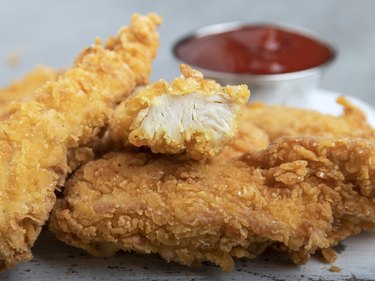
Not surprisingly, a number of indulgent foods don't make the cut on a low-fat diet. If you're following this type of eating plan, you'll want to steer clear of high-fat items like butter, coconut oil, red meat, full-fat dairy and fried foods. And remember that not all fats are created equal.
Given the choice, opt for unsaturated and omega-3 fats and leave saturated and trans fats behind, states the Harvard T.H. Chan School.
- Erin Palinski-Wade, RD, CDE, registered dietitian, certified diabetes educator, private practice, New Jersey
- Harvard T.H. Chan School of Public Health: “Obesity Prevention Source: Food and Diet”
- Mayo Clinic: Dietary Fats: “Know Which Types to Choose”
- JAMA: “Effect of Low-Fat vs Low-Carbohydrate Diet on 12-Month Weight Loss in Overweight Adults and the Association With Genotype Pattern or Insulin Secretion: The DIETFITS Randomized Clinical Trial”