When Does Hair Growth Start in Babies?
Some babies are born with a full head of hair, while others are born completely bald.
Both are completely normal, as is a baby born with a full head of hair who goes bald within the first few months. None of this is a cause for concern, as a baby grows hair of several different types in several different stages.
Baby's Hair in the Womb
Babies start growing hair before they are even born, Kids Health says. By the 14th week of pregnancy, babies in the womb develop a layer of lanugo, which is a soft, fine hair that starts on his face and eventually covers his entire body.
Hair starts to grow on a baby’s head as early as the 30th week of pregnancy and, by the 32nd week, the baby develops eyelashes and eyebrows. Lanugo starts to fall off prior to delivery, with most of it shed by birth.
Baby's Newborn Hair

Hair Growth in An African-American Babies
Learn More
Most babies are born with little or no hair on their heads, although some do arrive with a full head of tresses, notes HealthyChildren.
Any hair that does come with the baby at birth or starts to grow soon after, will end up falling out anyway. This is not a cause for concern but rather a normal process. Baby hair falls out to make way for the mature hair. Both baby hair and mature hair grow in at different rates, but you can usually expect mature hair to start growing in at around 6 months of age.
Baby's Hair Loss
Your baby can inadvertently speed up her hair loss with her habits, which is fine, although some hair loss can be cause for concern, Healthy Children warns. Baby habits like rubbing his scalp against the bedding or banging his head can make his hair fall out, but he will usually outgrow those habits as well as any lost hair. Hair loss can be a concern if your baby is born with a condition known as alopecia, according to Baby Center, which leaves small, round bald patches all over the scalp.
The Color of Baby's Hair
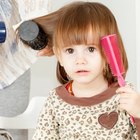
How to Blow Dry a Baby's Hair
Learn More
Dark hair is usually the norm for newborns, Kids Health says, but it does not indicate what color the mature hair will be.
In fact, the mature hair color that first develops does not have any bearing on what color your kid’s hair will be later in life. Hair shades and colors often change numerous times throughout a person’s life, notes Healthy Children.
Washing Baby's Hair
Wash your baby’s hair only when it needs it, which is not necessarily every time you give her a bath, states What to Expect. When his hair does need a bit of cleaning, use a single drop of a mild shampoo made for babies and gently rub it into his scalp. Use a damp washcloth to rinse her hair in the early days.
Use a firm hold under her head and neck when she’s big enough for a faucet rinse. Use your arm to support your baby’s back while his head is beneath the faucet.
Related Articles

Hair Growth in An African-American Babies
Learn More

How to Blow Dry a Baby's Hair
Learn More
Is Hair Glaze Safe During Pregnancy?
Learn More
What Causes a Toddler's Hair Not to Grow?
Learn More
How to Get Lint Out of Black Toddler Hair
Learn More

How to Treat Dry Hair on a 6-Year-Old Girl
Learn More

The Dangers of Hair Ties to Babies
Learn More
How to Use Extra Virgin Olive Oil on a Baby's Skin
Learn More
How to Prevent a Bald Spot from Developing on the Back of a Baby's Head
Learn More
Baby Scalp Acne
Learn More
