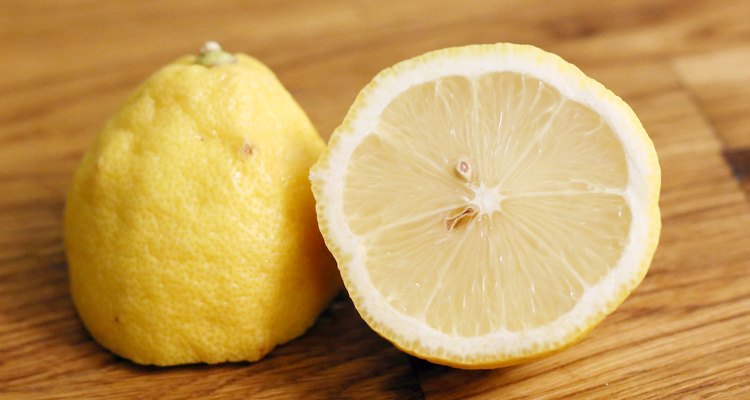
Eating plenty of fruits and vegetables is a smart way to get key nutrients such as fiber, potassium, iron and vitamins A and C. Before loading your plate with these highly nutritious foods, however, you should always wash them first. Washing your produce removes germs, bacteria and parasites that could make you quite sick. While most supermarkets sell commercial produce washes, you can make your own using lemon juice and several other common ingredients. In the end, this will retain the nutritional value of your fruits and vegetables without compromising your health.
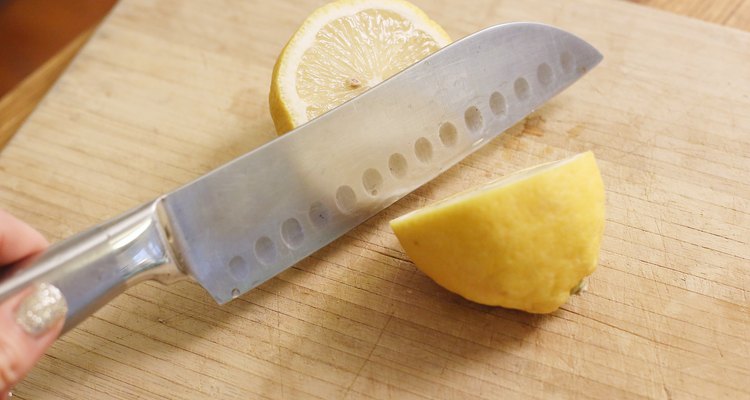
Slice a fresh lemon in half. Squeeze the lemon to release the juice. You need 1 tablespoon of fresh lemon juice. Place the tablespoon of lemon juice in a small bowl.
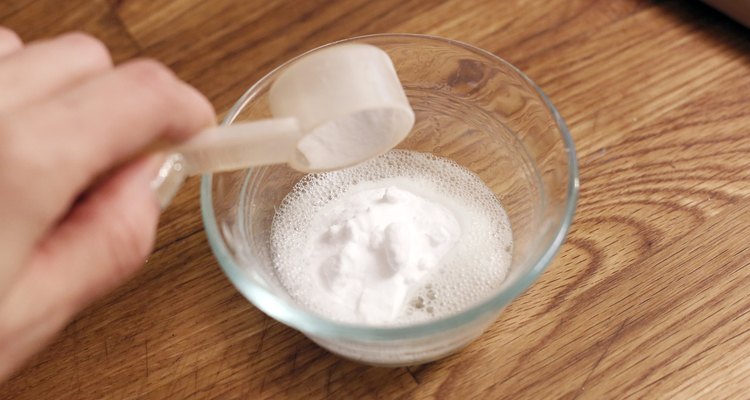
Add 2 tablespoons of baking soda to the lemon juice.
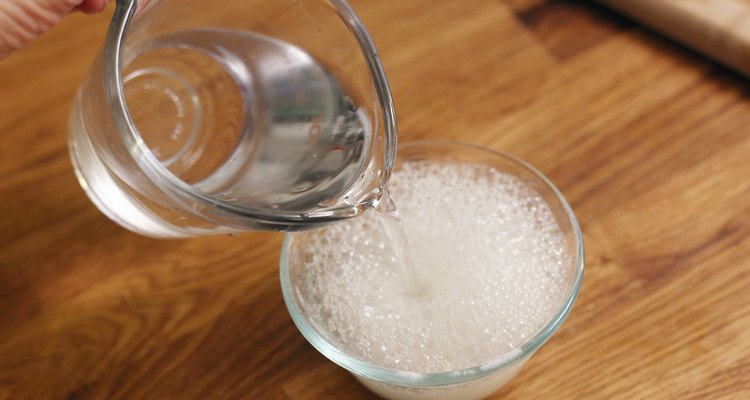
Pour 1 cup of plain water into the lemon juice and baking soda mixture.
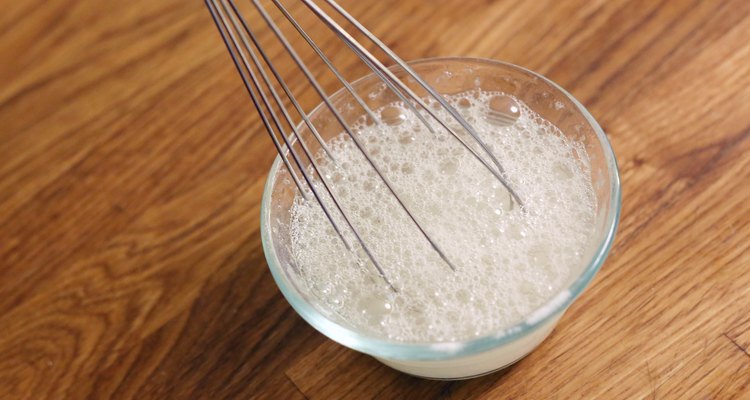
Whisk the lemon juice, baking soda and water together until the baking soda is completely incorporated and dissolved into the liquid.
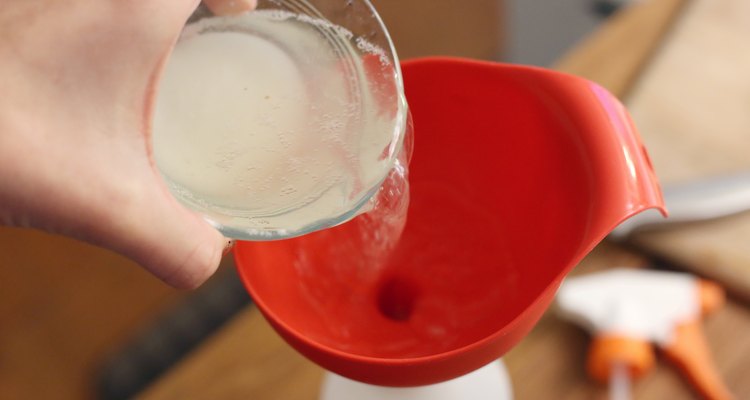
Pour the mixture into a clean spray bottle.
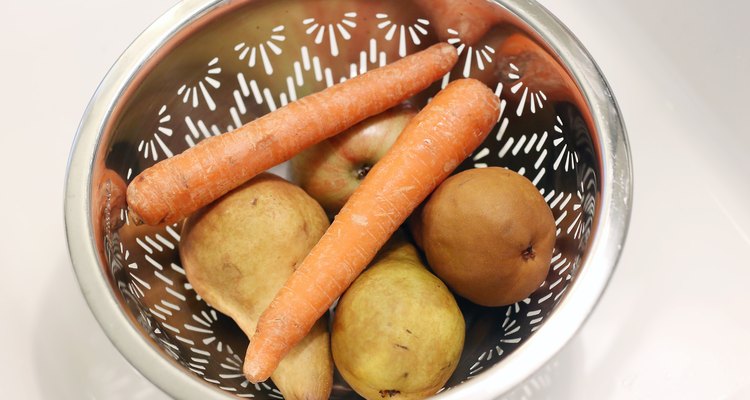
Arrange your fresh fruits and vegetables in a colander and set it in your kitchen sink.
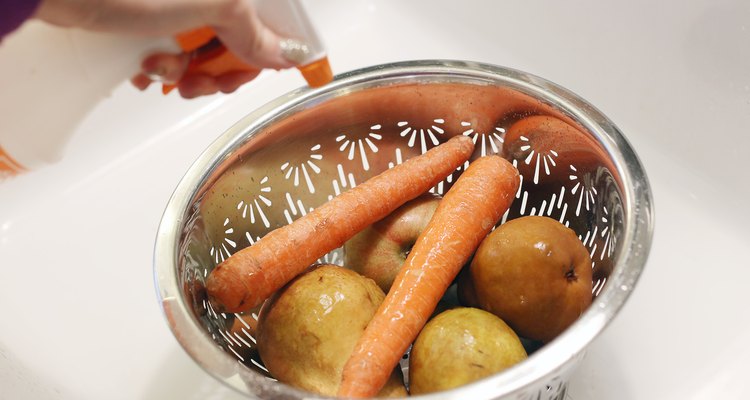
Spray the produce with your homemade lemon juice produce wash. Use enough to completely coat the outside of each piece of produce.
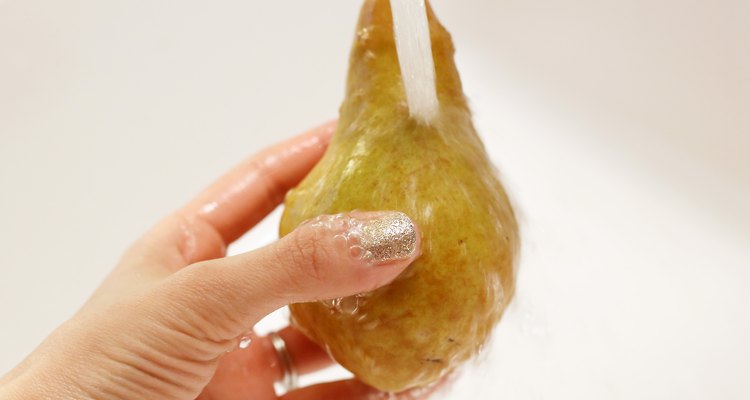
Let the fruits and vegetables sit for about five minutes and then rinse the produce well.
Related Articles

How to Make Toasted Bread Sticks With ...

How to Keep Hair Healthy While ...

How to Get Wrinkles Out of Nylon ...

How to Straighten a Cowlick

How to Clean Out Acrylic Nail Brushes

How Do I Hang a Wreath on a Tombstone?

How to Get the Stains Out of White ...

How to Substitute Mayonnaise for Sour ...

Instructions for Cleaning a Gaiam Yoga ...
How to Wash Fresh Fruit With Peroxide
Fresh Homemade Orange Juice Will Stay ...

How to Hand Wash a Beanie

How to Sterilize Eyeglasses

How to Clean a Philips Norelco Shaver

How to Polish Plastic Glasses

How to Shrink a Sweatshirt

How to Wash a Pashmina Scarf

How to Unclog a Perfume Sprayer

How to Clean a Makeup Puff
How to Exfoliate With a Loofah
References
Tips
- Lemon juice is an antimicrobial, which means that it can destroy germs and bacteria. This is why lemon juice is effective at washing fruits and vegetables.
- Wash the lemon before you cut it in half to make a fruit and vegetable wash. Even though you won't eat the peel, it can be contaminated. When you cut the lemon in half, those germs and bacteria can be transferred to the fruit and juice of the lemon.
Warnings
- Don't forget to wash organic produce, too. Even though organic produce isn't exposed to pesticides, it can still be contaminated with germs, bacteria and parasites that you can't see, according to the Academy of Nutrition and Dietetics. That goes for produce grown in your own backyard, too. While you know that you haven't applied pesticides, you can't know whether your produce is contaminated with potentially harmful microbes that could make you sick.
Writer Bio
Sara Ipatenco has taught writing, health and nutrition. She started writing in 2007 and has been published in Teaching Tolerance magazine. Ipatenco holds a bachelor's degree and a master's degree in education, both from the University of Denver.
Photo Credits
Pamela Follett/Demand Media