A Runny Nose in a Toddler
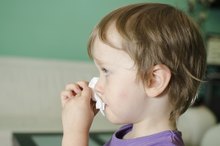
As any tissue-toting parent can attest, a runny nose is unfortunately very common in toddlers. This symptom can be due to a variety of causes, including a head cold, the flu, allergies, a sinus infection or another infectious disease. A foreign object stuck in the nose, like a bean or a bead, is also commonly to blame in this curious age group. The duration of the runny nose and accompanying symptoms can help determine the cause.
If you are experiencing serious medical symptoms, seek emergency treatment immediately.
Cold and Flu
Colds and the flu, or influenza, are extremely common causes of runny nose in toddlers. Young children catch an average of 5 to 7 colds each year, reports the medical text "Mandell, Douglas, and Bennett's Principles and Practice of Infectious Diseases." A runny nose from a cold is worst in the first 4 to 5 days and then improves. **In the case of a toddler with the flu, a runny nose is often accompanied by a high fever, headache, lack of energy, nausea, vomiting or diarrhea.
** The flu typically comes on more suddenly than a cold, and the child is likely to seem sicker than with a simple cold. Young children may also complain of sore legs or may resist walking when they have the flu.
- Colds and the flu, or influenza, are extremely common causes of runny nose in toddlers.
- A runny nose from a cold is worst in the first 4 to 5 days and then improves.
Allergies
Kids Complaining of Clogged Ears and Nose
Learn More
Nasal allergies are another common cause of runny nose in toddlers. A large study of 1,850 toddlers found 9 percent had symptoms of nasal allergies by 18 months, as reported in February 2011 in the journal "Allergy. " Along with a runny nose, allergies frequently cause sneezing and nasal congestion. Red, itchy or watery eyes and the development of dark circles under the eyes may also occur.
**In children, allergies are frequently seen with eczema or asthma.
** In toddlers, nasal allergies are most commonly due to irritants around the home, such as dust mites, mold or pet dander.
Seasonal allergies due to pollen in the air can also occur, especially in older toddlers. Unlike a cold or the flu, allergies do not cause fever, nausea, vomiting or diarrhea. Allergy symptoms typically come and go abruptly and generally improve as exposure to the allergy triggers decreases.
- Nasal allergies are another common cause of runny nose in toddlers.
- In children, allergies are frequently seen with eczema or asthma.
Foreign Objects
Toddlers are prone to sticking small objects in their nose, and unfortunately the objects can become stuck. This can cause pus- or mucus-filled discharge from the nose, typically only from the affected nostril.
In addition, a nose bleed, nasal pain and difficulty smelling or hearing may occur -- though in many cases the runny nose is the only symptom.
The toddler may also begin to pick at the involved side of the nose. While you may be able to see the object by looking into the child's nose with a flashlight, it's best to have it taken out by your doctor.
- Toddlers are prone to sticking small objects in their nose, and unfortunately the objects can become stuck.
- This can cause pus- or mucus-filled discharge from the nose, typically only from the affected nostril.
Tonsillitis and Adenoiditis
A Cranky Toddler With a Fever and a Runny Nose
Learn More
The adenoids and tonsils are immune system tissues at the back of the nose and throat. They help protect from infections but sometimes become enlarged and inflamed in children. Inflammation of the adenoids or tonsils can lead to a persistent runny nose with thick, puslike discharge. Some parents mistake these conditions for a cold that just won't go away.
Other symptoms that might point toward tonsillitis or adenoiditis include mouth breathing, a nasal tone to the child's voice and snoring. Some children with enlarged tonsils and/or adenoids also develop frequent ear infections.
- The adenoids and tonsils are immune system tissues at the back of the nose and throat.
- Inflammation of the adenoids or tonsils can lead to a persistent runny nose with thick, puslike discharge.
Other Infectious Diseases
While most colds go away in 7 to 10 days, they sometimes lead to a sinus infection.
The first tipoff is usually that a typical cold isn't improving within 10 days. Other symptoms may include a dry cough, facial tenderness, bad breath or the reappearance of a fever after initially going away in the first few days of the illness.
The early stage of whooping cough can also closely resemble a cold with a runny nose, sneezing and a mild cough. As the illness progresses, a severe, hacking cough develops, and that can help differentiate this infection from other possible other causes of a runny nose.
Strep throat in young children can also cause a runny nose in addition to painful swallowing, vomiting, fever and possible abdominal pain. A strep infection can sometimes lead to scarlet fever, which gets its name from the bright, red rash that spreads over the body. The rash usually appears 1 to 2 days after a fever and sore throat, though it sometimes occurs before theses symptoms.
- While most colds go away in 7 to 10 days, they sometimes lead to a sinus infection.
- The rash usually appears 1 to 2 days after a fever and sore throat, though it sometimes occurs before theses symptoms.
Warnings and Precautions
While a runny nose is common in toddlers and is usually due to a simple cold, this symptom is sometimes a sign of a more serious condition.
See your doctor if your toddler has a runny nose that hasn't improved within 10 days, or is accompanied by a rash, ear pain, or a high or uncontrollable fever. Seek emergency medical attention if your child experiences difficult or noisy breathing, a severe cough or unusual drowsiness.
While there are many over-the-counter cough and cold medications, the American Academy of Pediatrics recommends against using these products in kids younger than age 6 your, unless your doctor instructs you to give one of these medications to your child.
- While a runny nose is common in toddlers and is usually due to a simple cold, this symptom is sometimes a sign of a more serious condition.
- See your doctor if your toddler has a runny nose that hasn't improved within 10 days, or is accompanied by a rash, ear pain, or a high or uncontrollable fever.
Related Articles

Kids Complaining of Clogged Ears and Nose
Learn More

A Cranky Toddler With a Fever and a Runny Nose
Learn More

How to Take Care of Your Nose
Learn More

Bloody Nasal Discharge & Sinusitis Symptoms
Learn More
Toddler Coughing After Exercise
Learn More

Infant Cold & Cough Relief
Learn More

How to Diagnose Fifth Disease Vs. Hand, Foot and Mouth Disease
Learn More

White Line on Nose in Children
Learn More

Use of Zicam in Children
Learn More

Allergies in Children With Fever
Learn More
References
- Current Diagnosis and Treatment Pediatric Emergency Medicine, 7th Edition; C. Keith Stone and Roger L. Humphries
- Rudolph's Pediatrics, 22nd Edition; Colin D. Rudolph et al.
- Strange and Schafermeyer's Pediatric Emergency Medicine, 4th Edition; Robert W. Schafermeyer et al.
- Pediatric Practice Infectious Disease; Samir S. Shah
- Principles and Practice of Infectious Diseases, 8th Edition; John E. Bennett et al.
- Allergy: Does Allergic Rhinitis Exist in Infancy? Findings From the PARIS Birth Cohort
- HealthyChildren.org: Coughs and Colds: Medicines or Home Remedies?
- Pediatrics: Clinical Practice Guideline for the Diagnosis and Management of Acute Bacterial Sinusitis in Children Aged 1 to 18 Years
- Patterson's Allergic Diseases, 7th Edition; Leslie C. Grammer and Paul A. Greenberger
- Nijm, L.M., Garcia-Ferrer, F.J., Schwab, I.R., Augsburger, J.J. & Corrêa, Z.M. (2011). Vaughan & Asbury's General Ophthalmology. 18th ed. Chapter 5. Conjunctiva & Tears.
- Centers for Disease Control and Prevention. Common colds: Protect yourself and others. Updated February 11, 2019.
- Fendrick AM, Monto AS, Nightengale B, Sarnes M. The economic burden of non-influenza-related viral respiratory tract infection in the United States. Arch Intern Med. 2003;163(4):487-94. doi:10.1001/archinte.163.4.487
- Penn State Hershey Milton S. Hershey Medical Center. Allergic rhinitis. Updated December 14, 2019.
- Jovancevic L, Georgalas C, Savovic S, Janjevic D. Gustatory rhinitis. Rhinology. 2010;48(1):7-10. doi:10.4193/Rhin07.153
- Dzieciolowska-baran E, Teul-swiniarska I, Gawlikowska-sroka A, Poziomkowska-gesicka I, Zietek Z. Rhinitis as a cause of respiratory disorders during pregnancy. Adv Exp Med Biol. 2013;755:213-20. doi:10.1007/978-94-007-4546-9_27
- Cleveland Clinic. Nonallergic rhinitis. Updated July 26, 2019.
- Joe, SA & Liu, JZ. (2015). Cummings Otolaryngology: Nonallergic Rhinitis. 6th ed. 43, 691-701.e2
- Nijm, L.M., Garcia-Ferrer, F.J., Schwab, I.R., Augsburger, J.J. & Corrêa, Z.M. (2011). Vaughan & Asbury's General Ophthalmology. 18th ed. Chapter 5. Conjunctiva & Tears.
- Ramakrishnan, VR & Meyers, AD. (2015). Pharmacotherapy for Nonallergic Rhinitis.
- Turner, RB. (2016). Goldman-Cecil Medicine: The Common Cold. 25th ed.
- Waibel, KH & Chang, C. (2008). Prevalence and food avoidance behaviors for gustatory rhinitis. Annals of Allergy, Asthma & Immunology. Volume 100, Issue 3.
Writer Bio
Tim Petrie is a Physical Therapist and an Orthopedic Certified Specialist working in Milwaukee, Wisc. When he isn't working, he loves distance running, Packers football, and traveling with his wife and his energetic kids.