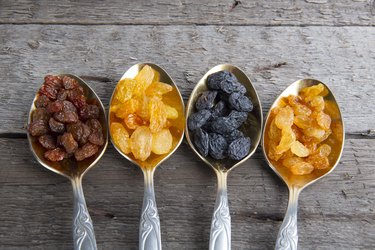
The USDA recommends adults get 1 to 2 cups of fruit per day and raisins are an inexpensive, easy and portable food that can help you meet that requirement.
Raisins are dried grapes and both provide you with the same nutrients, but the nutrients in raisins are more concentrated. This is a good thing when it comes to vitamins, minerals and antioxidants, but a not-so-good thing when it comes to sugar.
Video of the Day
Video of the Day
Find out all about raisin nutritional information, including raisins' calories, vitamins and minerals, below.
Raisins Nutrition Facts
A 1/2 cup of raisins is considered a single serving. A 1/2 cup of raisins contains:
- Calories: 217
- Total fat: 0.2 g
- Saturated fat: 0.1 g
- Cholesterol: 0 mg
- Sodium: 18.8 mg
- Total carbs: 57.5 g
- Fiber: 3.3 g
- Total sugars: 47.3 g
- Protein: 2.4 g
Vitamins, Minerals and Other Micronutrients
- Copper: 22% Daily Value (DV)
- Potassium: 11% DV
- Manganese: 9% DV
- Iron: 7% DV
- Vitamin B2: 7% DV
- Vitamin B6: 7% DV
- Vitamin B1: 6% DV
- Magnesium: 6% DV
- Phosphorous: 6% DV
Raisins Calories and Macronutrients
A 1/2 cup of raisins contains 217 calories, 57.5 grams of carbohydrates, 2.4 grams of protein and essentially no fat. The dried fruit also provides 3.3 grams of fiber and 57.5 grams of sugar.
Fiber is beneficial because it's linked to helping prevent chronic disease such as heart disease and obesity and also helps with weight management and staying regular, per the Academy of Nutrition and Dietetics. The sugar in raisins provides you with a quick burst of energy, but stick to one serving size or less so you don't consume too much sugar.
Minerals in Raisins
A 1/2 cup of raisins is an excellent source of copper, an essential mineral involved in energy production, iron metabolism and making neurotransmitters, according to the National Institutes of Health (NIH).
A 1/2 cup of raisins is a good source of potassium, a mineral that is needed for normal cell function as well as maintaining the health of your kidneys, heart, nerves and muscles, according to the NIH.
Vitamins in Raisins
Raisins contain small amounts of several B vitamins. B vitamins convert food into fuel to give you energy and help create red blood cells, according to the U.S. National Library of Medicine.
A 1/2 cup of raisins contains 7 percent of your daily recommended amount of vitamin B2, 7 percent of your daily recommended amount of vitamin B6 and 6 percent of your daily recommended amount of vitamin B1.
How to Eat Raisins
Because raisins are high in sugar, albeit natural, you'll want to stick to the serving size. Here's how to enjoy a small portion of raisins:
- Use them as a topping for cereal, yogurt or oatmeal
- Munch on them before a workout for a boost of energy
- Toss them over salads, like in this Lentil Raisin Spinach Salad
- Combine them with celery and peanut butter, like in this Nut-Butter Boat, for a healthy snack
- Toss them into popcorn for some sweeteness