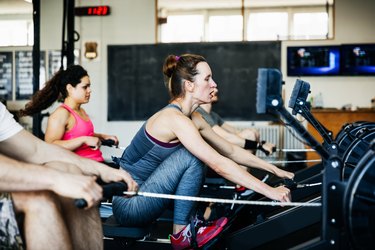
It's probably safe to surmise that sitting in front of a screen all day at work and in front of the TV all night isn't doing much for your physical health or self-image. A sedentary lifestyle does little to raise your fitness level, your energy, your self-confidence or your general sense of well-being.
But looking good, feeling strong and having a positive attitude — the attributes of self-esteem — are all benefits of a regular exercise regime.
Video of the Day
Video of the Day
Tip
Your self-esteem can be improved dramatically with exercise. You'll feel and look stronger and more self-assured.
Feelin' Good and Showing It
Regular exercise often leads to an improved body image, makes your heart and bones stronger, lowers your risk for chronic disease right along with your blood pressure, keeps your weight under control and reduces feelings of anxiety and depression. While you're boosting your energy levels, oxygen capacity, muscle tone and general fitness, a side benefit is an increase in self-esteem. Just the success of creating an exercise plan and sticking to it allows you to enjoy a sense of achievement.
Getting a move on is good for your body and mind. The Cleveland Clinic suggests exercising for 20 to 30 minutes every day, picking an activity you enjoy so you'll stick with it, varying what you do to ward off boredom, and mixing classes, sports and exercise with friends, and individual workouts to keep things interesting, keep pounds off and keep your confidence high.
Better Body Image
Society is obsessed with body image and, for many people, how they look has a direct bearing on self-esteem. ACE Fitness notes that exercising as little as two days a week can make you happier and less prone to stress. Regular exercise, with an emphasis on aerobic exercise, can have a positive effect on self-esteem as fitness and appearance improve.
There is no proven formula for how much or how often to exercise to affect self-esteem but it seems logical to follow the Physical Activity Guidelines for Americans, which recommends an allover approach to fitness: cardio, strength training and flexibility-building disciplines such as yoga. Exercise 150 to 300 minutes a week at a moderately-intense level for an all-over feeling of well-being.
Read more: How to Conquer Your Biggest Body Insecurities
More Isn't Always Better
Thirty minutes of moderate aerobic exercise is enough to release the beta-endorphins that increase feelings of well-being, and to lower levels of cortisol, the hormone associated with stress and anxiety according to Mayo Clinic. High-intensity exercise does not always decrease stress and anxiety and, in the context of challenge and competition, can increase anxiety in some cases.
The psychological benefits of physical activity last longer after moderate exercise than after high-intensity exercise. However, research into the mood effects of high-intensity exercise is less prevalent than other research. For an experienced exerciser in a noncompetitive situation, one can leave open the possibility that mastering intervals of high-intensity exercise can add to the sense of accomplishment.
Read more: 11 Yoga Poses to Eliminate Stress From Your Day
Om and Zen
Yoga, meditation, tai chi and qigong decrease tension, anxiety, depression and anger and improve psychological functioning. A yoga practice lowers levels of the stress hormones cortisol and adrenaline, says Psychology Today, and helps to regulate blood sugar, blood pressure, insulin resistance and the "food-seeking behavior" inspired by stress that leads to weight gain and added abdominal fat.
Meditation stimulates the prefrontal cortex that controls happiness levels and healthy immune function. Sit on a cushion and focus on your breathing, stretch up into a backbend, even chill in Corpse or Child pose, and you calm down, release tension, and improve coordination, quick reactions, IQ and memory. You'll also sleep better and regulate your emotions, leading to more effective social interactions and a positive self-image.