If you have thyroid problems, eating certain foods may make your symptoms worse. Keeping a list of foods to avoid with an overactive thyroid may help ease those symptoms as you seek treatment from your doctor.
Tip
If you have hyperthyroidism, you should avoid kelp. Kelp, considered to be a healthy food for many people, is high in iodine, and this can make your hyperthyroidism worse.
Video of the Day
Foods to Avoid With an Overactive Thyroid
If you are diagnosed with hyperthyroidism, or an overactive thyroid, you may be sensitive to harmful side effects from iodine, according to the National Institute of Diabetes and Digestive and Kidney Diseases (NIDDK). So foods with large amounts of iodine, including kelp, dulse or other kinds of seaweed, may make it worse.
Video of the Day
High iodine foods to avoid with an overactive thyroid are as follows, according to NIH:
- Dairy — milk and milk-based products
- Egg yolks and whole eggs
- Fish — saltwater
- Shellfish
- Seaweed
- Chocolate
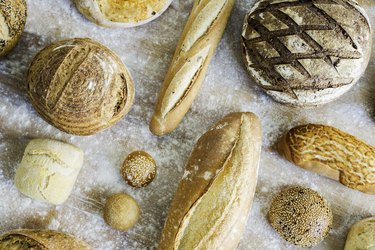
The University of Wisconsin's Low Iodine Diet recommends not eating processed foods. These often contain a lot of iodized salt, or salt with added iodine. Chips, crackers, pretzels, white bread, some processed grains, Worcestershire sauce, bottled salad dressings, frozen dinners and canned vegetables are usually highly processed foods. Fish from the ocean, shellfish and egg yolks contain iodine naturally and are not recommended if you have an overactive thyroid.
Your thyroid is a hormone gland in your neck. It helps the body to metabolize, grow and develop, according to Informed Health. It regulates many bodily functions by releasing a steady stream of thyroid hormones into the bloodstream. When you need more energy, like if you are cold, the thyroid gland makes more hormones.
Why Low Iodine?
The thyroid gland uses iodine to make thyroid hormone. Iodine is vital to life. However, both too much and not enough iodine are not good for the body. Vitamin A and zinc help to keep the thyroid gland functioning properly, according to a May 2014 study in the Journal of Medical Nutrition & Nutraceuticals.
Hyperthyroidism has several causes, according to the NIDDK. One is Graves' disease, an autoimmune disease that causes your immune system to attack the thyroid. Other causes are thyroid nodules and thyroiditis, or inflammation of the thyroid. Hyperthyroidism is occasionally caused by a non-cancerous tumor of the pituitary gland.
Eating too much iodine may cause hyperthyroidism. Another cause is a higher-than-needed dose of thyroid hormone medicine for hypothyroidism, or an underactive thyroid. This may cause your thyroid to make too much thyroid hormone. In that case, your doctor may need to adjust your thyroid medication. Certain medicines may also cause your thyroid to make too much thyroid hormone.
Radioactive iodine is a common treatment for an overactive thyroid, the NIDDK says. This treatment slowly destroys the cells of the thyroid gland that produce the thyroid hormone. It doesn't affect other tissues in the body.
You will almost certainly develop hypothyroidism because your thyroid-producing cells have been destroyed. But hypothyroidism is easier to treat. This treatment is not recommended for women who are pregnant or breastfeeding.
Eating a Low Iodine Diet
You will likely have to read a lot of labels when you're limiting your iodine. On a low iodine diet, you should limit your iodine consumption to less than 50 micrograms a day, according to the Memorial Sloan Kettering Cancer Center.
You won't be reading labels for the amount of iodine contained in a food, however. Most food labels don't list the amount of iodine. So you'll need to know which foods and ingredients to be wary of.
The best foods to eat are fresh, homemade foods, vegetables and fruits for hyperthyroidism, according to the University of Wisconsin. Fresh herbs, dried herbs and seasonings are also good, as long as they are not made with salt. While saltwater fish are high in iodine, freshwater fish are acceptable. Unsalted nuts and unsalted nut butters are good.
Grains, cereal and pasta are fine as long as they're not processed with iodized salt. Sugar, jelly, jam and natural honey are good. Dark chocolate processed without salt, dairy or soy is good.
Some Other Factors
Soy doesn't contain iodine, but the American Thyroid Association recommends not eating soy because animal studies have shown eating large amounts of soy interferes with radioactive iodine uptake.
Eating food high in selenium is sometimes recommended for people with Graves' disease, according to an article in the April 2018 journal Diagnostics. Researchers in that article and in an April 2017 article in the European Thyroid Journal caution that more studies are needed before selenium supplements are recommended.
When you go on a low-iodine diet, it's always best to do this under the supervision of a medical professional.
- University of Wisconsin Health: "Low Iodine Diet"
- National Institute of Diabetes and Digestive and Kidney Diseases: "Hyperthyroidism: Overactive Thyroid"
- American Thyroid Association: "Low Iodine Diet"
- Journal of Medical Nutrition & Nutraceuticals: "Diet and Thyroid: Myths and Facts"
- My Health Alberta: "Hyperthyroidism: Your Care Instructions"
- European Thyroid Journal: "Selenium in the Treatment of Thyroid Diseases"
- Diagostics: "Selenium and Selenoproteins in Immune Mediated Thyroid Disorders"
- Informed Health: "How Does the Thyroid Gland Work?"
- Thyroid Cancer Survivors Association: "Low Iodine Diet Guidelines"
- Memorial Sloan-Kettering Cancer Center: "Low Iodine Diet"