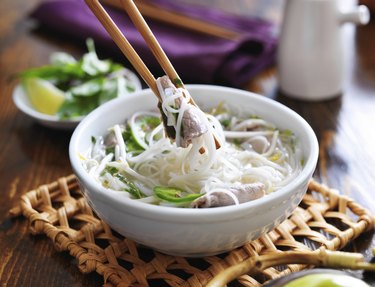
Noodle cuisine originated around 5,000 B.C. in China. Evolving from the simple wheat noodle, the types of Asian noodle choices are expansive and complement many dishes.
Pan-fried, stir-fried or boiled, noodles are a traditional part of many cuisines such as Chinese, Japanese and Thai. The nutritional content of these noodles varies as much as their textures and tastes.
Video of the Day
Video of the Day
Find out all about Asian noodles calories and nutrition below.
Egg Noodles Nutrition
A mixture of eggs and wheat, egg noodles star in soup like chicken noodle or creamy dishes like beef stroganoff. Egg noodles come in a variety of types and flavors including enriched, added salt and spinach-flavored.
A 1-cup cooked serving of Asian egg noodles contains:
- 221 calories
- 3.3 g fat
- 46.4 mg sodium
- 40.3 g carbs
- 1.9 g fiber
- 0.6 g sugar
- 7.3 g protein
Rice Noodles Nutrition
Similar to the Soba Japanese or the Chow Mein Chinese noodles, rice noodles come in a stick, sheet or vermicelli form. These noodles complement Asian dishes such as Pad Thai as stick noodles or traditional won tons and spring roll wrappers when in sheet form.
Rice noodles have a very mild flavor, making them a perfect bed for flavorful sauteed veggies or a grilled cut of lean meat. You won't get a lot of nutrients from rice noodles, though. They're high in calories and carbohydrates and very low in vitamins and minerals. Measure out your portion carefully, rather than scooping a pile in your bowl.
A 1-cup serving of cooked rice noodles has:
- 190 calories
- 0.4 g fat
- 33.4 mg sodium
- 42.3 g carbs
- 1.8 g fiber
- 0.1 g sugar
- 3.2 g protein
About 91 percent of rice noodles' calories come from carbs. A 1-cup serving of cooked rice noodles offers 1.8 grams of fiber, less than 7 percent of your daily requirement for a 2,000-calorie diet. The Dietary Guidelines for Americans state you should get 14 grams of total fiber per 1,000 calories you consume in your diet. Based on a 2,000-calorie diet, for example, you'll need 28 grams of fiber per day.
The only measurable amount of vitamins you'll get from rice noodles are a bunch of B vitamins. Having a 1-cup portion of prepared rice noodles offers very small amounts of thiamin, riboflavin, niacin and vitamin B6. These B vitamins work together to convert the food you eat into energy, support blood cell functions, keep your nervous system working and keep your skin and hair in optimal shape, per Harvard Health Publishing.
Ramen Noodles Nutrition Facts
Ramen noodles can be a quick and easy meal if you're on the go or a perfect addition to Asian-inspired dishes, but they're probably not something you'll want to include in your diet regularly.
While they may seem harmless enough, ramen noodles are high in calories and fat. Plus if your blood pressure is on the rise, you'll want to avoid these noodles as they are incredibly high in sodium.
A 1/2 container of Maruchan Ramen Noodles contains:
- 220 calories
- 10 g fat
- 5 g saturated fat
- 1000.2 mg sodium
- 28 g carbs
- 2 g fiber
- 4 g sugar
- 5 g protein
Half of ramen noodles' fat content comes from saturated fat, which is bad for the heart. Plus, a 1/2 container of ramen noodles contains 1,000 milligrams of sodium, which is 42 percent of your daily value — you shouldn't have more than 2,300 milligrams of sodium each day to keep your heart healthy.
Buckwheat Soba Noodles Nutrition
First of all, what are soba noodles? Soba means buckwheat in Japanese. Although some versions of soba noodles contain wheat, you can find soba noodles made with just buckwheat flour.
These noodles, used in both hot and cold dishes, look like spaghetti but have a nuttier flavor. Nutritionally, these noodles are similar to spaghetti, but they offer some additional benefits.
A 2-ounce raw serving (equal to about 1 cup cooked) contains:
- 190 calories
- 1 g fat
- 290 mg sodium
- 40 g carbs
- 3 g fiber
- 2 g sugar
- 7 g protein
Most of the calories in the noodle come from its carbohydrate content, which is 40 grams. Soba noodles are also low in fat with just 1 gram of fat per serving.
Soba noodles are a good source of fiber. Noodles made with 100 percent buckwheat flour contain 3 grams of fiber per serving. On average, Americans get 15 grams of fiber per day, according to UCSF Health, and are not meeting their recommended needs of 25 to 38 grams per day. Getting more fiber in your diet from foods like soba noodles keeps you feeling full longer and can help you better manage your weight.
Mung Bean Noodles Nutrition
Prior to cooking, dried mung bean noodles look like a ball of twine. Clear, like glass, when cooked, mung bean noodles are traditionally used as a filler, like in spring rolls. Also called cellophane noodles, these stringy guys have contain the following per 2 oz. raw or 1 cup cooked, per the USDA:
- 199 calories
- 0 g fat
- 5.7 mg sodium
- 48.8 g carbs
- 0.3 g fiber
- 0 g sugar
- 0 g protein
Mung bean noodles have no fat, cholesterol or protein.