How to Decrease Testosterone in Women Naturally
Women naturally have about one-tenth the amount of testosterone as men, but as they age, testosterone levels can rise. According to Dr. Abraham Kryger with the Monterey Preventive Medical Clinic, by the time a woman reaches 40, she can have testosterone levels approximately half that of a 20-year-old man's 1. Although high testosterone levels can have some beneficial side effects such as increased muscle mass and a higher libido, one common side effect many women do not care for is an increased growth of bodily hair. This condition, known as hirsutism, can be extremely annoying and embarrassing, but can easily be treated through a variety of natural remedies.
Take nutritional supplements to lower your testosterone. Diindolylmethane, or DIM, is a natural supplement made from cauliflower and broccoli, and is known to reduce androgens, or male sex hormones (among which is testosterone). Taken daily, 120 mg of DIM should help correct your hormonal balance; 200 mg of Calcium-D-Glucarate, twice daily, may also help to get your hormones back in balance.
Herbs to Decrease Testosterone
Learn More
Drink herbal teas or consume them in capsule or tincture form to help you lower your testosterone levels. Perhaps one of the best (and tastiest) herbs for correcting this problem is spearmint. Studies performed at the Suleyman Demirel University in Isparta, Turkey, show that women drinking two cups of spearmint tea for five days significantly lowered their androgen levels. Other herbs known to reduce testosterone levels include black cohosh (20 to 40 mg twice daily), saw palmetto (160 mg twice daily) and chaste tree (20 to 40 mg daily).
Consult an acupuncturist regarding treatment for hirsutism and high testosterone 2. Although sufficient evidence has not been compiled to determine just how acupuncture can benefit women with high testosterone levels, the University of Maryland Medical Center reports that a small study of women treated with acupuncture for their hirsutism showed a reduction of hair length and density, as well as testosterone levels 3.
Warnings
Be sure to consult a doctor about your condition, as high testosterone levels may be linked to other health problems. Make sure that any herbal or nutritional supplements you may take do not react negatively with any medications you may be on.
Related Articles

Herbs to Decrease Testosterone
Learn More

Are There Supplements That Reduce Testosterone in Women with PCOS?
Learn More

Nettle Root and Estrogen Levels
Learn More

What Can You Naturally Do for Low Progesterone?
Learn More
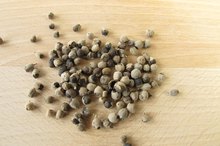
Chasteberry Extract for Fibroids
Learn More

Damiana Tea for Fertility
Learn More
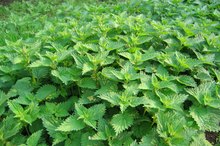
Side Effects of Saw Palmetto, Pygeum And Nettle Root
Learn More
Herbs That Raise Estrogen Level
Learn More

What Natural Herbs Can Lower Testosterone & Increase Estrogen?
Learn More
Ways to Naturally Stimulate Breast Growth
Learn More
References
- University of Maryland Medical Center: Hirsutism
- University of Rochester Medical Center. Total testosterone. 2019.
- MedlinePlus. Testosterone injection. Updated March 15, 2019.
- MedlinePlus. Testosterone levels test. Reviewed June 27, 2018.
- Long N, Nguyen L, Stevermer J. PURLS: It's time to reconsider early-morning testosterone tests. J Fam Pract. 2015;64(7):418-9.
- Kaiser Permanente. Testosterone results. Updated November 6, 2018.
- American Society for Reproductive Medicine. Testosterone use and male fertility. 2015.
- Harvard Health Publishing. Testosterone - what it does and doesn't do. Updated August 29, 2019.
- Franks S, Hardy K. Androgen action in the ovary. Front Endocrinol (Lausanne). 2018;9:452. doi:10.3389/fendo.2018.00452
- Test ID: TGRP; Testosterone, Total and Free, Serum. MayoClinic Medical Laboratories.
- Testosterone: Drug information. Lexicomp, Inc. UptoDate.com.
- Camacho EM, Huhtaniemi IT, O'Neill TW, et al. Age-associated changes in hypothalamic-pituitary-testicular function in middle-aged and older men are modified by weight change and lifestyle factors: longitudinal results from the European Male Ageing Study. Eur J Endocrinol. 2013;168(3):445-55. doi:10.1530/EJE-12-0890
- Kolettis PN, Purcell ML, Parker W, Poston T, Nangia AK. Medical testosterone: an iatrogenic cause of male infertility and a growing problem. Urology. May;85(5):1068-72. doi:10.1016/j.urology.2014.12.052
- Samplaski MK, Loai Y, Wong K, Lo KC, Grober ED, Jarvi KA. Testosterone use in the male infertility population: prescribing patterns and effects on semen and hormonal parameters. Fertil Steril. 2014;101(1):64-9. doi:10.1016/j.fertnstert.2013.09.003
- Spritzer MD, Daviau ED, Coneeny MK, Engelman SM, Prince WT, Rodriguez-Wisdom KN. Effects of testosterone on spatial learning and memory in adult male rats. Horm Behav. 2011;59(4):484-96. doi:10.1016/j.yhbeh.2011.01.009
- van Honk J, Schutter DJ, Bos PA, Kruijt AW, Lentjes EG, Baron-Cohen S. Testosterone administration impairs cognitive empathy in women depending on second-to-fourth digit ratio. Proc Natl Acad Sci U S A. 2011;108(8):3448-52. doi:10.1073/pnas.1011891108