
You probably know that calcium and vitamin D are the top two ingredients for a strong, sturdy skeleton. But beyond getting enough of these nutrients in your diet, are there steps you can be taking to increase your bone density?
The answer's a definite yes. Calcium might be the main building block of healthy bones, and vitamin D is vital for helping the mineral get absorbed. But "there are other factors that can also positively influence bone health," nutrition expert Melissa Nieves, RD, MPH, tells LIVESTRONG.com.
Video of the Day
Video of the Day
And the more of them you get into the habit of doing, the better off your bones will be. Here are six more smart bone-boosting strategies to add to your calcium-plus-D routine.
1. Add Weight-Bearing Exercises to Your Workouts
Weight-bearing exercises work your bones, which can help stave off bone mass loss and even rebuild bone density. Basically, "it stresses the skeletal bone to stimulate remodeling," Nieves says.
Strength-training activities like lifting weights are especially beneficial, since they tend to target fracture-prone areas like the wrists and hips, according to Harvard Health Publishing. For the biggest benefits, aim to work all of your major muscle groups at least twice a week.
Don't discount aerobic exercise, though — it can help too. "Higher-impact exercises like tennis, jumping rope, squash or jogging can all rebuild bone," says internist Soma Mandal, MD. "For older patients, I recommend lower-impact options like walking, tai chi, yoga or the elliptical machine. These can all help prevent bone loss."
9 Bone-Strengthening Exercises
Try this 20-minute strength workout that blasts calories while boosting your bone health.
2. Pay Attention to Protein
Protein is primo for the health of your muscles, sure. But did you know it's also a big deal for bones? According to a review published May 2018 in Osteoporosis International, protein-rich diets are tied to better bone mineral density as well as a lower risk for hip fracture.
Protein, after all, is the main structural component of cells, including bone cells. "Since bone undergoes continuous remodeling, an adequate supply of amino acids — the building blocks of protein — is needed for bone formation and maintenance," Nieves says.
Protein also plays a role in helping calcium get absorbed in the gut, Dr. Mandal notes.
Don't worry, you don't need to live off burgers and grilled chicken. As long as you're getting the recommended 0.8 grams of protein per kilogram of body weight per day, you're reaping protein's bone-boosting benefits, Nieves says. (Keep in mind that a kilogram equals 2.2 pounds. So, for example, a 150-pound person should aim for about 55 grams of protein per day.)
3. Fill Up on Fruits and Veggies
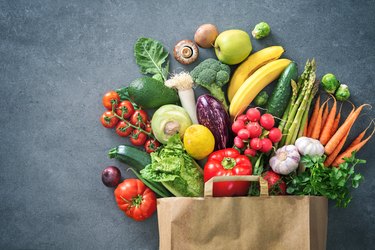
Fruits and vegetables are top sources of vitamin C, which is tied to both higher bone mineral density and fewer fractures, as well as a 33 percent lower risk for osteoporosis, according to an October 2011 review in Nutrition Reviews.
What makes C crucial for sturdy bones? "It's essential for collagen formation, which is the foundation that bone mineralization is built on," Nieves says. Fall short, and your bones won't have the resources they need to grow and repair themselves.
The good news is that getting the daily recommended 75 milligrams for women and 90 milligrams for men is pretty easy, Nieves says. You can find the latter in a half cup of red bell pepper! Other good sources include: medium orange (70 mg), medium kiwifruit (64 mg), half cup of cooked broccoli (51 mg).
4. Reach or Maintain a Healthy Weight
Among the countless important reasons you should try to keep your weight in check? It's good for your bones. According to an April 2018 review in Hormones, obesity is tied to lower bone strength and a higher risk of ankle, leg and hip fractures.
Experts don't fully understand why carrying too much weight seems to make bones more prone to breaking. But it's thought that obesity alters bone-regulating hormones, which in turn causes bones to be weaker, Dr. Mandal explains.
There's also the fact that people with obesity are more likely to have certain chronic health conditions that can have a negative affect on bones. Chief among them is type 2 diabetes, which a September 2018 PLOS One study ties to higher fracture risk.
5. But Steer Clear of Crash Diets
Diets that promise rapid weight loss usually call for major calorie cuts, which can come at a cost to your bones. "They can make it harder to meet your nutritional needs, especially with respect to calcium, vitamin D, vitamin C and protein, which could reduce bone mineral density," Nieves says.
In fact, one October 2019 Journal of the American Medical Association study found that adults who severely restricted their calories to drop pounds lost 2.5 times more bone mineral in their hips compared to those who only moderately trimmed their calorie intake.
How low is too low? In general, women shouldn't cut their calories below 1,200 a day, and men should stay above 1,500, according to Harvard Health Publishing.
6. Remember Non-Calcium Minerals, Too
Calcium isn't the only mineral that matters for your bones. Both magnesium and zinc also play major roles in keeping your skeleton strong and sturdy. "Low magnesium can inhibit vitamin D and calcium balance in bones, while zinc is essential for collagen production," Nieves explains.
Experts recommend getting about 320 milligrams of magnesium daily for women and about 420 for men, according to the National Institutes of Health (NIH). Get it from sources like almonds, spinach, cashews or black beans, Nieves says.
As for zinc? Aim for 8 milligrams daily for women and 11 for men, per the NIH, from foods like beef, pumpkin seeds or chickpeas.
- Harvard Health Publishing: "Strength training builds more than muscles"
- Osteoporosis International: "Benefits and safety of dietary protein for bone health—an expert consensus paper endorsed by the European Society for Clinical and Economical Aspects of Osteopororosis, Osteoarthritis, and Musculoskeletal Diseases and by the International Osteoporosis Foundation"
- Harvard Health Publishing: "How much protein do you need every day?"
- Nutrition Reviews: "Vitamins and Bone Health: Beyond Calcium and Vitamin D"
- Hormones: "Obesity and bone metabolism"
- PLoS One: "Fracture risk in type 2 diabetic patients: A clinical prediction tool based on a large population-based cohort"
- Journal of the American Medical Association: "Effect of Weight Loss via Severe vs Moderate Energy Restriction on Lean Mass and Body Composition Among Postmenopausal Women With Obesity The TEMPO Diet Randomized Clinical Trial"
- Harvard Health Publishing: "Calorie counting made easy"
- National Institutes of Health: "Magnesium — Health Professional Fact Sheet""
- National Institutes of Health: "Zinc — Health Professional Fact Sheet"
Is this an emergency? If you are experiencing serious medical symptoms, please see the National Library of Medicine’s list of signs you need emergency medical attention or call 911.