
The Benefits of Curl Ups (with Video)
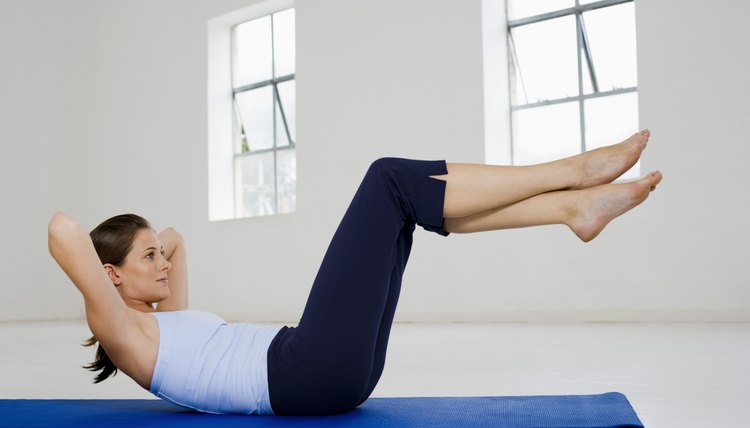
Curlups, or situps, are a classic calisthenic abdominal exercise. They are performed in physical education classes and military workouts on a daily basis to increase fitness level. Although curl ups are a simple, basic exercise, they offer many benefits to those who practice them regularly. Some of these benefits include the strengthening of your lower back and core muscles. Here are the benefits of one of the most popular core exercises of all time; the sit up.
How to do a situp?
The situp is a very easy ab exercise for a beginner to get a hold of specifically due to the lack of intense upper body movement. To get into starting position, lay flat on the floor with your knees bent upwards and your hands at your head. Start the repetition by bending your hips and lifting your torso off the ground by using just your body weight. Work your core stability by slowly moving your torso to your knees, and slowly lowering yourself back to the ground using just your flexion. Do 20 reps, or until proper form begins to dissipate, to truly experience the benefits of curl ups.
Improved Abdominal Strength

Pixland/Pixland/Getty Images
Curlups are an effective way to strengthen the muscles of your abdomen, specifically the rectus abdominis -- the muscle that forms the infamous six-pack. Adding a twist to the standard curlup will also target the external oblique muscles on the sides of your abdomen.. Strong abdominal muscles not only look better, but they also provide more stability for your entire trunk. You can improve core strength by holding a weight plate or dumbbell above your chest as you perform this strength training staple.
Improved Muscular Endurance
Pixland/Pixland/Getty Images
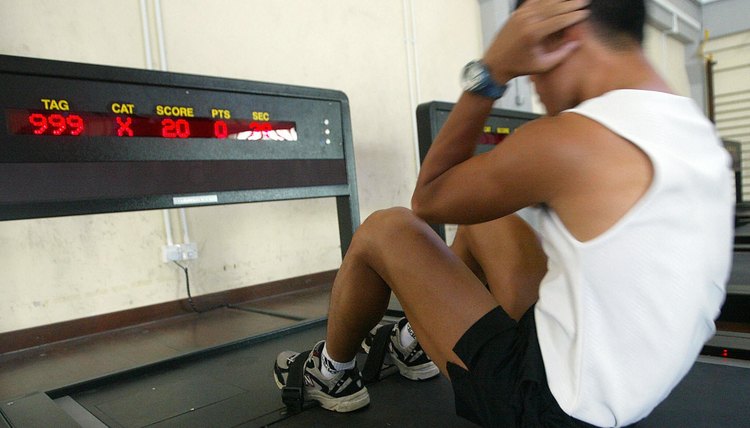
Muscular endurance is the ability of your muscle groups to move in a continuous, repetitive range of motion without tiring. The physical activity during the curlup demands just that. When you first started working out, you were probably only able to do 10 to 15 curlups before your abs tired and you felt a peculiar burning sensation in the muscles. After a few weeks of training, you were likely able to easily perform 20 to 30 curlups without tiring -- that is improved endurance. Fatigue-resistant abdominals are not only important for the feat of completing more curlups during your workout routine, but also for maintaining good posture throughout the day. The stronger your abs are, the less your lumbar spine and upper back is forced to work to keep your body upright.
Improved Overall Health

Pixland/Pixland/Getty Images
Curlups not only improve the muscle tone of your midsection, but they can also help improve your overall well-being. Yoga practitioners hold that strengthening your abdominal muscles will improve your digestion, energy and vitality by increasing blood flow and oxygen delivery while also increasing the removal of toxins. The strength of your abdominal muscles also has a lot to do with the health of your spine. According to Dr. Peter F. Ullrich, weak abdominal muscles cause hip flexor muscles to tighten, leading to an increase in the curve of the low back. This increased curve often results in low back pain, which can be aggravated by sitting at your desk for long periods of time. Keep your body healthy and pain-free by including curlups into your regular routine.
Convenient Exercise
Pixland/Pixland/Getty Images
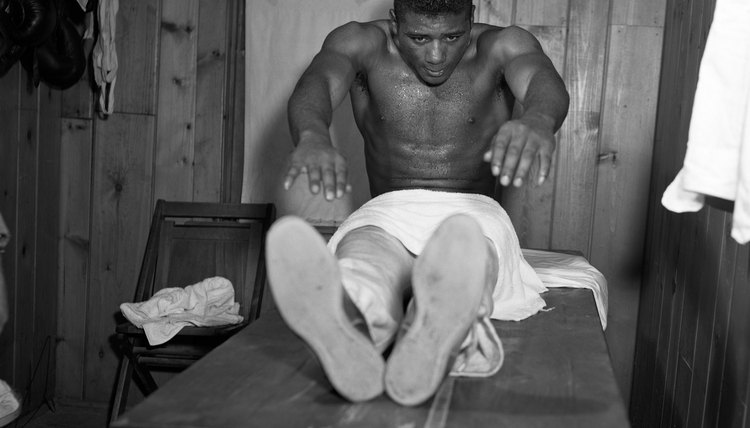
The basic nature of the curlup makes it an extremely convenient exercise. There is no special equipment required to practice curlups; in fact you don't even have to worry about fancy workout clothes. To get a good curlup workout, all you really need is somewhere to lie flat on your back. Curlups can be done at home, at the gym, in a hotel room, even at the the office if you're really dedicated.
Writer Bio
Jen Weir writes for several websites, specializing in the health and fitness field. She holds a Bachelor of Science in exercise science from Montana State University, is an NSCA-certified strength and conditioning specialist and maintains a personal trainer certification from the American College of Sports Medicine.