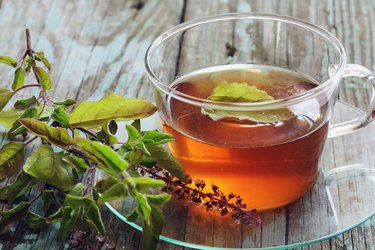
Belonging to the basil family of herbaceous plants, tulsi — which is the Sanskrit word for holy basil — has been used in Ayurvedic medicine for thousands of years. Commonly called the "elixir of life," some of holy basil's benefits include its antimicrobial and stress-reducing properties.
What is Tulsi?
Video of the Day
Native to Taiwan, India and parts of Africa, the tulsi plant or Ocimum sanctum L. differs from the basil that's used in cooking mainly in terms of its health benefits. Tulsi is known for its adaptogenic properties, which means it helps prevent stress in the body.
Video of the Day
According to the Vanderbilt University Osher Center for Integrative Medicine, holy basil works by lowering levels of cortisol, the body's main stress hormone. It is also rich in flavonoids, a type of antioxidants known to prevent heart disease and cancer, as well as reduce inflammation. The tulsi plant also contains eugenol, an oil known for its antibacterial and analgesic properties.
While the fresh leaves of the tulsi plant can be eaten raw or steeped in boiling water to make tulsi-infused water, it's most commonly found in the store dried as capsules, or as tulsi tea. An October 2014 study published in the Journal of Ayurveda and Integrative Medicine compares the regular drinking of tulsi tea to a regular yoga practice which leaves the practitioner with an overall sense of calmness.
Tulsi Leaf and Cancer
In an April 2012 study published in the International Journal of Pharmaceutical Sciences and Drug Research, the authors found that extracts of tulsi leaf exhibited anticancer activity when used on cultures of tumor cells. The cancer-preventative benefit of holy basil can, in fact, be attributed to eugenol extract, a powerful flavonoid, along with methanolic extract derived from the tulsi leaf.
Read More: 10 Everyday Ailments Soothed by Tea
Similar results on the benefits of tulsi leaf and cancer have been found in studies conducted in animals. Although an April 2016 study published in the Journal of Cancer Therapeutics and Research used mice instead of humans, its findings are important because it showed that holy basil also offers benefits against radiation poisoning.
In addition to their anticancer properties, the flavonoids present in holy basil are capable of protecting normal tissue cells from the harsh effects of radiation. While the results are promising, larger trials on humans need to be conducted to test the effectiveness of holy basil benefits in individuals.
Other Holy Basil Benefits
Antimicrobial activity is one of the many benefits that holy basil confers. In fact, in a small March 2016 study of five people published in the Journal of Clinical and Diagnostic Research, researchers found that tulsi extract was able to inhibit the main bacteria responsible for periodontal disease successfully.
Read More: Green Tea and Bowel Movements
According to the College of Charleston's Office of Sustainability, tulsi is a great replacement for caffeinated beverages such as coffee. It is also able to improve endurance and increase circulation in the brain, helping with memory function, and aiding patients with ADHD and ADD.
Tulsi is not just good for the body, but for the environment as well. The authors of the October 2014 study in the Journal of Ayurveda and Integrative Medicine explain that growing tulsi helps reduce levels of air pollution. Tulsi plants have even been planted around the Taj Mahal in India, to protect the white marble from damage by harmful pollutants.
- BMC Genomics: "Unravelling the Genome of Holy Basil: An “Incomparable” “Elixir of Life” of Traditional Indian Medicine”
- Vanderbilt University Osher Center for Integrative Medicine: "Adding Health Benefits and Flavor to Your Food With Herbs and Spices"
- Journal of Ayurveda and Integrative Medicine: "Tulsi - Ocimum Sanctum: A Herb for All Reasons”
- International Journal of Pharmaceutical Sciences and Drug Research: "Therapeutic Potential of Ocimum sanctum in Prevention and Treatment of Cancer and Exposure to Radiation: An Overview”
- Journal of Clinical and Diagnostic Research: "Anti-microbial Activity of Tulsi {Ocimum Sanctum (Linn.)} Extract on a Periodontal Pathogen in Human Dental Plaque: An Invitro Study”
- College of Charleston Office of Sustainability: "Holiday Immune Boosting with Elderberry, Tulsi Basil, and Hibiscus”
- Journal of Cancer Therapeutics and Research: "Radio Protective Effects of the Ayurvedic Medicinal Plant Ocimum Sanctum Linn. (Holy Basil): A Memoir”