
There are several types of sweet stuff, simple and complex, that all get broken down into one simple sugar that our body loves to use: glucose.
When you eat carbohydrates, whether it be from whole-wheat bread, a piece of fruit or a glass of milk, your body eventually breaks those carbs down into glucose to be used as energy, per the Cleveland Clinic.
Video of the Day
Video of the Day
Some foods are naturally high in pure glucose or another sugar that breaks down into glucose while other foods have glucose added to them in the form of added sugars.
The Important Role of Glucose
All carbohydrates that you eat are broken down by the body into fructose, galactose and glucose, with 80 percent of the end product being glucose, per a September 2021 article in StatPearls.
Glucose enters the bloodstream where it does two things, per the University of Michigan Health:
- It's transported by the hormone insulin into cells to be used as energy
- Leftover glucose is stored in fat cells or the liver as glycogen to be used for energy in the future
Your body breaks down a variety of carbohydrates to glucose to be used as energy. Complex carbs include starches like beans, whole grains, fruits and vegetables. These starches have fiber and other nutrients that slow down the release of glucose into the bloodstream.
Simple carbohydrates can be naturally found in foods like fruit and dairy products and can also be added to foods like candy, soft drinks, baked goods and syrups, per the U.S. National Library of Medicine. Simple carbs are broken down quickly, increasing the amount of glucose in your blood much faster than complex carbohydrates.
Glucose is your body's preferred source of energy, but too much sugar comes with some health risks. A diet high in sugar, especially added sugars, can contribute to weight gain, tooth decay, elevated triglyceride levels and heart disease, according to the American Heart Association.
How Much Glucose Should You Have in a Day?
There's no set limit for how much glucose you should have per day, but there are recommendations for limiting your added sugar.
People assigned female at birth should aim for less than 6 teaspoons, or 25 grams, of added sugar per day and people assigned male at birth should keep their intake below 9 teaspoons, or 36 grams, per the American Heart Association.
Foods High in Glucose
1. Grape Juice: 17.2 g
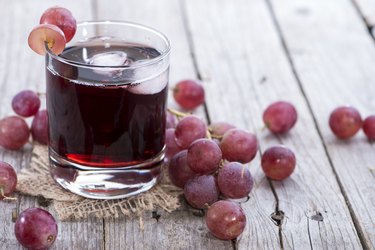
Fruit juice, even ones made from 100 percent juice, is often high in sugar and low in fiber. One cup of grape juice has 17.2 grams of glucose and only 0.5 grams of fiber.
Fiber is a carbohydrate that isn't broken down into glucose, but it does help regulate how quickly the body uses sugar, slowing down the release of glucose into the bloodstream, per the Harvard T.H Chan School of Public Health.
Related Reading
2. Soft Drinks: 15.2 g
One can of cola has more added sugar than is recommended in a day. Along with 37 grams of sugar, there are 15.2 grams of glucose in a 12-ounce can of cola. Sugar-sweetened beverages, like cola, are the largest source of added sugar in the American diet, per an April 2019 review in Circulation.
3. Jackfruit: 15.6 g
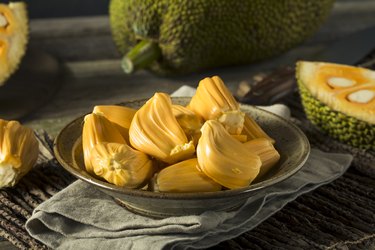
Jackfruit is a go-to meat substitute when you're craving a pulled pork sandwich. One cup of sliced jackfruit has 15.6 grams of glucose. This fruit has a stringy texture similar to pulled meat and is a good source of vitamin C, magnesium and potassium. Unlike many other plant-based meat substitutes, jackfruit is low in protein with less than 3 grams per cup.
If you're unsure what to do with this tropical fruit, brush up on exactly how to cook jackfruit and get creative in your plant-based cooking.
4. Dried Cranberries: 11.9 g
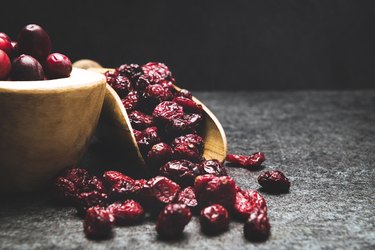
Just 1/4 cup of sweetened dried cranberries has 11.9 grams of glucose. Like other dried fruit, dried cranberries have much more sugar per serving than their fresh counterpart.
Most dried cranberries are sold sweetened to mask their tart taste, but if you can find the unsweetened variety, you'll reap the health benefits of dried cranberries without the extra added sugar.
5. Cherries: 10.1 g
The smallest of the stone fruits, cherries have 10.1 grams of glucose in each cup.
Cherries are rich in polyphenols, a natural plant compound that research suggests is linked to a decreased risk for metabolic syndrome, diabetes, nonalcoholic fatty liver disease (NAFLD) and heart disease, per a March 2018 review in Nutrients.
6. Sweet Tea: 9.7 g
An old Southern Staple, sweet tea has taken residence as a popular drink no matter where you go. Just like other sugar-sweetened beverages, most of the sugar in sweet tea comes from added sugars and has 9.7 grams of glucose per cup.
While plain tea has many health benefits, drinking too much sweet tea can quickly put you over the recommended limit for added sugars.
7. Honey: 7.5 g
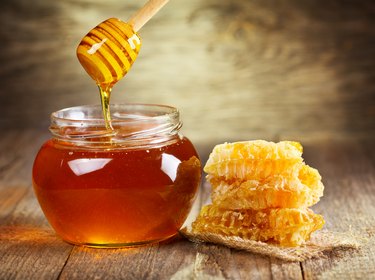
Honey is nature's sweetener. Even though it comes from a natural source, honey is still considered an added sugar, with 7.5 grams of glucose in one tablespoon, and it affects your blood sugar in a way similar to table sugar, per the University of Arkansas Division of Agriculture.
But, honey is sweeter than table sugar, meaning you may be able to use less of it to get the same flavor.
8. Canned Tomato Puree: 6.1 g
There's nothing more useful on your pantry shelf than a can of tomato sauce. One cup of canned tomato puree has 6.1 grams of glucose and is an excellent source of potassium, iron and vitamin C. Don't limit yourself to pasta only — try these comforting (non-noodle) recipes with tomato sauce.
9. Sweet Corn: 5 g

As one of the starchy vegetables, corn has more sugar than other types of veggies, but that doesn't mean you need to avoid it. Sweet corn is a vegetable high in glucose: 1 cup has 5 grams. It's also a good source of magnesium, folate, and has 21 percent of the recommended daily value (DV) for vitamin B5.
Vitamin B5, or pantothenic acid, is essential for turning the food you eat into useable energy, per the National Institutes of Health. Plus, nothing tastes like summer quite like sun-kissed sweet corn.
10. Barbecue Sauce: 2.8 g
Don't forget the condiments. Sauces and dressings like ketchup, salad dressing and barbecue can include natural sugars as well as added ones. One tablespoon of barbecue sauce has 2.8 grams of glucose.
Barbecue sauce can also be high in sodium, with 8 percent of your DV coming from just one serving. Choosing reduced sodium sauce can help decrease the sodium by 25 percent or more per serving.
Glucose Food Chart
Food | Serving Size | Glucose Content |
|---|---|---|
Grape Juice | 1 cup | 17.2 g |
Soft Drinks | 12-ounce can | 15.2 g |
Jackfruit | 1 cup, sliced | 15.6 g |
Dried Cranberries | 1/4 cup | 11.9 g |
Cherries | 1 cup, pitted | 10.1 g |
Sweet Tea | 1 cup | 9.7 g |
Honey | 1 tablespoon | 7.5 g |
Canned Tomato Puree | 1 cup | 6.1 g |
Sweet Corn | 1 cup | 5 g |
Barbecue Sauce | 1 tablespoon | 2.8 g |
- My Food Data
- Cleveland Clinic: "Carbohydrates"
- NIH: "Simple Carbohydrates"
- StatPearls: "Physiology, glucose"
- University of Michigan Health: "Carbohydrates, Proteins, Fats, and Blood Sugar"
- American Heart Association: "Added Sugars"
- Advances in Nutrition: "Carbohydrates"
- Harvard T.H. Chan School of Public Health : "Fiber"
- Circulation: "Long-Term Consumption of Sugar-Sweetened and Artificially Sweetened Beverages and Risk of Mortality in US Adults"
- Nutrients: "A Review of the Health Benefits of Cherries"
- NIH: "Pantothenic Acid"
- University of Arkansas Department of Agriculture: "Honey versus Sugar- Which is Healthier"
- American Heart Association: "How Too Much Added Sugar Affects Your Health Infographic"