Peanut Butter Nutrition
Native to South America, peanuts are now a staple of the average American diet, and they are among the most abundantly grown crops in America. Peanut butter offers one convenient way to help boost your peanut intake and also has a nutritional profile that includes significant amounts of several beneficial nutrients. Some types of peanut butter contain additives, such as sugar, that lower the nutritional value of the food, however.
Basic Nutritional Information
A 2-tablespoon serving of peanut butter contains 188 calories, or 9 percent of the daily intake in a standard 2,000-calorie diet. These calories come from a mix of carbohydrates, proteins and fats. Each serving of peanut butter provides you with 7.7 grams of protein, which helps keep your tissues strong and promotes immune function, as well as 16 grams of fat, a concentrated source of energy. Peanut butter also offers 6.9 grams of carbohydrates per serving. Some of these carbs break down into sugar and fuel your brain, liver and muscle tissue, while 2.6 grams comes from heart-healthy dietary fiber. A serving of peanut butter contributes 10 percent toward the recommended daily fiber intake for women and 7 percent for men.
Vitamin Content
Are Raw Peanuts Good for You?
Learn More
Peanut butter serves as a rich source of vitamin E and niacin, or vitamin B-3. Vitamin E controls inflammation in your body, aids in healthy cell-to-cell communication and helps prevent tissue damage through its role as an antioxidant. Consuming 2 tablespoons of peanut butter boosts your vitamin E intake by 2 milligrams, or 13 percent of the recommended daily intake. The niacin in peanut butter helps your cells perform chemical reactions, including those needed for energy production, and plays a role in cell development. A serving of peanut butter offers 4.4 milligrams of niacin -- 28 and 31 percent of the recommended daily niacin intakes for men and women, respectively.
Beneficial Minerals
Reach for peanut butter as a source of beneficial minerals, especially magnesium and copper. Your body relies on both minerals to help activate enzymes, the family of proteins that help drive chemical reactions in your cells. Magnesium- and copper-dependent proteins support energy production. Magnesium also contributes to healthy cell membranes, while copper controls gene activity. A 2-tablespoon portion of peanut butter contains 51 milligrams of magnesium -- 12 and 16 percent of the recommended daily intakes for men and women, respectively -- as well as 185 micrograms of copper, or 21 percent of the recommended daily intake.
Drawbacks and Shopping Suggestions
The Health Benefits of Grits
Learn More
Peanut butter is high in fat and calories, and its relatively small portion size makes it easy to overeat, which can contribute to weight gain. Make sure you measure your peanut butter portion before serving -- you might find that a 2-tablespoon portion appears surprisingly small. Reduced-fat peanut butter contains slightly less fat -- 12.2 grams per serving, compared to regular peanut butter's 16 grams -- but it's higher in sugar and contains the same amount of calories as regular peanut butter. For the most healthful peanut butter, opt for minimally processed versions that list peanuts as the sole ingredient. Avoid more processed options, which can contain sugar, salt or hydrogenated fats.
Related Articles
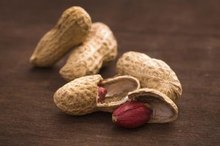
Are Raw Peanuts Good for You?
Learn More

The Health Benefits of Grits
Learn More

Calamari Nutritional Information
Learn More

The Digestive & Circulatory Systems Converting Food Into Energy
Learn More
The Nutrition and Fiber in Crowder Peas
Learn More
Peanuts Vs. Pistachios
Learn More
What Are the Health Benefits of Desiccated Coconut?
Learn More

Is Farm-Raised Catfish Good for You?
Learn More

Does Celery Help Cleanse the Body?
Learn More
Almonds: Nutrition & Inflammation
Learn More
References
Writer Bio
Sylvie Tremblay holds a Master of Science in molecular and cellular biology and has years of experience as a cancer researcher and neuroscientist. Based in Ontario, Canada, Tremblay is an experienced journalist and blogger specializing in nutrition, fitness, lifestyle, health and biotechnology, as well as real estate, agriculture and clean tech.