Can You Eat Raw Quinoa Grain?
Quinoa, the grain of the Incas, is a healthy, low glycemic carbohydrate that can add variety and nutrition to your diet. Quinoa has a better protein profile and a higher protein content compared to other vegetable sources of protein. Moreover, it is free of gluten and thus makes a healthy grain alternative for people with celiac disease or gluten intolerance. However, it is important to fully cook quinoa to enjoy its delicate nutty taste and benefit from its nutrition value.
Raw Quinoa
Raw quinoa cannot be digested properly and its undigested starches are likely to cause you gastrointestinal discomfort. Moreover, raw quinoa is covered by a substance called saponin, a toxic soap-like substance that can bind with some of the minerals you eat, preventing them from being absorbed, according to "Nutrition Research."
Preparation and Cooking
Is Quinoa a Complete Protein Food?
Learn More
Cooking quinoa will make it easier for your gastrointestinal tract to digest it. Cooking also increases its digestibility so your body can fully benefit from the important nutrients quinoa provides. Before cooking quinoa, it is important that you rinse quinoa under running water until it doesn't produce any foam. Cook quinoa in two parts water, which means that for every cup of dry quinoa, you should use 2 cups of water. Bring to a boil and let simmer for 15 to 20 minutes, or until all the liquid is absorbed.
- Cooking quinoa will make it easier for your gastrointestinal tract to digest it.
- Before cooking quinoa, it is important that you rinse quinoa under running water until it doesn't produce any foam.
Nutritional Value
Each 1/3 cup of raw quinoa yields about 1 cup of cooked quinoa. A serving of 1 cup of cooked quinoa provides 222 calories, 8.1 g of protein, 3.6 g of fat, 39.4 g of carbs and 5.2 g of fiber. It also contains many B vitamins, such as riboflavin, vitamin B-6 and folate, as well as the minerals calcium, magnesium, phosphorus and potassium. Eating quinoa raw wouldn't allow your body to absorb the important nutrients it contains and could even prevent the absorption of the nutrients found in other foods eaten at the same time.
- Each 1/3 cup of raw quinoa yields about 1 cup of cooked quinoa.
- A serving of 1 cup of cooked quinoa provides 222 calories, 8.1 g of protein, 3.6 g of fat, 39.4 g of carbs and 5.2 g of fiber.
Tasty Ideas
How Can Oatmeal Help You to Lose Weight?
Learn More
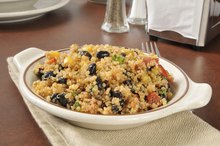
You can use cooked quinoa to have as a porridge for breakfast. Add diced pears, plain yogurt, walnuts and cinnamon or cottage cheese, almond butter and raspberries for a complete and satisfying breakfast. You can also serve cooked couscous as a side dish, instead of rice or baked potatoes. Add seasonings and mix in your favorite vegetables to accompany your protein. You can also use cooled cooked quinoa to prepare cold salads with cucumbers, spring onions, tomatoes as well as cooked beans and a salad dressing of your choice.
- You can use cooked quinoa to have as a porridge for breakfast.
- You can also use cooled cooked quinoa to prepare cold salads with cucumbers, spring onions, tomatoes as well as cooked beans and a salad dressing of your choice.
Related Articles
Is Quinoa a Complete Protein Food?
Learn More
How Can Oatmeal Help You to Lose Weight?
Learn More
Nutritional Value of Cooked Cabbage
Learn More

Wheat Chex Cereal Nutrition Information
Learn More

The Health Benefits of Grits
Learn More
Compare Soluble Fiber in Lentils & Barley
Learn More
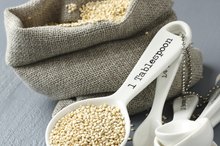
Fiber In Quinoa
Learn More
The Health Benefits of Kasha
Learn More
Nutrition in Plantain Flour
Learn More
What is Muesli Good for?
Learn More
References
- Versagrain: Quinoa Nutritional Value
- Grain-Free-Gluten-Free.com: Cooking Quinoa: A Step By Step Guide
- "Nutrition Research"; The Nutritional & Biological Significance of Saponins; J. Milgate and D. C. K. Roberts; August 2005
- Quinoa, cooked. FoodData Central. U.S. Department of Agriculture. Published April 1, 2019.
- Glycemic Index Food Guide. Diabetes Canada. Updated February 2018.
- Navruz-Varli S, Sanlier N. Nutritional and health benefits of quinoa (Chenopodium quinoa Willd.). J Cereal Sci. 2016;69:371-376. doi:10.1016/j.jcs.2016.05.004
- Giancoli, A. 5 Whole Grains to Keep Your Family Healthy. Academy of Nutrition and Dietetics. Updated August 27, 2018.
- Antioxidants - Protecting Healthy Cells. Academy of Nutrition and Dietetics. Updated March 3, 2020.
- Lim JG, Park HM, Yoon KS. Analysis of saponin composition and comparison of the antioxidant activity of various parts of the quinoa plant (Willd.). Food Sci Nutr. 2020;8(1):694-702. doi:10.1002/fsn3.1358
- Schwingshackl L, Hoffmann G, Lampousi AM, et al. Food groups and risk of type 2 diabetes mellitus: A systematic review and meta-analysis of prospective studies. Eur J Epidemiol. 2017;32(5):363-375. doi:10.1007/s10654-017-0246-y
- Quinoa Allergy. Allergy Knowledge Base. Updated May 16, 2019.
- Kesh S, Barnes CS, Noel-Macdonnell J, Patel NN. Association of quinoa and apple sensitization. J Allergy Clin Immunol. 2018;141(2):AB243. doi:10.1016/j.jaci.2017.12.771
- Types of quinoa. Oldways Whole Grains Council.
Writer Bio
Aglaee Jacob is a registered dietitian. She has experience working with people who have diabetes, cardiovascular disease, hypertension and obesity issues. Jacob obtained a bachelor of science and a master of science, both in nutrition, from Laval University in Quebec City, Canada.