Asian Pear Nutritional Information

Asian Pear Nutritional Information
Photo Credit asian pear black background image by David Smith from Fotolia.com

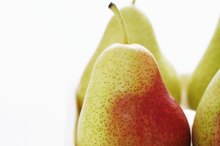
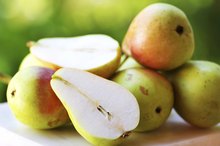
The Asian pear -- also known as the Japanese pear, Chinese pear, apple pear, sand pear or Nashi pear -- is related to European varieties of pears but includes many apple-like characteristics. All three available types of Asian pears are native to the Asian continent but can be grown successfully in other parts of the world. According to the Centers for Disease Control, adult men and women should consume at least 2 cups of fresh fruit daily because of the many health benefits associated with increased amounts of fruit and produce in the diet. Asian pears can help fill this requirement since they are rich in certain types of carbohydrates, vitamins and minerals.

Aspects

Although Asian pears -- also known by their scientific name Pyrus pyrifolia -- are a particular species of pear native to Asia, they can be grown successfully in orchards in Oregon, Washington and California, as well as in certain parts of Canada, the Great Lakes region and the east coast of the United States. The three main types of Asian pear are distinguished by both the color of their skin and their shape. One type has reddish-brown or green skin and is pear shaped, while the other two types are either round or flat and differentiated by their color -- one features greenish-yellow skin; the other has brownish-bronze skin. According to the CDC site, the most popular type of Asian pear in the United States is the round, yellow-skinned variety known as Nijisseiki.

Carbohydrates

According to the CDC site, Asian pears contain a total of 13 g -- or 4 percent -- of the percentage of daily recommended values for carbohydrates. Of this 13 g, 4 g come from dietary fiber and 9 g from simple sugars. While 4 g of dietary fiber may not seem significant, it provides approximately 14 percent of the recommended amount of fiber for one day, for an adult on a 2,000 calorie diet. The Harvard School of Public Health reports that studies show an increased consumption of high-fiber foods, such as fruits like Asian pears, can decrease the risk of developing heart disease, type 2 diabetes and certain types of digestive problems.

Vitamins

Asian pears are excellent sources of the following vitamins: vitamin C; folate; the B-complex vitamins, including riboflavin, niacin and thiamine; choline; pantothenic acid; vitamin E and vitamin K. The amount of vitamin C contained in one average-sized Asian pear contributes approximately 8 percent of the daily recommended values for the vitamin in a healthy adult. Since vitamin C is essential for proper cellular metabolism and optimal immune system functioning as well as acting as an antioxidant -- one of the compounds thought to neutralize free radicals and possibly decrease the risk of cancer -- vitamin C-rich Asian pears can be an important addition to a healthy diet.

Minerals

Asian pears contain a number of minerals essential for the proper functioning of several body systems. According to the United States Department of Agriculture Research Service site, one medium-sized 122 g Asian pear contains about 148 mg of potassium, 13 mg of phosphorus, 10 mg of magnesium and 5 g of calcium. The pears also contain small amounts of selenium, manganese, copper and zinc, and, according to the CDC site, 2 percent of the daily recommended allowance for iron, making it an important plant-based source of this mineral.

Fats and Protein

Only trace amounts of fat and protein can be found in Asian pears. The CDC site reports that of the 50 calories of energy provided by eating one medium raw Asian pear, only 5 of those calories are due to fat, a figure so low that it is counted as not fulfilling any amount of the percent of daily recommended values for either total or saturated fat. Asian pears do not contain cholesterol. They provide only about 1 g of protein, with the amino acids leucine, lysine, valine, proline, serine, glutamic acid and aspartic acid being the most common in the fruit.

References

Article reviewed by Ed Garcia Last updated on: Jun 14, 2011

Must see: Photo Galleries

Member Comments