
What Is the Difference Between an Intermediate & Senior Hockey Shaft?
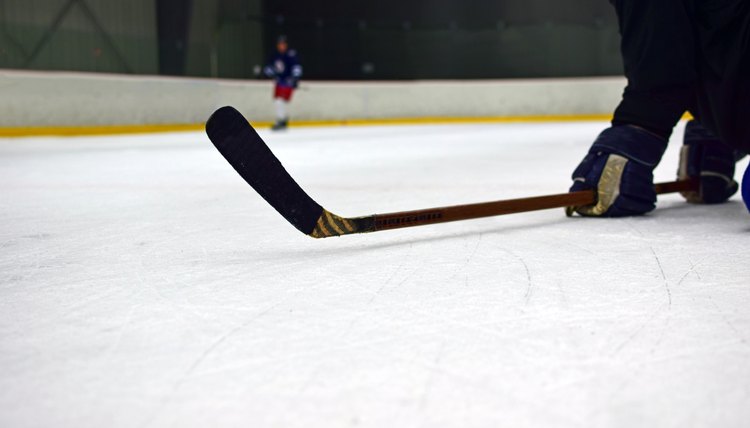
Choosing the appropriate hockey stick is important to success in the sport. The length and feel of the stick, including the shaft, should be based on the player's size and age. Intermediate sticks are between junior and senior sizes. Senior sticks are the largest sticks available. The stick is an essential piece of equipment for a hockey player, so it is vital to make an informed choice on what stick best fits you and your style of play.
Significance of the Stick's Size
Many hockey players choose a stick based on a preference for a specific length and flex. A defenseman may use a longer stick to help check opposing forwards who have the puck. A forward may use a shorter stick to increase puckhandling speed and deception with the puck. Intermediate and senior sticks have differences that are important for a hockey player to know to make the best choice.
Stick Length and Flex
An intermediate hockey stick typically is about 54 inches long; a senior hockey stick usually is 56 to 63 inches long. The amount of flex in the stick depends on how much you cut off from the top of the stick. A rule of thumb is that the more you cut off, the stiffer the flex.
Hockey Stick Flex
Flex refers to how much whip is in the shaft of the stick. When a shot is taken in hockey, an energy transfer takes place from the stick's shaft to the puck, causing the shaft to bend. The more flex in the stick, the greater the bend when a shot is taken. Hockey stick flex typically is assigned a numerical value by the manufacturer. The lower the number, the more flex in the stick. A stick that is 65 flex therefore has much more flex than a stick that is 95. Intermediate sticks tend to have a baseline flex of about 65; senior sticks typically have a baseline flex of 85 or 100.
Player Strength and Age
Intermediate sticks are designed for players who are not physically mature enough to use senior sticks. The increased flex in an intermediate shaft requires less strength to make the stick bend and power the shot. Some players may need to use an intermediate stick because they are shorter and grow later than other players of the same age. Fast-growing, taller players are ready for a senior stick much earlier. The rate at which a player becomes physically stronger should be used to determine when to switch to a senior stick. Typically, players are ready for a senior stick at age 14 or older.
Buying Hockey Sticks
If you are just learning the game or playing at a recreational level, a less expensive stick is probably an appropriate choice for your skill level. As your skills improve, you develop a stronger shot, requiring a stick with greater flex; however, it is more prone to breakage. Most mid-range sticks are adequate for house league play; invest in a more expensive stick only if you are serious about the game and play at a fairly high level. The sticks used by many National Hockey League players often cost $200 or more.
References
Writer Bio
Wade Harle began writing professionally in 2011 and holds a bachelor's degree in journalism from Iowa State University. His work on sports and other topics has been published on various websites.