Hemera Technologies/PhotoObjects.net/Getty Images
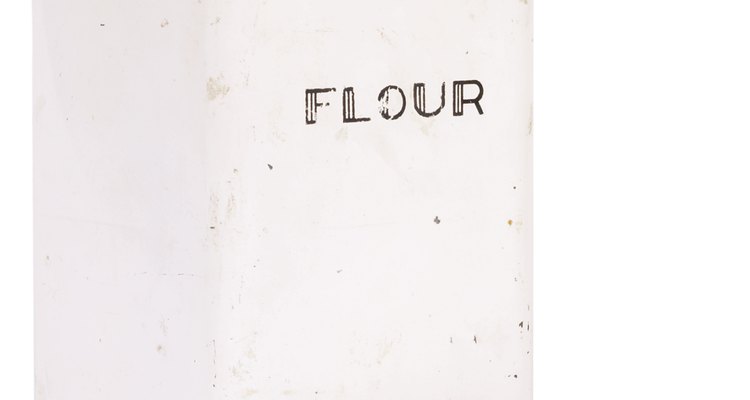
Flour doesn't store indefinitely, whether it's wheat, white, bleached or unbleached. Although it may not come with a definite expiration date, use it in a timely fashion to ensure that it has the best flavor and gives your baked good the proper texture. Flour storage times vary, depending on the type and the method used for storage.
Shelf Life
Bagged flour rarely has an expiration date, but it's usually stamped with a best-when-used-by date. Although flour stored in a sealed container and kept dry rarely molds, the oils in the wheat can go rancid or the flour may develop a stale flavor. Whole wheat flour contains more oils, so it goes rancid much more quickly than white or bleached flour. For the best results, use the flour by the date stamped on the package.
Flour Types
White flour usually retains its quality for six to 12 months at room temperature, while whole wheat flour is good for one to three months from the date of purchase. It's good practice to write the purchase date on the package so you can make sure the flour is used up before it becomes stale or rancid.
Pantry Storage
Unless flour moths are an issue, storing flour in the pantry in its original unopened package is a suitable method if you plan to use it within a few months. If moths are a problem, freeze the flour for 24 hours before moving it to the pantry. Once opened, repackage the flour in a tightly sealed, airtight container. The container prevents exposure to moisture, which can cause the flour to spoil more quickly.
Cold Storage
Cold storage, either in the refrigerator or freezer, can prolong the life of flour well beyond the use-by date. Package the flour in an airtight container or wrap the original packaging tightly with plastic wrap before storage. Store white flour for two years in the refrigerator and wheat flour for as long as six months. Storing in a 0-degree Fahrenheit freezer allows you to keep white flour indefinitely, or wheat flour for up to one year.
Related Articles

Does Flour Spoil?
Does it Help to Keep Flour in the ...
Does Flour Get Old or Go Bad?

If Flour Has Never Been Opened Can It ...
How to Store Flour

How to Keep Flour for Long-Term Storage
Can You Use Musty Smelling Flour?
How to Store Flours & Grains Without ...

How to Tell If Flour Is Rancid
How to Store Oat Bran
Differences Between Bleached Flour & ...

How Long Will Vital Wheat Gluten Last?

How Long Can Flour Be Stored in Mylar ...
How to Roast Chickpea Flour

How to Freeze Brioche

Does Bread Expire?

How to Freeze Tortilla Shells
How to Store Bulk Flour & Sugar

Methods of Long-Term Food Storage for ...
How to Substitute Cornstarch for ...
References
Writer Bio
Jenny Harrington has been a freelance writer since 2006. Her published articles have appeared in various print and online publications. Previously, she owned her own business, selling handmade items online, wholesale and at crafts fairs. Harrington's specialties include small business information, crafting, decorating and gardening.
Photo Credits
Hemera Technologies/PhotoObjects.net/Getty Images