Tight Hip Flexor at Night

Tight Hip Flexor at Night
Photo Credit hip xray image by JASON WINTER from Fotolia.com

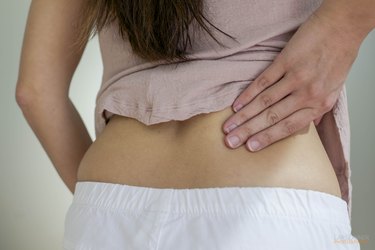
You don't always feel hip pain directly over the hip; you might feel it in the middle of the thigh or groin, according to MedlinePlus. A common cause of hip pain is tight hip flexors, which irritate the hip joint and can interfere with walking and other daily activities. This pain can be worse at night after a day of prolonged sitting or too much hip flexion. The tight muscles can inflame the bursa, a fluid-filled sac that helps decrease friction between muscles and bone. This is called iliopsoas bursitis and causes deep pain or tenderness on the front of the thigh. Hip pain can be caused by a variety of sources; knowing the anatomy of the joint can help you understand the effect of hip flexor tightness. Consult your doctor before self-treating.

Anatomy of the Hip

According to the book "Anatomy of Human Movement: Structure and Function," the hip joint is a synovial ball-and-socket joint that provides a wide range of movement for the process of locomotion. The hip joint connects the lower extremity with the pelvis and trunk. The hip joint is surround by a fibrous capsule, strong ligaments and stabilizing muscles. These muscles include the muscles known as the hip flexors. The hip flexors are made up of the psoas muscle and the iliacus muscle which are commonly called the iliopsoas. The rectus femoris muscle is part of the quadriceps and also aides in hip flexion.

What Causes Tight Hip Flexors

Hip flexors can become injured in sports that require a lot of kicking. They are also injured with repetitive use and can result without trauma from prolonged sitting. Jon Heck, the coordinator of athletic training at New Jersey's Richard Stockton College, reports that hip flexors can be strained from forceful contraction in sports such as soccer, and can also be the result of overuse micro-traumas. These micro-traumas can accumulate over time and eventually result in strain and pain.

Symptoms of Tight Hip Flexors

You may feel the pain of tight hip flexors throughout the day, but it is more common at night. This is most likely due to the effect of sitting throughout the day and the irritation that results from this prolonged hip flexion. At night, you will likely feel pain in the anterior thigh, deep beneath the surface of the muscles. Upward and forward leg movement or anything that flexes the hip can aggravate this pain.

Treatment

Hip flexor tightness is generally treated with stretching, ice, and exercise. Stretching will help ease the tension in the muscles, while ice will help decrease pain and inflammation. The American Academy of Orthopaedic Surgeons recommends exercise for back and hip pain, advising that regular exercises restore the strength of the back and can lead to a gradual return to everyday activities.

Hip Flexor Stretch

The American Academy of Orthopaedic Surgeons recommends a hip flexor stretch that begins with you on your back near the edge of a bed and holding your knees to your chest. Slowly lower one leg while keeping the knee bent until you feel a stretch across the top of the thigh. Hold this position for about 20 seconds, relax, then repeat three to five times on each side.

References

Article reviewed by Will McCahill Last updated on: Jun 14, 2011

Must see: Photo Galleries

Member Comments