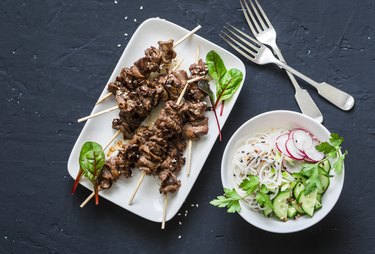
Monosodium glutamate, better known as MSG, is a flavor enhancer found in many packaged snacks, frozen TV dinners, cold cuts and even store-bought salad dressings.
This additive imparts food with an umami flavor, giving it a savory, meaty taste.
What Is MSG?
MSG was originally extracted from seaweed broth, but nowadays, it's made through natural fermentation, according to the International Food Information Council Foundation (IFICF).
"MSG has been around for centuries. It's really important to know that it is safe to consume and it is used to augment the flavor of foods," Bonnie Taub-Dix, RDN, creator of BetterThanDieting.com and author of Read It Before You Eat It: Taking You From Label to Table, tells LIVESTRONG.com.
While many of the rumblings on MSG have been around its so-called "adverse reactions," researchers haven't been able to find a reliable link between MSG and an allergy, according to the Mayo Clinic. As an additive, the Food and Drug Administration (FDA) considers MSG to be "generally recognized as safe" or GRAS, which means that experts have found MSG to be safe for consumption when used for its intended purpose.
MSG is made out of sodium and glutamate, the latter being an amino acid, aka a building block of protein. Glutamate is found naturally in many plant and animal proteins, per the IFICF.
"MSG had a negative connotation in the past, but because the younger generation is using more of it in cooking and research has shown that its negative effects are rare, the hype around it has calmed down," Taub-Dix says.
Foods With MSG
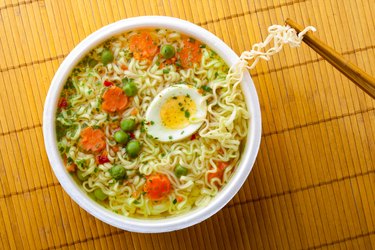
MSG is primarily found in processed foods. Some of the most common MSG food sources include:
1. Seasonings, Condiments and Sauces
- Soy sauce
- Fish sauce
- Oyster sauce
- Pre-made gravies and mixes
- Store-bought salad dressings
- Tomato and vegetable sauces
- Dips
2. Soups
- Canned soup
- Instant noodle soups
- Broth
- Bouillon cubes
- Seasoned salt
3. Processed Foods
- Frozen TV dinners
- Frozen pizza
- Cheese sauce
4. Packaged Foods and Snacks
- Potato chips
- Tortilla chips
- Corn-based chips
- Crackers
5. Processed Meats and Plant-Based Proteins
- Miso
- Tempeh
- Soy protein
- Processed meats and fish, including ham
- Hydrolyzed vegetable protein
- Protein isolate (milk protein isolate is a dry substance, created when the non-protein parts are removed from skim milk, per the American Dairy Products Institute).
It's common to taste MSG in Chinese takeout, per Mount Sinai. And, it's often found in fast food too — for example, the chicken sandwich at the Chick-fil-A chain is seasoned with MSG. You'll also find this flavor enhancer in several chicken products sold at McDonald's.
The FDA requires manufacturers to list MSG on the food label, so you can easily identify when it contains the flavor enhancer. If you're trying to avoid or limit MSG, it's important to read the ingredient list carefully. In addition to monosodium glutamate, MSG may also be listed as:
- Glutamate
- Glutamic acid
- Calcium glutamate
- Magnesium glutamate
- Disodium guanylate
- Disodium inosinate
- Disodium 5-ribonucleotide
- Magnesium glutamate
While MSG may be present in more foods than you'd expect, it is possible to avoid the ingredient and seek out MSG-free foods.
MSG vs. Glutamate
Despite its GRAS status, you may still have some reservations about MSG. To be clear, MSG and glutamate are indistinguishable by your body. This means that whether you're eating MSG or glutamate-containing foods (such as cheese or meat), your body metabolizes it in the same manner.
Despite its similar spelling, glutamate is not the same thing as gluten — the protein found in wheat, barley and rye products.
Glutamate, also referred to as glutamic acid, is essential for your body's metabolic function and is found in abundant amounts in its free form in your brain, where it serves as a neurotransmitter to aid in the communication between your brain cells, according to a March 2014 article in the Journal of Neural Transmission.
MSG and Sodium
MSG is a source of sodium but it contains about less than table salt. MSG has 12 percent sodium while sodium chloride has 39 percent, per a November 2019 study in Nutrients.
"It can be a good way to reduce your sodium intake while also enhancing the flavor of your food," Taub-Dix says, so long as you don't have a sensitivity to it.
FYI, the American Heart Association (AHA) recommends limiting your daily sodium intake to no more than 2,300 milligrams, with an ideal limit of 1,500 milligrams. Too much sodium in the diet increases your risk of high blood pressure and heart disease, according to the AHA.
Sensitivity to MSG
While allergic reactions have been reported, MSG isn't recognized as an allergen by the American College of Allergy, Asthma & Immunology. If you're experiencing reactions when you eat a food with MSG, it's more likely a sensitivity to the MSG.
A food allergy can lead to a life-threatening reaction, while a sensitivity causes unpleasant (but not life-threatening) symptoms, per Harvard Health Publishing.
If you suspect you have a sensitivity to MSG or some other food or additive, talk to your doctor. Here are some of the common symptoms associated with MSG sensitivity, according to the U.S. National Library of Medicine:
- Headaches
- Chest pain
- Flushing
- Sweating
- Heart palpitations
- Nausea
- Numbness or tingling in the face or neck
The Bottom Line
Researchers haven't been unable to find a definitive link between these symptoms and MSG. In the rare instances when they have occurred, the symptoms have been mild and resolved on their own without the need for medical care.
MSG's Effects on Appetite and Fullness
There's some evidence that MSG may stimulate the appetite and increase feelings of fullness.
MSG may potentially help increase appetite in older adults by improving taste sensations, per an April 2016 report in Natural Product Communications. As you get older, taste and smell sensations decrease, which may affect your desire to eat. A poor intake and dwindling appetite increase the risk of malnutrition and health complications.
"MSG gives a feeling of satiation. Our senses of taste include sweet, sour, bitter and umami. MSG gives the umami flavor, and the salt in it enhances the perception of sweetness and diminishes bitterness," Taub-Dix says.
When MSG was added to carrot soup, it helped improve appetite and also had a satiating effect, a January 2018 study in Appetite found. This small study (28 participants) found that when MSG was added to soup it didn't affect food intake, but it did increase feelings of fullness and decrease the desire to eat. The researchers concluded that MSG may affect the hormones in your gut that control appetite.
Moreover, the umami flavor that MSG added to foods may increase immediate appetite but also satiety, according to a June 2014 study in the American Journal of Clinical Nutrition.
While there are some benefits to using MSG, including the fact that it has less sodium than table salt, the evidence is limited.
As with any food additive, you still need to limit your MSG intake and keep in mind when you're using it.
Tip
If MSG is a staple in your kitchen, Taub-Dix recommends adding some of it to your dish at the end of your cooking instead of during your cooking process so you don't overuse it.