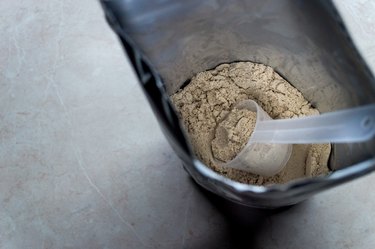
The amount of protein you consume is important for your health. Most people should consume 0.8 grams of protein per kilogram of body weight, but this amount can change based on various factors. People who are pregnant, lactating, have certain health issues or are very active typically require more protein than average.
Tip
Most people should consume 0.8 gram of protein per kilogram or 0.36 gram per pound of body weight, but this amount varies based on a number of factors.
Video of the Day
Protein Requirement Per Kilogram
You should know your protein requirement per kg of body weight. In general, the Recommended Dietary Allowance or RDA for protein is 0.8 gram per kilogram of body weight. This obviously means that your daily protein consumption is dependent on how much you weigh. However, it can also depend on your age or whether or not you're trying to lose weight, are an active athlete or are pregnant.
Video of the Day
Certain diets, like low-carbohydrate diets or the Atkins and paleo diets, may require you to consume more protein than this while still allowing you to consume a balanced diet. Other diets, like the Dukan or carnivore diet focus on consumption of only protein and fat.
Increasing the amount of protein you eat can be perfectly fine and healthy, especially if the protein you're consuming is coming from varied sources. However, according to the Harvard Medical School, consuming more than 2 grams of protein per kilogram of body weight or more could be bad for your health.
According to the Centers for Disease Control, the average American man weighs 195.7 pounds (or 88.77 kilograms), while the average American woman weighs 168.5 pounds (or 75.21 kilograms). Since the RDA is 0.8 gram of protein for every kilogram of body weight, this means that most men should consume about 71 grams of protein per day. Women, who are a bit smaller, should typically consume about 60 grams of protein per day.
Who Should Consume More Protein?
Many people choose to consume more than the RDA for protein. In some cases, this is perfectly OK and can even be beneficial to your health. People who should consume more protein than average include:
- Children and adolescents. Growing young people need more protein than average.
- Pregnant people. Pregnant people should consume 1.1 grams per kilogram of protein per day.
- Lactating people. Lactating people should consume 1.3
grams per kilogram of protein per day.
- Older adults. Older people may need more protein than average.
- People with certain health issues. People who are trying to manage symptoms associated with certain types of diseases, like inflammation, often need to decrease their carbohydrate intake and increase their protein intake. Consuming fewer carbohydrates and replacing those calories with healthy fats and protein can also help manage metabolic issues and insulin resistance.
- Athletes. Different types of athletes require different amounts of protein, with endurance athletes needing less protein than strength athletes.
- People trying to lose weight. A 2015 study in the American Journal of Clinical Nutrition indicates that increasing your protein consumption can not only help you lose weight but specifically reduce fat and maintain muscle in your body.
Benefits of Eating More Protein
According to a 2015 study in the American Journal of Clinical Nutrition, 1.2 to 1.6 grams is the ideal amount of protein for weight loss and many other health benefits. Increased protein consumption can help:
- Reduce waist circumference and overall weight loss
- Reduce triglyceride levels
- Reduce blood pressure
- Improve cardiometabolic risk factors
- Manage a range of diseases, including Type 2 diabetes, metabolic syndromes and sarcopenia
For certain people, consuming more protein is essential. For instance, athletes are more active than the average person and typically require increased amounts of calories. Depending on the sport, they may also actively be trying to become leaner or build muscle mass. The protein consumption of athletes can vary substantially given the type of sport, whether or not the athlete is trying to lose weight or build muscle and a variety of other factors.
According to an interview with Christopher Mohr, Ph.D., R.D., in Today's Dietitian, the protein consumption of athletes can range between 1.2 and 1.7 grams per kilogram of body weight depending on the sport. Endurance athletes typically consume less protein, in the range of 1.2 to 1.4 grams of protein per kilogram of body weight. Strength and power athletes, on the other hand, can consume up to 1.7 grams of protein per kilogram of body weight.
Read more: 7 Popular Protein Myths Totally Busted by Science
Excess Consumption of Protein
It's perfectly acceptable to increase the amount of protein you eat, but there are, of course, limits to the amount you should consume. According to the Harvard Medical School, eating 2 grams of protein per kilogram of body weight or more could be bad for your health. Some of the negatives that can occur when consuming too much protein include:
- High cholesterol, often associated with the consumption of too much saturated fat, which is found in animal products and other foods like coconuts
- Gastrointestinal system issues, including diarrhea and constipation
- Kidney problems, including kidney stones and kidney disease
- Increased risk of age-related diseases, including heart disease and cancer
- Weight gain
Consuming large amounts of protein over a short period of time likely won't affect you in these ways. However, long-term consumption of a high-protein diet may negatively affect your health.
If you choose to consume a substantial amount of protein each day, it's important to make sure that you still eat a balanced diet. In this case, that would mean choosing different types of protein, like fatty fish, eggs and plant-based proteins, as well as animal products. Consuming a variety of proteins will help increase the amount of nutrients in your diet, reduce the amount of saturated fat you're consuming and be better for your overall health.
Consuming Too Little Protein
Consuming too little protein is just as bad as consuming too much over long periods of time. People who consume too little protein may simply be adhering to vegan, vegetarian or other diets that feature many plant-based foods. Regardless of the diet you choose to follow, a balanced diet should typically have about 50 to 60 percent carbohydrates, 12 to 20 percent protein and 30 percent fat. Using these ratios as a guideline, you can adjust your protein consumption to whatever is best for you.
You should be aware that a protein intake of less than 5 percent, can cause loss of muscle mass and is considered to be too little to sustain good health. Even low-fat, low-protein, high-carbohydrate diets involve consuming a minimum of this much protein.
If you want to make sure that you're getting the right amount of protein each day, you can use the United States Department of Agriculture Dietary Reference Intakes Calculator. This tool will not only show you how much protein to eat, but the amounts of all the nutrients you should consume to maintain good overall health. These days, many different apps are also available to help you determine the amount of protein that's suitable for you, regardless of whether you're trying to lose weight, build muscle or just stay healthy.
- USDA: DRI Calculator for Healthcare Professionals
- Age and Ageing: New Horizons: Dietary Protein, Ageing and the Okinawan Ratio
- Kaiser Permanente: Balancing Carbs, Protein, and Fat
- Harvard Health Publishing: Harvard Medical School: When It Comes To Protein, How Much Is Too Much?
- The American Journal of Clinical Nutrition: The Role of Protein in Weight Loss and Maintenance
- Today's Dietitian: Athletes and Protein Intake
- Current Opinions in Clinical Nutrition and Metabolic Care: Effects of Inflammation and/or Inactivity on the Need for Dietary Protein
- International Journal for Vitamin and Nutrition Research: Protein Intake and Bone Health.
- Food and Nutrition Board, Institute of Medicine, National Academies: Dietary Reference Intakes (DRIs): Recommended Dietary Allowances and Adequate Intakes, Total Water and Macronutrients
- Centers for Disease Control and Prevention: National Center for Health Statistics: Measured Average Height, Weight, and Waist Circumference for Adults Aged 20 and Over
- Popular Science: Please Do Not Try to Survive on an All-Meat Diet
- BBC: Good Food: What Is the Dukan Diet?
- Healthline: Protein Intake – How Much Protein Should You Eat Per Day?