
Growing out hair from a relaxer, or transitioning, may be tricky because hair breakage is a common side effect of growing out your permed hair, reports Essence.com. Additionally, relaxers, even the non-lye variety, chemically weaken the hair, making it more prone to split ends. In some cases, it may just be easier to take the plunge and cut off all but the new growth. For those who wish to try a slow transition and want to preserve as much length as possible, you'll need a step-by-step process to protect and grow out your permed locks.

Moisturize at every opportunity. Use a moisturizing shampoo designed for damaged or color treated hair. Use both rinsing and leave-in conditioners, designed to restore moisture to the hair. Deep condition at least twice a month and apply a hot oil treatment once a month. Use light, natural hair oils, such as olive or jojoba, and avoid alcohol-based styling products.
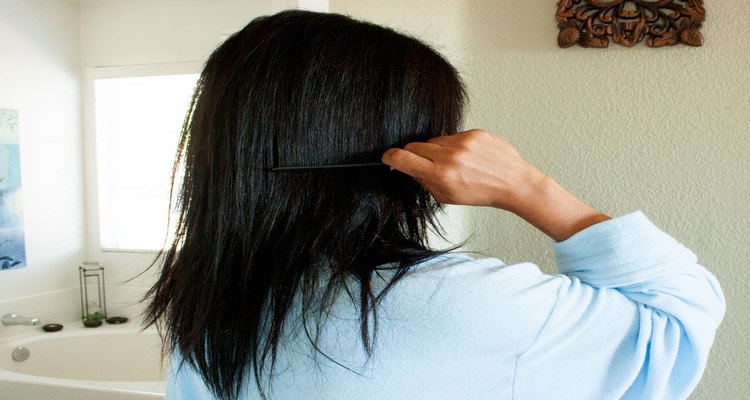
Comb your hair carefully. Your hair may mat where the new growth meets the relaxed hair; combing too roughly can cause the relaxed hair to break off. Use a wide-toothed comb and spray your hair with a detangling agent to prevent breakage. Detangle the ends first and then work your way back to the root.
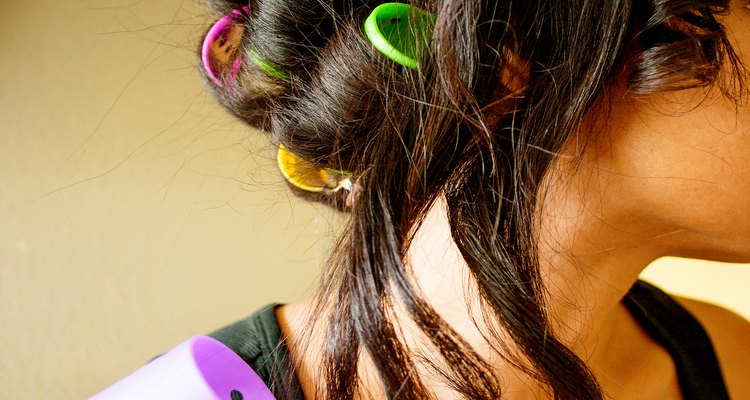
Style your hair in length-preserving styles. Opt for braids or twists instead of heat-based styles. Curl your hair with rollers instead of a curling iron. Go for a wrap instead of a flat-ironed style. If you must use heat, use as little as possible. Braid your hair, or cover your head with a scarf when sleeping. Loose hair can snag on a pillow and cause breakage.
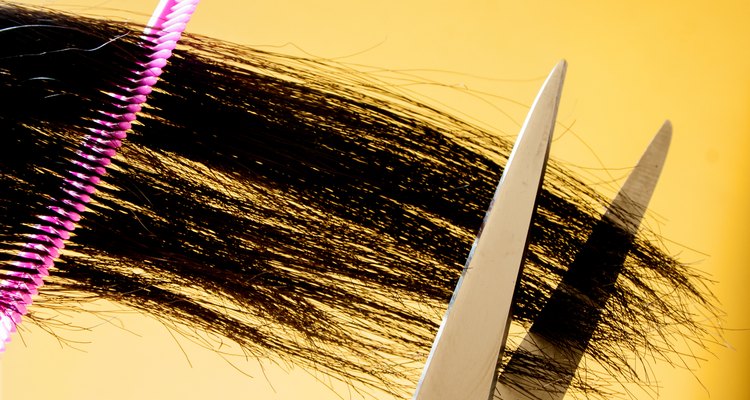
Trim your hair regularly. Unlike cutting, you’re not removing significant length; you are simply removing damaged ends that can hamper hair growth. Get your hair professionally trimmed every 2 to 3 months, preferably with a stylist who specializes in natural hair.
Go natural and avoid chemicals. Coloring and products that texturize and soften your natural curl can also damage your hair. If you must apply chemicals to your hair, go to a professional stylist rather than doing it yourself.
Related Articles

Easy Way to Take Out Micro Braids

How to Maintain a Deep Wave Weave

How to Deep Condition Extensions
How to Cleanse the Hair Without Water

How to Go from a Perm to Natural Black ...

How to Stop Your Hair From Looking Dry ...

Chi Thermal Hair Straightener Treatment

How to Get a Healthy Spiral Perm
How to Preserve Curls Overnight

How to Change from a Relaxer to a Perm

Taming Over-Permed Hair
How to Correct Uneven Blond Bleaching
How to Deal with an Itchy Weave

Products That Relax Curls
How to Use Shea Butter on Natural Hair

How to Stretch Out Curls
How to Make a Human Hair Weave Soft ...
How to Grow Shaggy Hair
How Soon Can You Color Your Hair After ...

How to Take Care of a Wet & Wavy Weave
References
- "Thank God I'm Natural";Chris-Tia E. Donaldson;
- "No Lye! The African-American Woman's Guide to Natural Hair Care"; Tulani Kinard;
- "Textured Tresses: The Ultimate Guide to Maintaining and Styling Natural Hair";Diane DaCosta with Paula T. Renfroe
- Essence: The Great Growout, Pt. 1: Growing Out A Perm
- Cosmopolitan: Relaxed-Hair Help
Writer Bio
Julia Michelle has been writing professionally since January 2009. Her specialties include massage therapy, computer tech support, land and aquatic personal training, aquatic group fitness and Reiki. She has an Associate in Applied Science from Cincinnati State Technical and Community College in integrative medical massage therapy.
Photo Credits
Maryurys Connolly/Demand Media