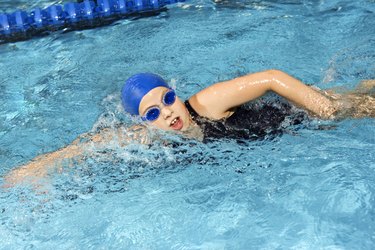
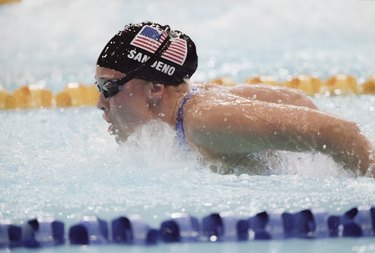
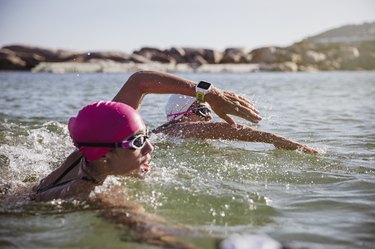
Meal planning is essential for competitive swimmers, who need to eat before and after practice to fuel workouts. Any diet plan for a female swimmer or other athlete — including one who swims for fitness and doesn't compete — should include a protein source and carbohydrate foods, and also meet water and hydration needs.
"Many swimmers ask what they should be eating on the day of a meet or the night before in order to swim fast," notes U.S.A. Swimming (USAS). "By then, it's too late. Eating healthy for optimum performance doesn't begin the day of the meet or the night before. It's a healthy lifestyle, an everyday training commitment."
Video of the Day
Video of the Day
As Sports Dietitians Australia (SDA) points out, swimmers often train more than six hours a week, and one session can cover 10 kilometers. "Training commitments are usually lower at a school or club level but still involve multiple training session per week, usually held very early in the morning," observes SDA. Competitive swim teams often practice twice a day, making meal planning essential.
When it comes to meal plans for athletes fueling up for competition, the U.S. Olympic & Paralympic Committee's Sport Nutrition Team (USOPC) recommends eating a balanced meal 3 to 4 hours before competing, or a smaller meal or larger snack 2 hours before. Eating small meals and snacks throughout the day can help a swimmer or other athlete maintain calorie and nutrient needs in the midst of a busy training and competition schedule.
Here's what to focus on when planning a swimmer's diet.
Carbohydrate Foods
Swimming is an aerobic physical activity that uses a lot of energy. Depending on the stroke, it burns an average of around 200 to 450 calories per half hour, according to the organization Swim England. (The breaststroke burns the fewest calories; the butterfly, the most.) Carbohydrates give the body energy, which is obviously crucial for sports and exercise like swimming. That's why carbohydrates should be the backbone of any swimmer's diet plan.
"Athletes need to consume adequate carbohydrate to optimize carbohydrate stores (glycogen) in the liver and muscle," says the USOPC. "This helps maintain blood sugar levels and fuels muscle contraction. Insufficient carbohydrate intake decreases the ability to sustain heavy loads and high-intensity exercise."
If it isn't possible to eat a balanced breakfast 3 or 4 hours prior to a morning competition, the USOPC advises that swimmers — and other athletes who must display "continuous endurance" — "eat a carbohydrate-rich dinner the night before and a light breakfast."
Choosing complex carbohydrates like whole grains over refined sugars will protect you from energy crashes. "Complex carbohydrates are digested more slowly and supply a lower, more steady release of glucose into the bloodstream," says the American Heart Association. Result: longer-lasting energy.
Fruits, vegetables and whole grains such as oats, rice and whole-grain breads and cereals are all good carbohydrate sources for swimmers.
A Protein Source
Protein develops and repairs muscle. It's also filling. "Adding protein to your meal can help delay the onset of hunger during competition," says the USOPC. Their example of a healthy night-before-the-race dinner for swimmers consists of 4 ounces of chicken, a cup and a half of whole-grain pasta, a cup of roasted vegetables and an eight-ounce glass of water.
The body needs proteins to build new tissues. As a July 2021 article published by the Cleveland Clinic explains, "Protein speeds up exercise recovery and injury [repair]."
High-quality sources of animal protein include poultry, beef, eggs, dairy and fish. Vegetable protein sources include legumes and nuts. Swimmers can easily boost their protein intake by adding nuts, peanut butter and/or milk to meals and snacks. This is especially wise during post-race recovery. SDA lists ham-and-cheese wraps, dairy smoothies and omelets as good, protein-rich recovery meals.
Tip
A healthy breakfast is a crucial part of any athlete's diet plan, per Sports Dietitians Australia (SDA). It replenishes your levels of glycogen — the stored form of glucose — which may be a bit low after sleeping. Start fueling your muscles with energy earlier in the day to avoid an energy slump later on. "Typically, training sessions are held early in the morning and as a result some swimmers skip breakfast before training," observes SDA. "Ideally, swimmers should aim to eat breakfast or a light snack prior to training to maximize performance – especially for key training sessions."
Water Needs and Hydration
Water is a crucial part of any athlete's diet. To avoid dehydration, which can cause overheating and fatigue, swimmers need to replace all of the fluid they lose through sweat and urine. "Dehydration of just 3 to 4 percent of your body weight can reduce muscle strength by about 2 percent," warns USAS.
Current dietary recommendations from the University of Missouri System (UMS) and other sources say the average person needs to drink half their weight in ounces of water each day — so if you're 140 pounds, you should be drinking at least 70 ounces of water daily. But athletes need a lot more than that. The UMS suggests "adding 12 ounces of water to your daily intake for every 30 minutes that you plan to work out."
USAS, meanwhile, advises swimmers to drink 8 ounces of water for every 15 minutes of activity. An easy way to track this is to simply count your swallows: "A large swallow is about an ounce," they note, "so take 8 swallows of your drink when you get a break."
"Pool areas (especially indoors) are often warm and humid, which increases fluid losses," concludes SDA. "Water bottles should be taken to training and competitions and placed in an easily accessible location to ensure fluids are consumed regularly."
Another Diet Need for Swimmers: Electrolytes
"Nearly every fluid and cell in your body contains electrolytes," says the Cleveland Clinic. "They help your body regulate chemical reactions, maintain the balance between fluids inside and outside your cells, and more."
Says U.S. Masters Swimming (USMS), "The average athlete can lose 1 to 3 liters of sweat an hour, a figure that depends on variables such as the temperature and elevation the exercise is performed, how fit the athlete is, the intensity of the workout, and how long the activity is." Potassium, magnesium and calcium are three of the important electrolytes that athletes lose through sweating and urination.
If they don't have enough of these minerals in their system — or neglect to replace them — an athlete could cramp up. "Too little potassium, calcium or magnesium in the diet can cause leg cramps," cautions the Mayo Clinic. "A muscle cramp can happen after working a muscle too hard or straining it, losing body fluids through sweat or simply holding a position for a long time."
Obviously, this could have a serious impact on athletic performance. To replenish electrolytes, USMS suggests snacking on salted fruits or vegetables like tomatoes or apples, or sipping a sports drink.
"Sports drinks help you hydrate better than water alone because they contain important electrolytes such as calcium, chloride, magnesium, potassium and sodium," they say. "These electrolytes can help maintain fluid balance, prevent cramping, regulate muscle contraction and relaxation, and regulate heart rhythm and blood pressure."
And that's a win.
- Cleveland Clinic: "What Are the Best Sources of Protein?"
- U.S.A. Swimming: "Nutrition and Recovery"
- U.S. Olympic & Paralympic Committee: "Fueling for Competition"
- U.S. Masters Swimming: " What Swimmers Need to Know About Sports Drinks"
- Mayo Clinic: "Muscle Cramp"
- Sports Dietitians Australia: "Swimming"
- Swim England: "The Best Swimming Stroke for Weight Loss"
- American Heart Association: "Carbohydrates"
- University of Missouri System: "How to Calculate How Much Water You Should Drink"
- U.S.A. Swimming: "Summer Hydration Tips for Swimmers"
- Cleveland Clinic: "Electrolytes"