Can Herbs Treat High Platelet Counts?
Platelets are cell fragments that are present in blood. They help stop bleeding from skin wounds, ulcers and damaged and diseased organs. In healthy individuals, each milliliter of blood contains between 250,000 and 500,000 platelets, according to the University of Nebraska at Omaha. If your blood contains higher concentrations, you may be at risk for internal blood clots, which can cause stroke or heart attack. Certain herbs may help control platelet counts in your bloodstream or prevent them from forming clots. Check with your doctor before using any herb to treat high platelet counts.
Ginkgo Biloba
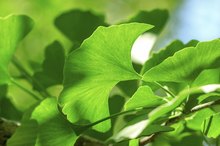
Ginkgo biloba, an herb native to China, is marketed in the United States and Europe as a memory enhancer. However, it also has a long history of use as a circulation enhancer. The leaves of the ginkgo tree contain terpenoids, which may reduce the stickiness of blood platelets, according to the University of Maryland Medical Center. This may lessen your risk of internal blood clots, and may allow your body to more efficiently remove excess platelets from your bloodstream. Contact your physician if you plan to use ginkgo -- this herb may reduce the effectiveness of anticonvulsant medications.
- Ginkgo biloba, an herb native to China, is marketed in the United States and Europe as a memory enhancer.
- The leaves of the ginkgo tree contain terpenoids, which may reduce the stickiness of blood platelets, according to the University of Maryland Medical Center.
Garlic
Herbs for Dissolving a Blood Clot
Learn More
Garlic has been used in herbal medicine for more than 5,000 years, Egyptian pharaohs distributed this herb to slaves to prevent illness and increase physical strength, according to Michael Castleman, author of "The New Healing Herbs." Allicin, a chemical compound found in freshly chopped or crushed garlic cloves, may decrease your body's ability to produce platelets. This may help lower total platelet counts in your bloodstream. Talk to your doctor before using garlic to reduce platelet counts. Garlic may occasionally cause skin rashes and digestive upset.
- Garlic has been used in herbal medicine for more than 5,000 years, Egyptian pharaohs distributed this herb to slaves to prevent illness and increase physical strength, according to Michael Castleman, author of "The New Healing Herbs."
- Talk to your doctor before using garlic to reduce platelet counts.
Ginseng
Ginseng is well-known in the United States as an energy-boosting herbal supplement. However, this herb may also help prevent internal blood clots and reduce heart attack and stroke risk, according to Castleman. Like ginkgo biloba, ginseng may help reduce the tendency of blood platelets to clump together or adhere to cell walls. Check with your physician if you plan to use ginseng to address a high blood platelet count. In rare cases, it may contribute to insomnia or stomach discomfort.
- Ginseng is well-known in the United States as an energy-boosting herbal supplement.
- However, this herb may also help prevent internal blood clots and reduce heart attack and stroke risk, according to Castleman.
Considerations
Herbs That Lower Blood Pressure Quickly
Learn More
Avoid using herbs to treat high platelet counts if you take anti-clotting medications, such as warfarin or clopidogrel. Using platelet-reducing herbs in conjunction with prescription anti-clotting drugs may cause excessive blood thinning, which can contribute to uncontrolled bleeding from wounds.
Herbs are not replacements for medical supervision or prescription medications. Blood clots pose serious risks to your health, and can cause permanent injury, disability or death.
- Avoid using herbs to treat high platelet counts if you take anti-clotting medications, such as warfarin or clopidogrel.
- Using platelet-reducing herbs in conjunction with prescription anti-clotting drugs may cause excessive blood thinning, which can contribute to uncontrolled bleeding from wounds.
Related Articles
Herbs for Dissolving a Blood Clot
Learn More
Herbs That Lower Blood Pressure Quickly
Learn More
Herbs to Increase White Blood Cells
Learn More
Herbal Remedies for Dermatitis Stasis
Learn More
Herbs That Stop Heavy Bleeding With Fibroids
Learn More
What Are the Causes of Low Platelets & Low White Blood Cells?
Learn More
Does Echinacea Thin Your Blood?
Learn More
Can Herbs Strengthen Capillary Walls?
Learn More
What Are the Causes of Low Platelets & Low White Blood Cells?
Learn More
Are There Herbs That Increase Blood Oxygen Levels?
Learn More
References
- University of Maryland Medical Center; Ginkgo Biloba
- "The New Healing Herbs"; Michael Castleman; 2010
- Khan A, Haider I, Ayub M, Khan S. Mean Platelet Volume (MPV) as an indicator of disease activity and severity in lupus. F1000Res. 2017;6:126. doi:10.12688/f1000research.10763.3
- Rivera FJ, Kazanis I, Ghevaert C, Aigner L. Beyond Clotting: A Role of Platelets in CNS Repair? Front Cell Neurosci. 2015;9:511. doi:10.3389/fncel.2015.00511
- Rossi M, Lewis M, Hutchinson N. Coronary artery bypass grafting in idiopathic thrombocytopenia: use of thromboelastometry without platelet transfusion. Tex Heart Inst J. 2010;37(3):361–364.
- Kayal L, Jayachandran S, Singh K. Idiopathic thrombocytopenic purpura. Contemp Clin Dent. 2014;5(3):410–414. doi:10.4103/0976-237X.137976
- Panova-noeva M, Schulz A, Hermanns MI, et al. Sex-specific differences in genetic and nongenetic determinants of mean platelet volume: results from the Gutenberg Health Study. Blood. 2016;127(2):251-9. doi:10.1182/blood-2015-07-660308
- Icli A, Tayyar S, Varol E, et al. Mean platelet volume is increased in infective endocarditis and decreases after treatment. Med Princ Pract. 2013;22(3):270–273. doi:10.1159/000345393
- Yan K, Ding B, Huang J, Dai Y, Xiong S, Zhai Z. Normal platelet counts mask abnormal thrombopoiesis in patients with chronic myeloid leukemia. Oncol Lett. 2015;10(4):2390–2394. doi:10.3892/ol.2015.3502
- Schmoeller D, Picarelli MM, Paz munhoz T, Poli de figueiredo CE, Staub HL. Mean Platelet Volume and Immature Platelet Fraction in Autoimmune Disorders. Front Med (Lausanne). 2017;4:146. doi:10.3389/fmed.2017.00146
- Cumhur Cure M, Cure E, Yuce S, Yazici T, Karakoyun I, Efe H. Mean platelet volume and vitamin D level. Ann Lab Med. 2014;34(2):98–103. doi:10.3343/alm.2014.34.2.98
- Al-sweedan SA, Alhaj M. The effect of low altitude on blood count parameters. Hematol Oncol Stem Cell Ther. 2012;5(3):158-61. doi:10.5144/1658-3876.2012.158
- Alper AT, Sevimli S, Hasdemir H, et al. Effects of high altitude and sea level on mean platelet volume and platelet count in patients with acute coronary syndrome. J Thromb Thrombolysis. 2009;27(2):130-4. doi:10.1007/s11239-007-0159-9
- Ciftci H, Yeni E, Demir M, et al. Can the mean platelet volume be a risk factor for vasculogenic erectile dysfunction? World J Mens Health. 2013;31(3):215–219. doi:10.5534/wjmh.2013.31.3.215
- Qadri S, Holman S, Dehovitz J, Crystal H, Minkoff H, Lazar JM. Mean platelet volume is decreased in HIV-infected women. HIV Med. 2013;14(9):549-55. doi:10.1111/hiv.12048
- Ranjith MP, DivyaRaj R, Mathew D, George B, Krishnan MN. Mean platelet volume and cardiovascular outcomes in acute myocardial infarction. Heart Asia. 2016;8(1):16–20. doi:10.1136/heartasia-2015-010696
- Alper AT, Sevimli S, Hasdemir H, et al. Effects of high altitude and sea level on mean platelet volume and platelet count in patients with acute coronary syndrome. J Thromb Thrombolysis. 2009 Feb;27(2):130-4. Epub 2007 Nov 4.
- Al-Sweedan SA, Alhaj M. The effect of low altitude on blood count parameters. Hematol Oncol Stem Cell Ther. 2012;5(3):158-61. doi: 10.5144/1658-3876.2012.158.
- Joergensen MK, Bathum L. Reference intervals for mean platelet volume and immature platelet fraction determined on a sysmex XE5000 hematology analyzer. Scand J Clin Lab Invest. 2016;76(2):172-6. doi: 10.3109/00365513.2015.1124448. Epub 2016 Feb 6.
- Maluf CB, Barreto SM, Vidigal PG. Standardization and reference intervals of platelet volume indices: Insight from the Brazilian longitudinal study of adult health (ELSA-BRASIL). Platelets. 2015;26(5):413-20.doi:10.3109/09537104.2014.942620. Epub 2014 Aug 7.
- Panova-Noeva M, Schulz A, Hermanns MI, et al. Sex-specific differences in genetic and nongenetic determinants of mean platelet volume: results from the Gutenberg Health Study. Blood. 2016 Jan 14;127(2):251-9. doi: 10.1182/blood-2015-07-660308. Epub 2015 Oct 30.
Writer Bio
Owen Pearson is a freelance writer who began writing professionally in 2001, focusing on nutritional and health topics. After selling abstract art online for five years, Pearson published a nonfiction book detailing the process of building a successful online art business. Pearson obtained a bachelor's degree in art from the University of Rio Grande in 1997.