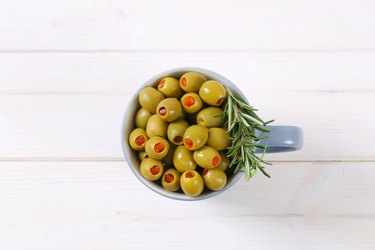
Olives are a popular food, particularly in the Mediterranean. Italy is famous for its stuffed olives, but many other countries — including Greece, Malta, Portugal and Spain — have created their own variations of stuffed olives too. The nutrition of stuffed green olives changes based on the type of olive and type of stuffing used, as well as the method used to cure them.
However, they are generally considered a tasty and healthy snack and you can expect the following from a serving of stuffed green olives:
Video of the Day
Video of the Day
- 20 calories
- 2 grams of fat
- 1 gram of carbohydrates
- 0 grams of protein
Read more: Are Canned Olives Healthy Food?
Types of Stuffed Green Olives
Olives, particularly green olives, are a traditional part of many Mediterranean cuisines. Over time, they have become part of many cuisines around the world, particularly in North and South American dishes.
These days, stuffed green olives are a popular food sold around the world. One of the most common types of stuffed olive is the plump, succulent Castelvetrano olive, stuffed with pimiento — a red pepper paste. This is the type of olive you're likely to find in a dirty martini or tuna salad.
Other types of stuffed olives are also popular. You'll find green olives stuffed with anchovies, cream cheese, garlic, jalapeno peppers and tuna in the supermarket. If you're in a restaurant, you may even encounter a breaded, fried, sausage-stuffed green olive. This dish is known as olive Ascolana and is an Italian delicacy.
Stuffed Olives Nutrition
As you can imagine, there's an incredible nutritional difference between an anchovy-stuffed olive and an olive Ascolana. However, the nutrition of most popular stuffed olives— typically made from Castelvetrano, Manzanilla or Queen olives — is quite similar regardless of any difference in olive type or stuffing. Stuffed olives usually have about 20 to 25 calories, 2 grams of fat and 200 milligrams of sodium per serving.
Regardless of whether you're eating an anchovy-stuffed olive or a jalapeno-stuffed one, there's such a small amount of stuffing that the majority of nutrients come from the olive itself. Only fried, stuffed olives are dramatically different from a nutritional perspective; these have 77 calories, 4 grams of fat and 5 grams of carbs and protein.
Pickled olives contain little fiber and protein. However, they are rich in sodium, like other pickled foods. They also contain several vitamins and minerals, including copper, calcium, iron, magnesium, vitamin A and vitamin E.
The serving size of olives is pretty small — it's usually just about four olives (14 to 16 grams). That makes the amount of most of these nutrients, besides sodium, practically negligible. Not even sodium content is reliably the same, though, as the way olives are fermented can influence their sodium content.
Why are olives considered healthy, then? They also contain anti-inflammatory, antioxidant and antimicrobial properties. These properties differ between stuffed olives, as well as the type of olive being consumed and the fermentation process.
For instance, olives fermented with olive extract can have more antioxidant activity than those fermented with the standard commercial starter. Fermentation typically involves healthy bacteria, such as lactic acid bacteria. This also means that fermented olives are essentially delivering probiotics to your gut.
If you're keen on eating olives to consume these benefits, you can use stuffed olives in various types of salads or as a pizza topping, and you can even blend them into hummus. Always try to look for a low-sodium version. Alternatively, you can also get the nutritional benefits of olives from a different type of olive product, like olive oil.
Read more: The Hidden Benefits of Greek Olive Oil
- Musco Family Olive Co.: Pearls
- Journal of Agricultural and Food Chemistry: Biophenols in Table Olives
- Fermented Foods in Health and Disease Prevention: Chapter 22 - Role of Natural Fermented Olives in Health and Disease
- Frontiers in Microbiology: Fermentation of Nocellara Etnea Table Olives by Functional Starter Cultures at Different Low Salt Concentrations
- Food Research International: Effects of olive leaf extract addition on fermentative and oxidative processes of table olives and their nutritional properties
- Food & Function: Bioactivity and phenolic composition from natural fermented table olives
- NPR Kitchen Window: An Unexpected Delight: Fried Olives in Italy
- Self: Nutrition Data: Olives, pickled, canned or bottled, green
- USDA Food Composition Databases: Stuffed Olives
- Spruce Eats: Stuffed and Fried Ascolana Olives (Olive all'ascolana) Recipe