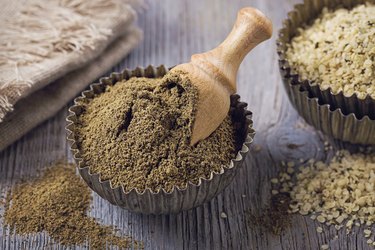
As people become more aware of the benefits of hemp protein, they're flocking to this plant-based supplement. Since 2011, sales of hemp-based products have risen 10 to 20 percent, accounting for almost $700 million in revenue yearly. But what is it about hemp seeds' nutrition that makes them so appealing to consumers?
Hemp not only has a high protein content, but its protein is more easily digested and absorbed than other plant-based proteins. It's also high in fiber and essential fatty acids and its protein is more soluble than other plant-based proteins, making it an easy addition to your morning smoothie.
Video of the Day
Video of the Day
What Is Hemp?
There's some controversy surrounding hemp, most stemming from a misunderstanding about its origins. Hemp is a strain of the Cannabis sativa L. plant. Marijuana is also classified as a Cannabis sativa L. plant. Because they both belong to the same plant family, people confuse the two, but they're vastly different.
Unlike marijuana, which produces psychoactive effects in its users, hemp does not. That's because marijuana is high in a cannabinoid called THC, which is responsible for eliciting the "high" it produces, while hemp contains only trace amounts, or less than 0.3 percent. Because of this, consuming hemp protein is not only safe, it's highly beneficial.
What Is Hemp Protein?
The hemp plant produces shelled seeds that are often called "hemp hearts." To make hemp protein, manufacturers first remove the outer shell of the hemp seed and then put the de-shelled seed through a cold-pressing process that removes some of its natural oil content. The seeds are then ground into a fine powder and sifted to produce a uniform product.
According to the Michigan Medicine Frankel Cardiovascular Center, hemp protein contains around 35 to 50 percent protein, 20 to 35 percent carbohydrates (which mostly comes from fiber) and 10 percent fat (largely in the form of essential fatty acids).
Hemp Protein Content
Protein is found in almost every part of your body. It keeps your hair, skin, bones and muscles strong, allows various chemical reactions to take place and makes sure your blood is healthy. Hemp protein powder is a fairly rich source of the macronutrient, especially for a plant-based product. A three-tablespoon serving of hemp protein offers 9.75 grams of protein. But it's not just the amount of protein that's beneficial — it's also its quality.
Protein is divided into two major classes: complete proteins and incomplete proteins. Complete proteins contain all the essential amino acids, or the amino acids that your body doesn't make on its own. Incomplete proteins are proteins that are either missing or deficient in at least one of the essential amino acids. According to the Food and Drug Administration, most plant-based or vegan protein sources are incomplete proteins.
However, this isn't the case with hemp protein. A January 2019 report in Food Research International notes that, unlike other plant-based protein sources, hemp contains all the essential amino acids your body needs, which makes it a complete protein.
Low in Anti-Nutrients
Many plant foods, like whole grains, seeds, legumes and nuts, contain compounds called anti-nutrients. These anti-nutrients exist as the plant's natural defense from the wild (they prevent the plant from being eaten by insects and birds and protect the plant against bacterial infections), but in humans, anti-nutrients block the absorption of vitamins and minerals and make the food harder to digest.
One type of anti-nutrient, called phytate or phytic acid, decreases the absorption of iron, zinc, magnesium and calcium specifically, while another, called tannins, inhibits the absorption of iron. Unlike other plant-based proteins like soy and pea, hemp contains low levels of both phytic acid and tannins, so you're better able to absorb all the minerals in the plant.
High in Fiber
Hemp protein is also rich in fiber. Although the plant contains both types of fiber (soluble and insoluble), the large majority is in the form of insoluble fiber. Unlike other protein powders which can be constipating, hemp protein may help improve bowel movements, making them more frequent and easier to pass, due to its high, insoluble fiber content.
A three-tablespoon serving of hemp protein contains 8.3 grams of carbohydrates. More than 60 percent of those carbohydrates, or 5.2 grams, come from fiber. Because of this, hemp protein may also be considered a low-carbohydrate food, providing only 3.1 grams of net carbs per serving.
Lots of Unsaturated Fatty Acids
Like essential amino acids, essential fatty acids are those that the body can't make. That means you need to get them from your diet in order to stay as healthy as possible. Hemp protein contains around 80 percent polyunsaturated fat and provides a balance of both omega-3 and omega-6 essential fatty acids, like alpha-linolenic acid, or ALA, and gamma-linolenic acid, or GLA.
These types of fats keep your heart healthy and lower your risk of stroke, heart disease and heart attack. Omega-3 fatty acids also play a role in brain and eye health and contribute to the proper development of the nervous system.
Read more: 18 Fat-Rich Foods That Are Good for You
Hemp Seeds Nutrition
In addition to high-quality protein, fiber and essential fatty acids, hemp seeds also contain a handful of micronutrients that help keep your body healthy. A three-tablespoon serving of hemp seeds contains:
- 20 milligrams of calcium
- 3.6 milligrams of iron
- 180 milligrams of magnesium
- 450 milligrams of phosphorus
- 3 milligrams of zinc
- 2.1 milligrams of manganese
These minerals work together synergistically to provide other various hemp seeds benefits. Calcium, phosphorus and magnesium work together to keep your bones and teeth strong, while iron makes sure your red blood cells stay healthy. Zinc and manganese make up the foundation of many enzymes, which are proteins that are vital to ensuring that necessary chemical reactions are carried out in your body.
How to Include Hemp Protein
Because it's highly water soluble — meaning that it blends into different foods and drinks easily (unlike other plant-based proteins) — you can easily add it into many things that you already eat and drink.
Put a scoop in your morning smoothie or stir it into your yogurt. Add a little bit to baked goods or make protein pancakes with it.
- Michigan Medicine: Frankel Cardiovascular Center: "Hemp Protein"
- Nutrients: "Effects of Vegetable Proteins on Hypercholesterolemia and Gut Microbiota Modulation"
- Plant Foods for Human Nutrition: "Nutritional Value of Commercial Protein-Rich Plant Products"
- Today's Dietitian: "Health Benefits of Hemp Seeds"
- Sustainable Protein Sources: "Chapter 7 - Hemp Seed (Cannabis sativa L.) Proteins: Composition, Structure, Enzymatic Modification, and Functional or Bioactive Properties"
- Food Research International: "Production, Digestibility and Allergenicity of Hemp (Cannabis sativa L.) Protein Isolates"
- Congressional Research Service: "Hemp as an Agricultural Commodity"
- Food and Drug Administration: "Protein"
- Harvard T.H. Chan School of Public Health: "Protein"
- University of Michigan: Michigan Medicine: "Minerals: Their Functions and Sources"
- Mayo Clinic: "Dietary Fiber: Essential for a Healthy Diet"
- Circulation: "Biomarkers of Dietary Omega-6 Fatty Acids and Incident Cardiovascular Disease and Mortality"
- Academy of Nutrition and Dietetics: "Do Kids Need Omega 3 Fats"
- USDA Branded Food Products Database: "Full Report (All Nutrients): Organic Hemp Powder"
- USDA Branded Food Products Database: "Full Report (All Nutrients): Manitoba Harvest Hemp Foods, Hemp Hearts, Raw Shelled Hemp Seeds"
- Harvard T.H. Chan School of Public Health: "Are Anti-Nutrients Harmful?"