
Talk to a handful of people about protein, and the odds are good you'll hear plenty of contradictory statements. It seems many of us are confused on everything from how much protein we really need to whether all protein sources are created equal.
But first, it's important to understand why protein matters. It's one of three macronutrients — along with carbohydrates and fats — that you should eat every day. Protein is a molecule made up of amino acids, according to the National Institutes of Health (NIH), and is commonly referred to as the building block of life.
Video of the Day
Video of the Day
"Protein does a lot of great things for our bodies. It builds new cells, repairs old ones, keeps our muscles and bones strong and even helps us feel full between meals," says Abby Sauer, MPH, RD, a dietitian with Abbott.
But despite being so essential to our survival, many myths remain about protein — here, we've debunked them with the latest research with input from registered dietitians.
1. All Protein Sources Are the Same
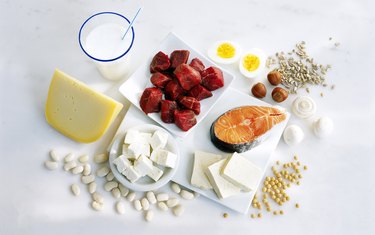
You'll find protein in many foods you eat: meat, dairy, vegetables, grains and so on. But, not all proteins are equal, says Amy Shapiro, RD, CDN.
Proteins are made up of 20 amino acids, according to the Merck Manual. Nine of those are considered essential — since our bodies can't make them on their own, we need to get them through our diet.
A "complete protein" contains all the essential amino acids, says Shapiro. "Most complete proteins come from animal sources," she notes. But if you follow a plant-based diet, it's still possible to get complete proteins. "Eating a variety of vegetable protein sources each day (such as grains and legumes) can provide enough complete protein," Sauer says.
It's also worth considering that all sources of proteins — including complete proteins — are accompanied by other nutrients, too, says Shapiro. Take steak: A restaurant serving size (166 grams) of sirloin steak contains 49.5 grams of protein, according to the USDA. But it also has 5.2 grams of saturated fat (which is best avoided).
Shapiro notes eating red meat is linked with cancer: A 2015 report from the World Health Organization concluded that red meat is "probably carcinogenic" and processed meat is deemed "carcinogenic to humans." Instead of eating red meat and processed meat, opt for plant-based protein (legumes, whole grains, nuts and so on) as well as poultry, fish and eggs, recommends Harvard T.H. Chan School of Public Health.
2. We All Need the Same Amount of Protein
According to the 2015-2002 Dietary Guidelines for Americans, an adult woman should take in 46 grams of protein a day and an adult male should have 56 grams of protein a day.
This recommendation is based on the general population, notes Allison Koch, RD, CSSD, LDN, a Chicago-based board-certified sports dietitian. "But a bodybuilder, pregnant person or older adult have different physiological needs — and this blanket recommendation may not be enough to promote optimal health for all populations," Koch says.
There is growing evidence that taking in more than the recommended daily amount (RDA) laid out in the Dietary Guidelines may help with weight management and can help preserve lean muscle as we age, notes a June 2015 article in the American Journal of Clinical Nutrition.
Read more: How Much Protein Is Right for You?
Your protein needs will vary based on your age, lifestyle, calorie consumption and other factors. For instance, if you're very active, your protein needs will be different from someone more sedentary.
"The more we work out, the more our muscles need to repair from that work, rebuild and recover," says Koch — and that means eating more protein. Active adults should aim for 1.2 to 2.0 grams of protein per kilogram of body weight per day, according to a March 2016 position paper published in the Journal of the Academy of Nutrition and Dietetics. So an active adult who weighs 150 pounds should eat 81 to 136 grams of protein each day.
Koch recommends thinking of the RDA not as an upper limit of what to take in, but rather, as "the minimum level you need per day to avoid illness or injury."
3. High-Protein Diets Wreck Your Kidneys
One of the most common misconceptions is that protein can damage your kidneys, says Ana Reisdorf, RD, CDE. "A high-protein diets can't damage healthy kidneys, but can make kidney disease worse if you already have it," says Reisdorf.
Your kidneys have a valuable role in your body — as your blood flows through your kidneys, they filter out waste, fluids and acids, while maintaining the right balance of minerals, according to the National Institute of Diabetes and Digestive and Kidney Diseases.
But eating more protein won't damage your kidneys if you're healthy. "While they may have to do a little extra work to clear the metabolites of protein metabolism, this additional work is insignificant compared to the rest of the work your kidneys do each day," says Koch.
4. Too Much Protein Can Cause Osteoporosis

Here's the theory behind this myth: "We used to believe protein caused the formation of acids that broke down bone mass," says Reisdorf. But, she says, "the acid load theory has been debunked."
That's a good thing since the reality is that protein is key when it comes to preventing osteoporosis. "It is best to eat adequate amounts of protein to support the health of your bones and muscles," says Reisdorf.
For older people who have osteoporosis, eating more protein is associated with higher bone mineral density and a slower rate of bone loss, according to a September 2018 paper published in Osteoporosis International. Plus, researchers didn't find any adverse effects tied to higher protein intakes, per a June 2017 meta-analysis published in the American Journal of Clinical Nutrition.
And there's "fairly compelling evidence to date suggests that higher intakes of dietary protein do not have any detrimental effect on bone and likely pose a beneficial effect," according to a May 2019 article in Nutrition Today.
5. There’s No Such Thing as Too Much Protein
Although many experts agree that we should be eating more than the recommended daily protein intake of 0.8 grams per kilogram of body weight (0.36 grams per pound), you don't want to go too far, according to Harvard Health Publishing. Your muscles can only absorb 30 grams or protein at a time, notes Reisdorf.
Eat more, and your body will store the protein as energy, aka fat, says Shapiro.
"It's important to eat what you need and not to fuel up for growth or for later," Shapiro says. Plus, skewing your diet toward one macronutrient (such as protein) means that you'll likely wind up with nutritional deficiencies, as you'll have to cut back on other foods, such as vegetables, fruit, whole grains and healthy fats to make room for all the protein. This may cause you to fall short on vitamins, minerals or other nutrients necessary for your body to function at its best.
Tip
Don’t get too concerned with your protein intake, says Shapiro. Instead, “make sure you are eating a variety of food choices especially vegetables and other plants.”
Read more: How Much Protein Is Right for You?
6. You Need Protein ASAP After a Workout
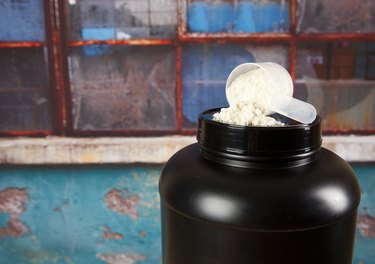
Does it matter when you eat after a workout? Proponents of nutrient timing believe that it's important to take in nutrients in the "anabolic window" — the period following a workout — in order to repair muscle tissue and boost performance, explains an October 2013 article in the Journal of the International Society of Sports Nutrition (ISSN). Because the window of time was sometimes seen as being as brief as 15 or 30 minutes, people were eager to down protein shakes in the minutes following a cool down.
"The anabolic window is definitely a thing — but we've gotten a bit more sophisticated in the research over the years," says Koch.
"Fueling your body shortly after working out to maximize recovery is still very important," says Koch. But, she notes, it's important to consider the timing of your nutrition before and after meals. Pre-workout and post-exercise meals can be separated by up to 3 to 4 hours if you're doing a 45- to 90-minute training session to reap, according to a January 2013 article published in the Journal of the International Society of Sports Nutrition. Simply put, your body can recover after a workout via the protein and other nutrients you eat throughout the day.
"Instead of worrying so much about what you have immediately following your workout, look at your diet in total and look at the fueling window surrounding your workout," Koch says. To promote muscle repair and recovery, eating before your workout is a good idea if you won't be able to eat immediately afterward.
7. All Plant-Based Proteins Are Created Equal
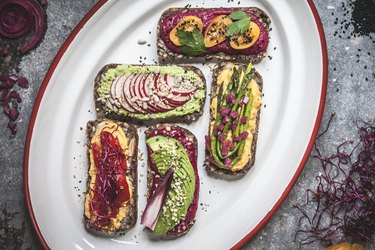
Don't believe a recipe or food is a great source of protein unless you read the nutrition facts. Fruits and vegetables often contain protein, but that doesn't mean that every plant-based food is a good source of protein, Shapiro notes.
An entire medium avocado has less than 3 grams of protein, according to the USDA. Hemp seeds have about 3 grams of protein per tablespoon, so sprinkling them over your oatmeal or in your smoothie won't provide a significant amount of protein. Eat a full cup of hummus, and you'll get 12 grams of protein — that's a lot more hummus than most of us eat in a sitting. A 4-ounce serving of chicken breast, in contrast, delivers 27 grams of protein.
It's not that these foods (avocado, hemp seeds and so on) are bad. They provide valuable nutrients. But if you're counting on them for the lion's share of your protein at a meal, you might find yourself not getting enough. Seeing a registered dietitian, or making it a habit to closely read food labels, can help ensure you get the protein you need.
- National Institutes of Health: "Protein in Diet"
- Merck Manual: "Overview of Nutrition"
- World Cancer Research Fund International: "Meat, Fish and Dairy Products and the Risk of Cancer"
- World Health Organization: "IARC Monographs evaluate Consumption of Red Meat and Processed Meat"
- USDA: "Dietary Guidelines for Americans 2015-2020"
- American Journal of Clinical Nutrition: "Effective Translation of Current Dietary Guidance: Understanding and Communicating the Concepts of Minimal and Optimal Levels of Dietary Protein"
- European Society for Clinical Nutrition and Metabolism: "Protein Intake and Exercise for Optimal Muscle Function With Aging: Recommendations From the ESPEN Expert Group"
- National Institute of Diabetes and Digestive and Kidney Diseases: "Your Kidneys & How They Work"
- Nutrients: "Higher Protein Intake Is Not Associated with Decreased Kidney Function in Pre-Diabetic Older Adults Following a One-Year Intervention—A Preview Sub-Study"
- Harvard Health Publishing: "How Much Protein Do You Need Every Day?"
- Mayo Clinic: "Are High-Protein Diets Safe for Weight Loss?"
- Osteoporosis International: "Benefits and Safety of Dietary Protein for Bone Health"
- American Journal of Clinical Nutrition: "Dietary Protein and Bone Health: A Systematic Review and Meta-analysis From the National Osteoporosis Foundation"
- Nutrition Today: "Optimizing Dietary Protein for Lifelong Bone Health"
- Journal of the International Society of Sports Nutrition: "Nutrient Timing Revisited: Is There a Post-exercise Anabolic Window?"
- Journal of the International Society of Sports Nutrition: "International Society of Sports Nutrition Position Stand: Nutrient Timing"
- USDA: "Avocado, Raw"
- USDA: "Hemp Seeds, Hulled"
- USDA: "Hummus"
- USDA: "Chicken Breast"
- USDA: "Restaurant, Family Style, Sirloin Steak"
- Harvard T.H. Chan School of Public Health: "Protein"