















































Barley & Cholesterol

Barley & Cholesterol
Photo Credit barley field image by Calin Tatu from Fotolia.com

Whole grains like barley offer a natural way to achieve a healthy cholesterol level. Left unchecked, the waxy substance known as cholesterol can cause heart disease or stroke by blocking blood vessels to the heart or brain. Barley offers both the dietary fiber and nutrients shown to promote healthy cholesterol levels. Always check with your doctor to determine the best heart-healthy diet plans or prescription treatments.

Definition

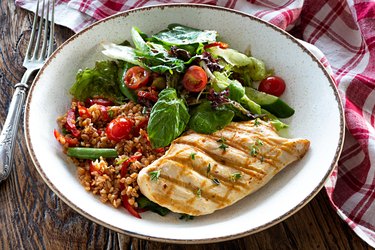
One of the more nutritious grains, barley's versatility makes it useful as rice-like side dish, as a classic soup ingredient and even as an oatmeal alternative. According to the nonprofit nutrition website World's Healthiest Foods, or WHFoods.org, barley's nutty taste and chewy texture often draw comparisons to wheat berries. Like wheat, rice and pasta, barley varieties range from nutritious, whole grain choices to highly refined, less-healthy options.

Dietary Fiber

Barley's high dietary fiber content is a primary reason the grain may help fight cholesterol. One cup of cooked, hulled barley offers more than 13.6 g, or half of the recommended daily amount, RDA, of dietary fiber. Even the more-refined version known as pearl barley lands the grain on MayoClinic.com's list of high-fiber grains, with 6 g dietary fiber per cup. According to the medical website, dietary fiber not only promotes healthy digestion, but helps flush your system of cholesterol buildup.

Soluble and Insoluble Fiber

Barley's fiber makeup includes both soluble and insoluble fiber. Soluble fibers may help lower your low-density lipoprotein, or "bad cholesterol," level by binding themselves to cholesterol buildup. The fiber and cholesterol are then released through your body's waste, according to the American Heart Association. Insoluble fibers may also help by encouraging the bacteria which also boast cholesterol-lowering activities, notes WHFoods.org.

The Niacin Connection

A serving of cooked barley provides about 14 percent of the RDA for niacin, the B vitamin closely associated with lowering overall cholesterol. Niacin both raises "good" cholesterol and lowers "bad" cholesterol, notes the University of Maryland Medical Center. It is important not to take too much of the nutrient; check with your doctor about proper amounts of niacin in food or supplement form.

Types of Barley

When choosing barley as part of a cholesterol-lowering diet plan, choose the least-refined varieties available. Barley types include pearl barley, pot barley and hulled barley. Hulled barley, considered a whole grain, offers more nutrition and dietary fiber because processors remove only the outer hull. Pot barley, also known as scotch barley, isn't a whole grain, but contains more of the grain's nutritious and fiber-rich layers than pearl barley. With pearl barley, the hull and bran, and sometimes endosperm layers are removed, resulting is a "pearlier," or less chewy version of the grain, but also one which is less nutritious. Barley flakes and barley grits may be made from pearl, pot or hulled barley, so check labels to determine dietary fiber content.

Additional Benefits

Along with the cholesterol-lowering dietary fiber and niacin content of barley, a 1-cup serving of the grain also yields at least 10 percent RDA of protein, thiamine, copper, iron, magnesium, manganese, phosphorus, selenium and zinc.

References

Article reviewed by Jason Dean Last updated on: Jun 14, 2011

Must see: Photo Galleries