
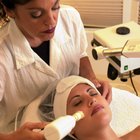
Digital Vision/Digital Vision/Getty Images
One of the more unwelcome signs of aging may be the skin's propensity to sag. Fortunately, modern technology, including laser resurfacing and radiofrequency therapy, have come to the rescue to help return firmness to mature skin, according to the American Academy of Dermatology, or AAD. Some people may choose to undergo the more traditional face-lift. This invasive procedure may be the most effective and longest lasting solution to sagging skin. All skin firming treatments have at least minimal side effects such as bruising, redness, swelling and possible discomfort. More serious side effects like permanent discoloration or scarring are also possible.
Ablative Laser Resurfacing
During ablative or wounding laser resurfacing, the outer layer of skin known as the epidermis is destroyed while heat that penetrates the deeper layer of skin called the dermis. This encourages the growth of new collagen. The result is smoother and tighter skin, according to the Mayo Clinic.
The potential side effects of ablative laser resurfacing include skin redness, dryness, infection, scarring and irregular pigmentation such as lighter or darker spots. The full healing process may take several months.
Non-Ablative Lasers
Less intense lasers or non-ablative devices help stimulate new collagen without harming the epidermis, according to the AAD. This type of laser therapy for skin tightening has minimal healing time.
Apart from a brief reddening of the skin, few if any side effects are reported with non-ablative lasers. However, the daily use of certain medications such as aspirin or anti-inflammatory medications may hamper the full potential of this type of laser therapy.
Non-ablative lasers may not be advisable for people with dark skin since it may cause lightening of the skin called hypopigmentation, according to Plastic Surgery Adviser.com.
Radio Frequency
Radiofrequency devices, such as Thermage and Thermacool, work beneath the surface layer of the skin to promote collagen growth and tightening without damaging the epidermis.
The procedure may cause some discomfort and recovery typically takes up to one week or longer. During this time patients may experience skin redness, swelling, and possible blisters. Pain may persist for several days following the procedure.
Face-Lift
A face-lift is an invasive procedure that improves sagging by removing excess skin and fat and tightening the underlying facial muscles and connective tissue, according to the Mayo Clinic. The results of a face-lift may last up to 10 years.
Bruising and swelling may linger for several weeks following this surgical procedure. Some patients may experience temporary facial or ear numbness. In rare cases numbness or skin discoloration can be permanent.
Related Articles

Fraxel Repair Vs. Restore Results

Laser Treatment for Face Wrinkles

What Are the Dangers of Fraxel Repair?

What Are the Dangers of Photofacials?

Fraxel Laser Treatment Dangers
How to Get Rid of Acne Dents

Hyperpigmentation and Shaving

What Is the Downtime for a Photofacial?
Risks of Facial Fillers

How to Remove Dark Marks From Skin

How do I Speed Up the Reversal of Face ...

Photofacial Vs. Microdermabrasion

How to Treat Dark Spots From Acne

The Best Skin Treatment for Melasma

Microdermabrasion for the Neck

Face Abrasion Treatment
Bromelain & Bruising

How to Fix an Irritated Upper Lip After ...
How to Shave Skin Moles

How to Get Rid of a Tattoo Scab
References
Resources
Writer Bio
Karen Hellesvig-Gaskell is a broadcast journalist who began writing professionally in 1980. Her writing focuses on parenting and health, and has appeared in “Spirituality & Health Magazine" and “Essential Wellness.” Hellesvig-Gaskell has worked with autistic children at the Fraser School in Minneapolis and as a child care assistant for toddlers and preschoolers at the International School of Minnesota, Eden Prairie.
Photo Credits
Digital Vision/Digital Vision/Getty Images