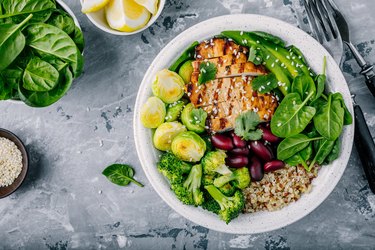
A healthy diet is important for everyone at all stages of the life cycle. Children require the same kinds of nutrients as adults to support their growing bodies and activity, but the amount of protein, carbohydrates, fat, vitamins and minerals children need varies depending on their age, sex and activity level. An 11-year-old diet plan should include a balance of nutrient rich foods from all the food groups.
Calories Still Count
Video of the Day
Unlike adults, calorie needs for children increase as they get older. Eleven-year-old boys require an average of 1,800 calories for a more sedentary child, to as much as 2,600 calories for a very active boy, according to the National Heart, Lung, and Blood Institute. Girls of the same age usually require fewer calories, and their needs range from 1,400 to 2,200 calories depending on how physically active they are. Breaking these calories into several healthy, balanced meals and snacks throughout the day provides active children with the energy and nutrients they need to grow while maintaining a healthy weight.
Video of the Day
Kids Need Balance
Children need a balance of foods from all food groups. Carbohydrates provide energy for active bodies, and most 11-year-olds should eat about five ounce-equivalents of grains each day. At least half of those should be whole grains like whole-grain cereal, oats, brown rice, or whole-wheat bread or pasta. Fruits and vegetables provide important vitamins for growing bodies; ideally, children who require 2,000 calories per day should eat about 2 ½ cups of vegetables and 1 1/2 cups of fruit each day from a variety of sources, according to the USDA. Breakfast foods like cereal, toast and fruit can provide several food groups in one nutritious meal.
Nutrients Are Important for Growth
Dairy foods like milk, yogurt and cheese provide calcium for growing bones, and 11-year-old kids need 3 cups from this group each day. A serving of dairy is 1 cup of milk or yogurt or an ounce of cheese. Protein foods are important for the development of growing muscles, tissues and organs, and a total of 5 ounce-equivalents from lean meats like chicken, fish or turkey, beans, or nuts and seeds is recommended each day. A healthy lunch or dinner for an 11-year-old should include some protein and dairy, along with portions of grains, fruit and vegetables.
Healthy fats are also an important part of an 11 year old diet plan. Healthy sources of fats include olive oil, nuts and seeds, avocados. Like adults, children should avoid trans fats in processed foods and limit their intake of solid fats from meats and butter. According to the USDA, the daily allowance of fats and oils for 11 year old boys is 5 teaspoons.
Smart Snacks Provide Energy
It's important for 11-year-olds to choose healthy snacks for sustained energy throughout the day. Good choices include fruit or cut-up vegetables, yogurt, cheese sticks, popcorn or trail mix. While it's tempting for most kids to snack on sweets like cookies and candy or salty snacks like chips, these are low in nutrients and high in fat and sugar. The American Heart Association recommends that children who require 2,000 calories each day limit sugar intake to 25 grams or 6 teaspoons per day.
- National Heart, Lung, and Blood Institute: How Much Should I Feed My Child?
- USDA: What foods are in the Grains Group?
- USDA: All About the Vegetables Group
- USDA: All About the Dairy Group
- USDA: All About Oils
- Heart.org: Sugar Recommendation Healthy Kids and Teens Infographic
- USDA Choose My Plate: Daily Food Plans and Worksheets (2000 calories)