Uric acid results from the breakdown of compounds known as purines in the body. Purines are both produced in the body and consumed through the diet.
According to the University of Rochester Medical Center, normal levels of blood uric acid levels are less than 6.0 milligrams per deciliter for women and less then 7.0 milligrams per deciliter for men.
Video of the Day
Video of the Day
High uric acid levels in the blood can cause crystals to form and build up around joints, resulting in a painful form of arthritis known as gout. According to Mayo Clinic, many foods — such as red meats, seafood, organ meats and alcoholic beverages — are on the list of foods high in uric acid content and eating these foods can lead to high levels of uric acid in the blood.
1. Red Meats
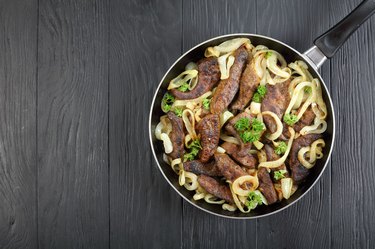
One of the main sources of uric acid in the diet is red meat. Organ meats such as liver contain the highest levels of uric acid. Other red meats that contain significant amounts of uric acid include beef, lamb, veal and pork.
If you have been diagnosed with gout or have high uric acid levels, these meats should be limited or even avoided.
2. Seafood and Fish
Seafood has many health benefits, including omega-3 fatty acids. These fats have been shown to reduce risk of heart disease and stroke. The American Heart Association recommends consuming 3.5 ounces of cooked fish per week.
However, seafood and fish are other major sources of uric acid in the diet. Tuna, mackerel, herring and anchovies are among the fish high in uric acid ,as well as lobster, scallops and shrimp.
Along with red meats, these types of fish and seafood might need to be avoided or limited if you have high levels of uric acid in the blood or are prone to developing gout.
3. Red-Flag Vegetables
Certain vegetables can contribute to higher levels of uric acid. Vegetables that contain moderate amount of purine include beans, peas, lentils, spinach, cauliflower, asparagus and mushrooms, according to the American Academy of Family Physicians.
Replace these vegetables with ones containing higher levels of magnesium and lower levels of calcium to help decrease the amount of uric acid buildup in the blood and decrease the chances of developing gout.
Vegetables high in magnesium include broccoli, potatoes, carrots and avocados, according to Cleveland Clinic.
Read more: Can Apple Cider Vinegar Treat Gout?
4. Beer and Alcohol
Alcohol, especially beer, is important to consider in regard to high levels of uric acid. While they do not contain purines or uric acid themselves, beer and other alcoholic drinks increase the production of purines in the body, according to the American Academy of Family Physicians.
Avoid beer and spirits, such as hard liquors, as they have been shown to increase the risk for developing gout. Wine has not been shown to have any influence on gout development. It is best to limit all alcohol consumption to two or fewer servings per day.
- American Academy of Family Physicians: "Diagnosis, Treatment, and Prevention of Gout"
- Mayo Clinic: "Gout — Diagnosis and Treatment"
- American Heart Association: "Fish and Omega-3 Fatty Acids"
- University of Rochester Medical Center: "Uric Acid (Blood)"
- Cleveland Clinic: "Magnesium-Rich Food"
- American Academy of Family Physicians: "Low-Purine Diet"
Is this an emergency? If you are experiencing serious medical symptoms, please see the National Library of Medicine’s list of signs you need emergency medical attention or call 911.